Children suffer as schools go online in polluted Delhi / Photo: © AFP

 Bezzecchi takes pole for San Marino MotoGP
 China, Russia, Iran leaders gather in India as BRICS nations seek common ground

 Korda finally beaten as Europe grasp slender Solheim lead

 Zelensky says willing to meet Putin at G20 in Miami: interview

 Quebec Brokerage Qubit Insurance Announces New Data on Coverage Shortfalls as Rebuilding Costs Rise

 Trump asks Smithsonian to install George Washington statues, exhibition

 'A legend': Celine Dion poised for emotional comeback in Paris

 Europe eyes battle over 'pervert' AI glasses

 Philippine Muslim enclave trades bullets for election ballots

 Children in flood-hit Nepal grapple with loss, cling to hope

 Bhutan business bets on hazelnuts for farming future

 First bodies of Philippines ferry fire victims land as toll hits 35

 Gaza film, Malkovich drama vie for Venice top prize

 DR Congo school fire stampede death toll rises to 26: UNICEF

 Coastal erosion forces cancellation of California music festival

 Anthropic says UAE-linked AI op targeted UN experts over Sudan

 Rennes beat Marseille to seize top spot in Ligue 1

 Duplantis delivers masterclass for Ultimate pole vault win

 Weapons, spyware and AI scams: Anthropic exposes Claude misuse

 Gary Oldman hopes Jack Lowden is the new James Bond

 Six-stop race is best on tyre-shredding Madrid track says Russell

 Prosecutors seek up to 10 years prison over violent burglary of Donnarumma

 Solheim Cup on a knife-edge after Korda record

 Corruption probe targets Brazil presidential candidate Flavio Bolsonaro

 New No.1 Rybakina out to thwart Sabalenka US Open three-peat bid

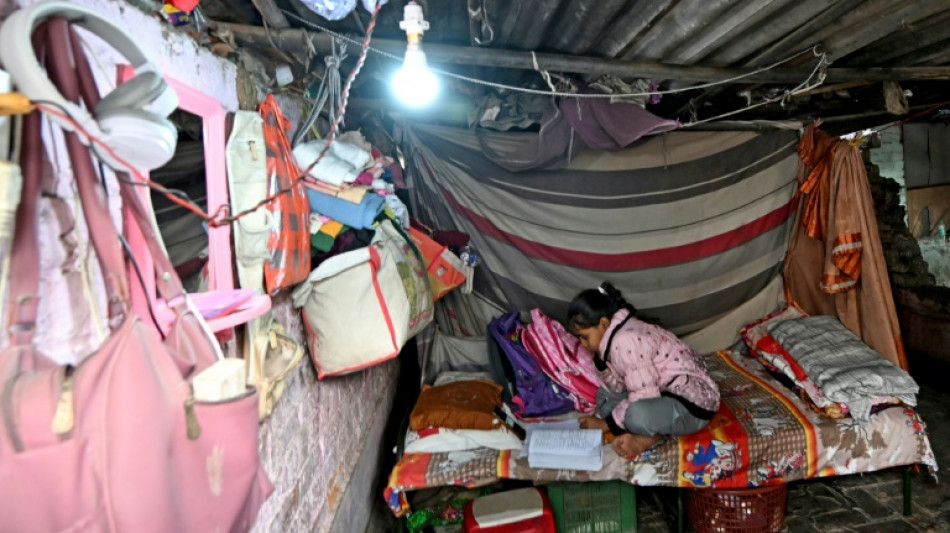
Confined to her family's ramshackle shanty by the toxic smog choking India's capital, Harshita Gautam strained to hear her teacher's instructions over a cheap mobile phone borrowed from her mother.
The nine-year-old is among nearly two million students in and around New Delhi told to stay home after authorities once again ordered schools to shut because of worsening air pollution.
Now a weary annual ritual, keeping children at home and moving lessons online for days at a time during the peak of the smog crisis in winter ostensibly helps protect the health of the city's youth.
The policy impacts both the education and the broader well-being of schoolkids around the city -- much more so for children from poorer families like Gautam.
"I don't like online classes," she told AFP, sitting on a bedher family all share at night in their spartan one-room home in the city's west.
"I like going to school and playing outside but my mother says there is too much pollution and I must stay inside."
Gautam struggles to follow the day's lesson, with the sound of her teacher's voice periodically halting as the connection drops out on the cheap Android phone.
Her parents both earn paltry incomes -- her polio-stricken father by working at a roadside food stall and her mother as a domestic worker.
Neither can afford to skip work and look after their only child, and they do not have the means to buy air purifiers or take other measures to shield themselves from the smog.
Gautam's confinement at home is an additional financial burden for her parents, who normally rely on a free-meal programme at her government-run school to keep her fed for lunch.
"When they are at school I don't have to worry about their studies or food. At home, they are hardly able to pay any attention," Gautam's mother Maya Devi told AFP.
"Why should our children suffer? They must find some solution."
Delhi and the surrounding metropolitan area, home to more than 30 million people, consistently tops world rankings for air pollution.
The city is blanketed in acrid smog each winter, primarily blamed on agricultural burning by farmers to clear their fields for ploughing, as well as factories and traffic fumes.
Levels of PM2.5 -- dangerous cancer-causing microparticles that enter the bloodstream through the lungs -- surged 60 times past the World Health Organization's recommended daily maximum on Monday.
A study in the Lancet medical journal attributed 1.67 million premature deaths in India to air pollution in 2019.
Piecemeal government initiatives include partial restrictions on fossil fuel-powered transport and water trucks spraying mist to clear particulate matter from the air.
But none have succeeded in making a noticeable impact on a worsening public health crisis.
- 'A lot of disruptions' -
The foul air severely impacts children, with devastating effects on their health and development.
Scientific evidence shows children who breathe polluted air are at higher risk of developing acute respiratory infections, a report from the UN children's agency said in 2022.
A 2021 study published in the medical journal Lung India found nearly one in three school-aged children in the capital were afflicted by asthma and airflow obstruction.
Sunita Bhasin, director of the Swami Sivananda Memorial Institute school, told AFP that pollution-induced school closures had been steadily increasing over the years.
"It's easy for the government to give a blanket call to close the schools but... abrupt closure leads to a lot of disruptions," she said.
Bhasin said many of Delhi's children would anyway continue to breathe the same noxious air whether at school or home.
"There is no space for them in their homes, so they will go out on the streets and play."
T.Egger--VB