
COP29 host tries to calm waters after diplomatic turmoil / Photo: © AFP/File

 Late Mbappe goal sends Lille top of Ligue 1
 Five-star Brighton crush 10-man Coventry
 Team Europe beat United States to reclaim Solheim Cup

 US House Speaker warns curbing AI too sharply could leave China ahead

 張國榮70歲誕辰音樂會西九舉行 唐鶴德錄音致意

 Iran's economic ties to Dubai hard to break despite war
 iPhone 18預購後出現可疑扣款 四間銀行調查未授權交易
 《浪花男女》辦特別謝票場 馮志強談票房與導演客串拍攝

 Former captain De Villiers hails 'fantastic' Springboks

 Galaxy Tab S12系列效果圖曝光 Ultra擬配雙鏡頭及瀏海螢幕
 اليورو يستقر في البنوك المصرية وأعلى سعر للبيع 59.85 جنيه
 حمزة قورقماز يناقش العلاقة بين وضوح المبادئ واحترام الاختلاف

 Altman tells Fortune OpenAI will not go public in 2026
 China, Russia, India seek economic cooperation at BRICS
 ستاندرد آند بورز تثبت تصنيف السعودية عند A+
 دول عربية ومنظمات تدين استهداف خط أنابيب في السعودية
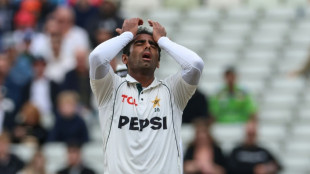
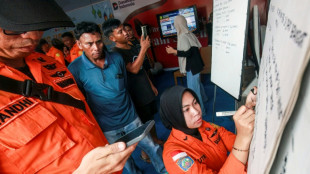 One dead, 102 rescued from stricken ferry off Indonesia's Java
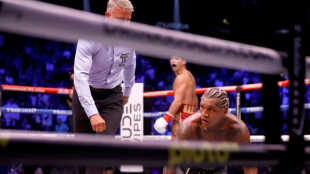 Garcia keeps WBC welterweight title by stopping Benn
 Lights out in Laos as electricity exports surge

 'This is the test': All eyes on US Fed to tackle high inflation

 Scars of Marawi siege linger as Philippines poll nears

 Trump turns to golf, family business on Irish visit's second day

 Defiant Sabalenka motivated by US Open defeat

 Houthis say hit Saudi base after renewed fighting with Yemeni govt forces

 Steven Strogatz weighs AI mathematics advances and their consequences for researchers

Host Azerbaijan tried to bring down the diplomatic temperature in Baku on Thursday after a French minister cancelled her trip to the UN climate talks and Argentina withdrew its delegation.
While negotiators work behind closed doors at the COP29 talks to trash out a climate finance deal, the spotlight has been largely stolen by diplomatic turmoil.
France's Environment Minister Agnes Pannier-Runacher said Wednesday she would not travel to Baku after Azerbaijan's President Ilham Aliyev accused Paris of colonial "crimes" and "human rights violations" in its overseas territories.
Pannier-Runacher called his speech "unacceptable... and beneath the dignity of the presidency of the COP."
It was also a "flagrant violation of the code of conduct" for running United Nations climate talks, she added.
Attempting to calm the waters on Thursday, COP29 lead negotiator Yalchin Rafiyev insisted that Azerbaijan had fostered "an inclusive process".
"We have opened our doors to everybody to come to engage in very constructive, fruitful discussions," he told reporters.
"Our doors are still open."
Relations between Paris and Baku have long been tense over France's support for Azerbaijan's arch-rival Armenia.
Azerbaijan defeated Armenia in a lightning offensive last year when it retook the breakaway Armenian-populated region of Nagorno-Karabakh -- leading to an exodus of more than 100,000 Armenians.
- 'Diplomatic matter' -
Aliyev has hailed the victory in remarks to delegates and also raised eyebrows by insisting natural resources including carbon-emitting fossil fuels were a "gift from God".
The EU's climate commissioner said the climate talks "should be a place where all parties feel at liberty to come and negotiate."
"The COP Presidency has a particular responsibility to enable and enhance that," Wopke Hoekstra posted on X.
Compounding the diplomatic turmoil, Argentina's delegation was abruptly pulled from the talks.
An environment ministry source confirmed the departure but declined to offer more detail.
Argentina's anti-establishment President Javier Milei has made no secret of his scepticism of climate change and is an ally of newly reelected former US president Donald Trump.
While Argentina's delegation was small, its departure "is unprecedented in the country's diplomatic history", said Oscar Soria, an Argentine environmental activist and director of the Common Initiative.
Rafiyev declined to be drawn on the departure, terming it a "diplomatic matter between Argentina and the UN".
"We hope that all who are attending here have only one intention, to come to join us in this collective effort to get an outcome that is positive," he added.
- 'Some uncertainty' -
But progress on the key goal of the talks -- a new climate finance deal -- is proving grindingly slow.
The main fault line is clear: how much should developed countries pay to help poorer nations adapt to climate change and transition away from fossil fuels.
Rich nations are reluctant to spend much more than the $100-billion a year already committed, conscious of domestic publics angry about inflation and stuttering economies.
But developing countries warn they need at least $1 trillion to defend against the ravages of climate change and meet commitments to reach net-zero emissions.
Sources described ongoing discussions as difficult, with negotiators struggling to wrestle a draft text into a reasonable form before ministers arrive in a few days to start nailing down a deal.
"At this pace we won't be able to deliver something meaningful by Saturday as initially requested by the presidency," warned Fernanda de Carvalho, climate policy lead at WWF.
Hanging over proceedings is the question of what role the United States will play on climate action and funding after Trump returns to the White House in January.
He has pledged to again withdraw from the landmark Paris agreement, raising questions about how much US negotiators can really promise and deliver in Baku.
"I think it's fair to say that there's some uncertainty in the next administration," conceded Jake Levine, the White House's senior director for climate and energy.
"We cannot cede the playing field to China, to our competitors... So I think that you will see a continued American presence."
A.Ammann--VB