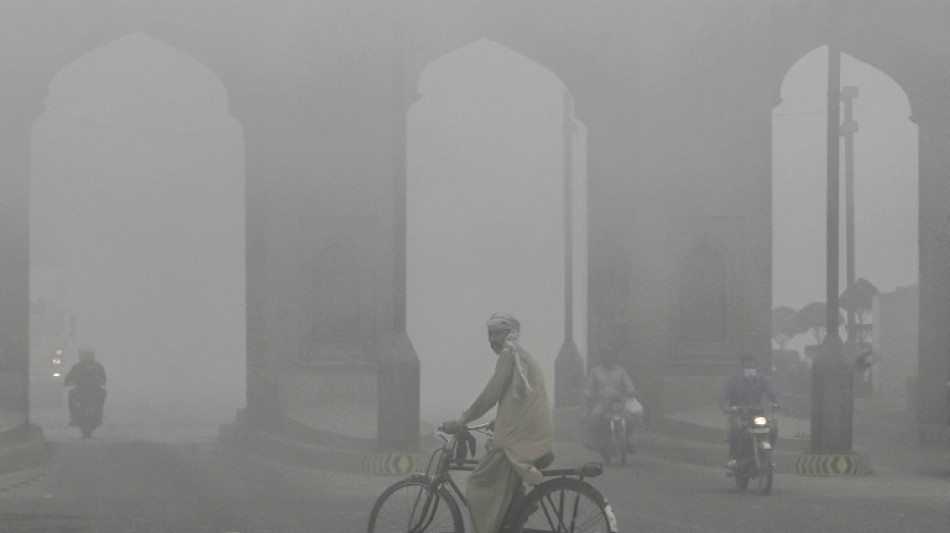
Pakistan's record smog triggers anguish and anxiety / Photo: © AFP

 Russia's Stalin-admiring provincial leader waging an ultra-conservative crusade
 Marcelo Gallardo appointed as new Ecuador head coach

 'Widow's Bay' and 'The Pitt' tipped for success at Emmy Awards
 For club and comfort: Rodman makes it to Shelton's US Open final
 Houthis say Saudi Arabia launched over 50 strikes against them in 24 hours

 'Fed up': Thousands march against Sinaloa Cartel violence

 Controversial Zverev: from tennis nearly-man to multiple Grand Slam winner

 Swedish left-wing cheers far-right decline amid tight election race

 Yamal double helps Barca beat Levante, Atletico triumph

 Sassuolo stun Juve, Lobotka eases pressure on Allegri with Napoli winner

 Bills beat Texans and Ravens roll Colts in NFL openers

 US fight off spirited France to win 12th World Cup

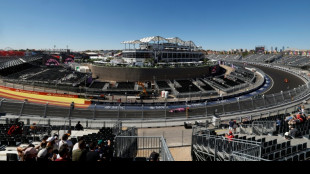 Drivers give cool reception to new Madring circuit

 Maresca makes flawless Man City start to leave Man Utd trailing

 Dozens arrested in major anti-LGBTQ raids in Turkey

 Leftwing opposition seen leading Sweden election, far-right losing ground

 Senegal goalkeeper Mendy retires from international football

 Carrick 'worried' by decision to award Man City winner

 Lobotka eases pressure on Allegri with Napoli winner
 Trump watches as Lowry wins Irish Open in record-breaking style

 Poland, Ukraine slam Russian strikes near border as 'escalation'
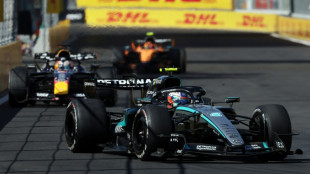
 Haaland fires 10-man Man City to memorable win over Man Utd

 I miss the adrenaline, but it's not my moment - Bolt

 Championship leader Antonelli to 'keep pushing' for title
 Yamal double helps Barca edge Levante thriller

On the streets of Pakistan's second biggest city, smog stings eyes and burns throats. Inside homes, few people can afford air purifiers to limit the damage of toxic particles that seep through doors and windows.
Lahore -- a city of 14 million people stuffed with factories on the border with India -- regularly ranks among the world's most polluted cities, but it has hit record levels this month.
Schools have closed in the main cities of Punjab province, of which Lahore is the capital, until November 17 in a bid to lower children's exposure to the pollution, especially during the morning commute when it is often at its highest.
"The children are constantly coughing, they have constant allergies. In schools we saw that most of the children were falling sick," said Rafia Iqbal a 38-year-old primary school teacher in the city that borders India.
Her husband Muhammad Safdar, a 41-year-old advertising professional, said the level of pollution "is making daily living impossible".
"We cannot move around, we cannot go outside, we can do nothing at all," he told AFP.
According to the international Air Quality Index Scale, an index value of 300 or higher results is "hazardous" to health and Pakistan has regularly tipped over 1,000 on the scale.
In Multan, another city of several million people some 350 kilometres away, the AQI level passed 2,000 last week -- a staggering height never seen before by incredulous residents.
Access to parks, zoos, playgrounds, historic monuments, museums and recreational areas will be banned until November 17 and tuk-tuks with polluting two-stroke engines, along with restaurants that operate barbecues without filters have been banned in Lahore "hot-spots".
Air purifiers are luxury for most families, with the cheapest priced at around $90, with the added cost of replacing filters every few months in such extreme pollution.
Safdar and Iqbal do not have air purifiers and instead try to contain their children to one room.
"Preventive measures should have been taken. It's a yearly occurrence," Safdar said of the government.
"Obviously there is something missing in their solution."
- Cloud of poison -
A mix of low-grade fuel emissions from factories and vehicles, exacerbated by agricultural stubble burning, blanket the city each winter, trapped by cooler temperatures and slow-moving winds.
The WHO says that air pollution can trigger strokes, heart disease, lung cancer and other respiratory diseases.
It is particularly punishing for children and babies, and the elderly.
Last year, the Punjab government tested artificial rain to try to overcome the smog, and this year, trucks with water cannons sprayed the streets -- with no results.
Special smog counters to triage patients have been established at clinics across the province, with 900 people admitted to hospital in Lahore alone on Tuesday.
Doctor Qurat ul Ain, a hospital doctor for 15 years, witnesses the damage from an emergency rooms in Lahore.
"This year smog is much more than previous years and the number of patients suffering from its effects is greater too," she told AFP.
Many arrive with laboured breathing or coughing fits and reddened eyes, often the elderly, children and young men who have breathed in the toxic air while on the back of motorbikes.
"We tell people not to go out and otherwise to wear a mask. We tell them not to touch their eyes with their hands, especially children," she adds.
For days the concentration of polluting micro-particles PM2.5 in Punjab has been dozens of times higher than that deemed tolerable by the World Health Organization (WHO).
Doctor Alia Haider, also a climate activist, is calling for awareness campaigns for patients who often do not know the dangers of smog.
"We are stuck in our own poison," she said. It's like a cloud of gas over the city."
S.Spengler--VB