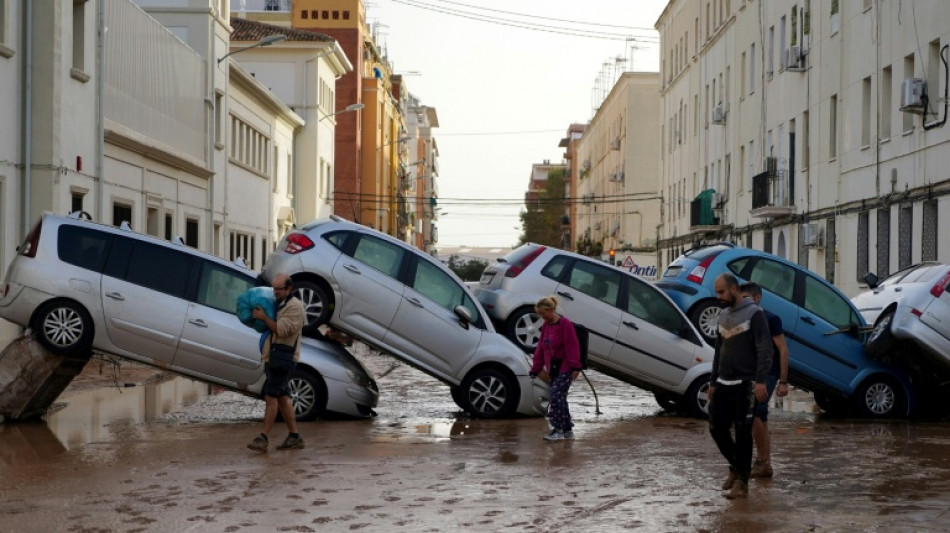
Spain’s warning system under scrutiny as flood toll rises / Photo: © AFP

 BASIS.pro Expands On-Chain Infrastructure with XDC Network Partnership and Zypher DAO as Auto Earn Goes Live

 Samson relishing battle with teen star Sooryavanshi for India spot

 Pickle-flavoured tart? AI inspires Japan's convenience stores
 Macau holds first closed-door national security trial

 Bank of Japan set to raise rates under pressure from inflation, US
 Zverev, Shelton back on court for Davis Cup qualifiers

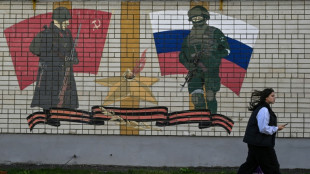 Peace is a 'dangerous' word in Russian city heading to polls

 Meta chief pushes back on AI slowdown calls

 'Resident Evil' film brings video game's ethos to the big screen

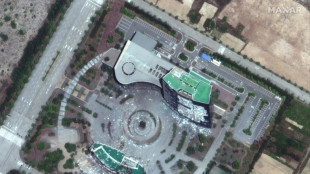 Court orders N. Korea pay Seoul $32.5 mn for blowing up office
 US military buildup in Palau stirs war fears
 US Fed to deliver rate decision with markets betting on hike
 Saudi, Egypt demand open Red Sea as Riyadh vows response to Houthi attacks

 Capitals say hockey star Ovechkin 'was asked' to film Putin ad

 Spurs in 'tough moment' after League Cup exit as De Zerbi says sorry

 Arteta salutes 'unbelievable' Dowman after Arsenal's teen star sinks Ipswich

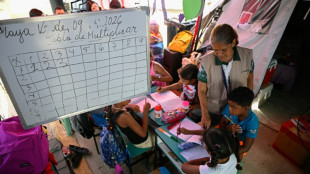 Empty seats as schools reopen in Venezuela's quake-hit Guaira

 Messi set for Argentina farewell in Benin friendly

 Ton-up Brook leads from the front as England hammer Sri Lanka in 1st T20

 AI giants pursue self-regulation as safety fears mount

 Argentina begin life after Messi with Bolivia friendly

 Helen Mirren delves into Patricia Highsmith's mind in 'A Talent for Murder'
 Sanders, Bannon warn of AI dangers in rare US left-right alignment

 US Senate crypto bill collapses amid partisan deadlock

 Raptors confirm Leonard return after Clippers salary cap scandal

Spain's heavy flood death toll raises questions about how one of the world's most developed nations failed to respond adequately to extreme storms likely to intensify as climate change accelerates.
Torrential rains that began at the start of the week sparked flooding that has left at least 95 people dead, the deadliest such disaster in the western European country since 1973.
National weather agency AEMET launched a red alert for the hardest-hit eastern Valencia region on Tuesday morning and conditions deteriorated throughout the day.
But it was only in the early evening that the regional body in charge of coordinating the emergency services was set up.
And an alert sent by the civil protection service urging residents in the Mediterranean coastal city of Valencia not to leave home was issued after 8:00 pm (1900 GMT).
For many, it was already too late. Motorists began journeys only to find themselves trapped on roads and left at the mercy of raging torrents of water.
"They raised the alarm when the water was already here, there's no need to tell me the flood is coming," fumed Julian Ormeno, a 66-year-old pensioner in the Valencia city suburb of Sedavi.
"Nobody came to take responsibility," he told AFP.
With weather forecasters issuing warnings beforehand, such tragedies are "entirely avoidable" if people can be kept away from surging flood water, said Hannah Cloke, hydrology professor at the University of Reading.
The devastating outcome suggests Valencia's warning system failed, she said. "People just don't know what to do when faced with a flood, or when they hear warnings."
"People shouldn't be dying from these kinds of forecasted weather events in countries where they have the resources to do better," added Liz Stephens, a professor in climate risks and resilience at the University of Reading.
"We have a long way to go to prepare for this kind of event, and worse, in future."
Experts have said the storm was caused by cold air moving over Mediterranean's warm waters, which produced intense rain clouds, a phenomenon common for the time of year.
But they also say the warming of the Mediterranean, which increases water evaporation, plays a key role in making torrential rains more severe.
The events "are yet another wake-up call that our climate is changing rapidly", according to Hayley Fowler, professor of climate change impacts at Britain's Newcastle University.
"Our infrastructure is not designed to deal with these levels of flooding," she added, saying "record-shatteringly hot" warmer sea temperatures fuel storms that dump extreme levels of rain in one place.
- 'No country exempt' -
Scientists warn that extreme weather events are becoming more intense, last longer and occur more frequently as a result of human-induced climate change.
But in some cases, even the best-prepared warning systems can be caught off guard, analysts said.
Such extreme weather "can overwhelm the ability of existing defences and contingency plans to cope, even in a relatively wealthy country like Spain", said Leslie Mabon, senior lecturer in environmental systems at Britain's Open University.
"The floods in Spain are a timely reminder that no country is exempt from the risks of climate change."
For Linda Speight, a lecturer at the School of Geography and the Environment at the University of Oxford, warnings for intense thunderstorms are "incredibly hard to issue" as the exact location of the heaviest rainfall is usually unknown in advance.
"We urgently need to adapt our cities to be more resilient to floods," she added, suggesting making space for water to flow through urban environments without causing damage.
"We take preparation for other hazards such as earthquakes and tsunami very seriously," added Jess Neumann, associate professor of hydrology, at the University of Reading.
"It is time we afforded the same to flood risk preparedness."
Government minister Angel Victor Torres declined to answer directly when asked about the potential delay in sending alerts to the population.
D.Bachmann--VB