Scientists to scour African waters to gauge ocean pollution / Photo: © AFP

 Allen lights up Bills' new stadium with 41-31 win over Lions
 Afghan medical students in Pakistan hope court stops college expulsions

 AI doomsday warnings unlikely to slow IPOs but questions linger
 ICC eyes China in bid to expand cricket
 Nkunku craving freedom and fun on RB Leipzig return

 Bhutan's traditional archers lose ground to development
 Asian stocks track Wall St rally as oil prices drop

 South Korea makes Asian Games complaint over Japan warlord ceremony
 US aid cuts are killing Kenyan sex workers
 October 7 survivors, families take centre stage in Israel vote
 Captain Mat Ryan axed from Socceroos squad for Brazil games

 US approves sale of 48 F-35 jets to Saudi Arabia

 Juventus, Palace cruise to Europa League wins, Bournemouth beat Sociedad

 Stocks climb as oil retreats, Fed calms inflation fears

 Russians begin voting in controlled election as war drags

 Hispanics feel 'betrayed' on immigration, Republican warns Trump

 High-scoring Bears face Vikings in battle of NFL unbeatens
 'In our lane': Fed's Warsh defies Trump but still fighting for credibility

 Trump admin makes major cut to endangered species protections

 Princess Diana's brother makes new explosive claims against Charles

 Ovechkin on Russian political video: 'I support my country'

 Can we shut down AI?
 Teenager Sullivan named in new-look US squad
 Travis Scott and Keith Richards feature on GTA VI soundtrack

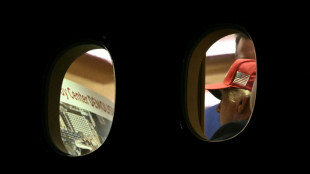 AFP photo shows Trump examining image of apparent Kennedy Center razing

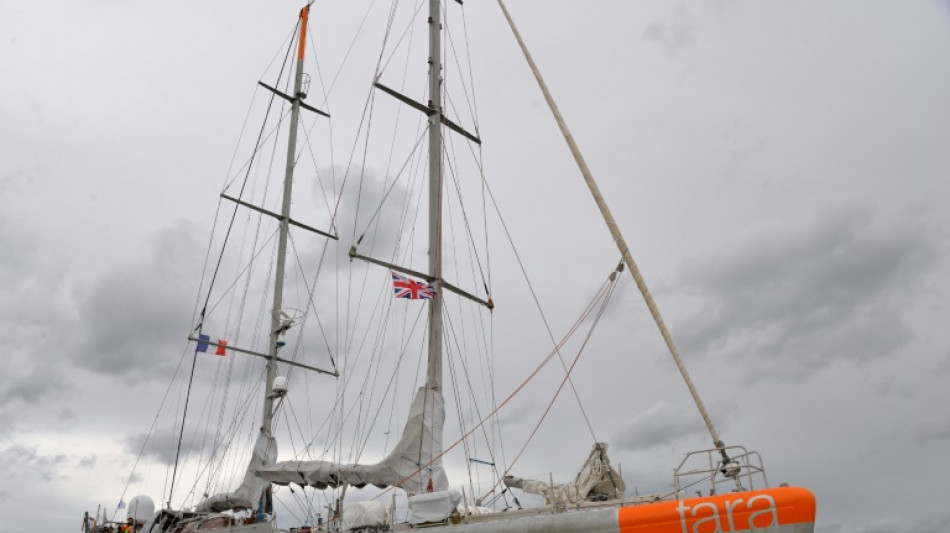
Scientists on Saturday began a five-month mission to study how plastic pollution in Africa's main rivers and climate change stresses are impacting microorganisms in the Atlantic ocean, they announced.
The survey is being staged from the 33-year-old Tara research schooner which arrived in South Africa's Cape Town on Friday ahead of the expedition up the West African coast.
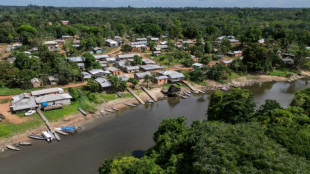
The researchers will analyse how nutrients and pollution in major African rivers - the Congo, Orange, Gambia and Senegal - are affecting the Atlantic.
They will trace the sources of plastic pollution at river mouths, to understand their distribution and the types of material involved.
The research station will also cast nets that can go up to 1,000 metres below the ocean's surface, to collect samples from ecosystems called "microbiomes", to be analysed in labs on land. The data gathered will help answer key questions about the world's oceans.
The researchers will also study the Benguela Current, which moves up from South Africa to the Namibian and Angolan coasts.
It pulls up cold water from the ocean depths in a process known as upwelling, bringing nutrients to the surface.
"You get more nutrients here than anywhere else in the world," Emma Rocke, a 42-year-old research fellow at the University of Cape Town, who is working on the vessel, told AFP.
"Understanding that, and characterising it at a microbiome level is something that hasn't been done really ever, and more importantly, it's not incorporated in climate change models".
She said the UN's Intergovernmental Panel on Climate Change reports published so far don't consider the microbiome, "yet without it, ocean life would not exist".
Marine biologists will later study an upwelling current off the Senegalese coast, the world's third most powerful after Benguela and the Peru-Chile upwelling system.
The Tara vessel is on its 12th global mission and it involves 42 research institutions around the world.
Tara Ocean Foundation executive director Romain Trouble, 46, said that this is the first time the ship has traversed the West African coast.
"There's very little data on this kind of microbiome, microscopic species, in this ecosystem," he said.
University of Pretoria's microbial ecology and genome professor Thulani Makhalanyane, 37, will be focusing on the effect of agriculture and plastic pollution from African rivers.
"In coastal communities, we expect to see evidence of a high degree of pollution," said Makhalanyane. "We are also interested in other polluters that are perhaps not as well characterised, things like antibiotic resistance genes".
The vessel left its homeport of Lorient in France in December 2020 to embark on a 70,000-kilometre journey. Since then, it has traversed the coasts of Chile, Brazil and Argentina, as well as the Weddell Sea in Antarctica.
Y.Bouchard--BTB



