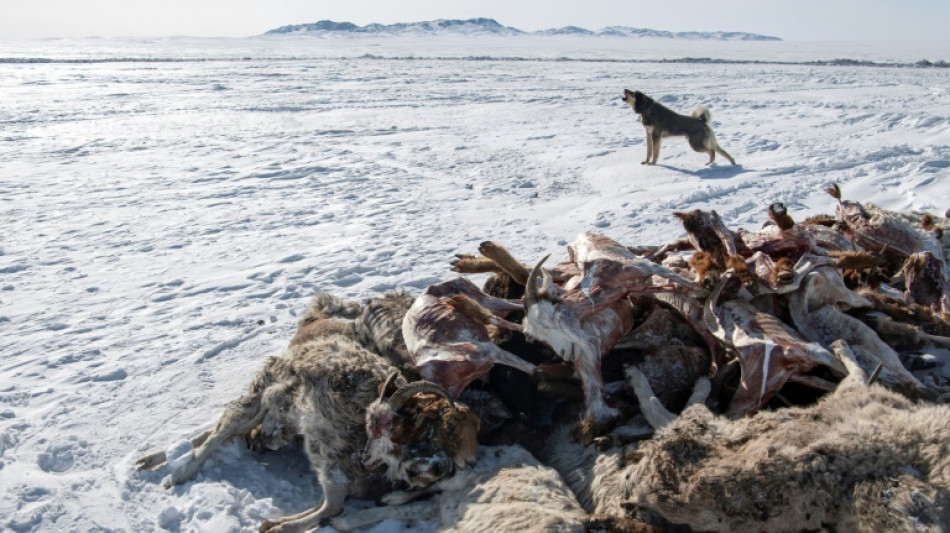
2 million animals dead as extreme winter weather hits Mongolia / Photo: © AFP

 'It has to stop': runners protest women's murders in S.Africa district

 Fire erupts near Riyadh airport as Houthis claim strikes

 Cuba works to restore power after another blackout

 England thrash Sri Lanka again to return to top of T20 rankings

 Arsenal thrashed by Brighton, sorry Spurs lose again

 South Korea, Austria qualify for Davis Cup finals

 Seare shocks Ingebrigtsen to win world 5km gold

 Brigitte Bardot widower slams sale of star's belongings

 Aston Villa compound Tottenham's misery despite late rally

 Asian Games offer 'deepest apologies' for South Korea anthem blunder
 Inter Milan and Italy icon Mazzola dies aged 83

 Saudi capital issues first air raid alert since renewed fighting in Yemen

 Martin edges title rival Marquez for Austrian MotoGP pole

 Indonesia accepts Malaysia's help to tackle wildfires

 Indians living in Japan on stand-by to house Asian Games athletes

 Trump signs bill authorizing sweeping Russia sanctions

 Protesters form human chain at Kennedy Center after Trump threat

 Death toll from attack at police HQ in Pakistan rises to 31

 Trump says Denmark to give US 'permanent control' over Greenland security
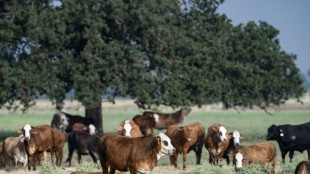
 Kennedy Center: future unclear for iconic Washington arts hub

 Trump claims 'infinite' Greenland security deal with Denmark

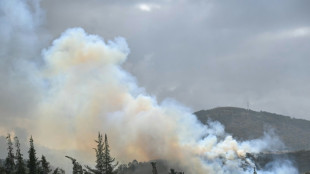 Helicopters battle wildfire threatening Ecuador's capital

 Brentford batter Chelsea to undo Alonso's promising start

 Kane hits Bundesliga century as Bayern rout Union

 Trump says CNN, MS NOW, Politico banned from White House
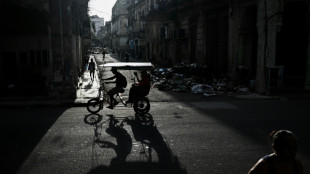
More than two million animals have died in Mongolia so far this winter, a government official said Monday, as the country endures extreme cold and snow.
The landlocked country is no stranger to severe weather from December to March, when temperatures plummet as low as minus 50 degrees Celsius (minus 58 Fahrenheit) in some areas.
But this winter has been more severe than usual, with lower than normal temperatures and very heavy snowfall, the United Nations said in a recent report.
As of Monday, 2.1 million head of livestock had died from starvation and exhaustion, Gantulga Batsaikhan of the country's agriculture ministry said.
Mongolia had 64.7 million such animals, including sheep, goats, horses and cows, at the end of 2023, official statistics show.
The extreme weather is known as "dzud" and typically results in the deaths of huge numbers of livestock.
The United Nations said climate change is increasing the frequency and intensity of dzuds.
Mongolia has experienced six dzuds in the past decade, including the winter of 2022-23 when 4.4 million head of livestock perished.
This year's dzud has been exacerbated by a summer drought that prevented animals from building up enough fatty stores to survive the harsh winter.
- 'Praying for warmer weather' -
Seventy percent of Mongolia is experiencing "dzud or near dzud" conditions, the UN said.
That compares with 17 percent of the country at the same time in 2023.
"The winter started with heavy snow but suddenly air temperatures rose, and the snow melted," herder Tuvshinbayar Byambaa told AFP.
"Then the temperatures dropped again, turning the melting snow into ice."
That ice makes it hard for the livestock to break through to the grass below, he said, preventing them from grazing and forcing many herders to borrow money for feed.
"The weather changes are so sudden these days," Tuvshinbayar said.
The deadliest dzud on record was the winter of 2010-11, when more than 10 million animals died -- almost a quarter of the country's total livestock at the time.
Snowfall this year -- the heaviest since 1975 -- has compounded herders' woes, trapping them in colder areas and making them unable to buy food and hay for their animals from the nearby towns.
Mongolia is one of the most sparsely populated countries in the world and about one-third of its population of 3.3 million people is nomadic.
The government has promised to help, launching a campaign to deliver hay fodder to herders in a bid to prevent further losses of crucial commodities like meat and cashmere, one of the country's top exports.
But for now, Tuvshinbayar and his fellow herders can only pray for warmer weather.
"It is becoming too hard to be a herder -- we suffer drought and flood in summer and dzud in winter," he told AFP.
"I'll start losing my animals if the snow does not melt in the coming months," he added.
"All herders are praying for warmer weather to melt this ice, so our animals can reach the grass."
H.Weber--VB