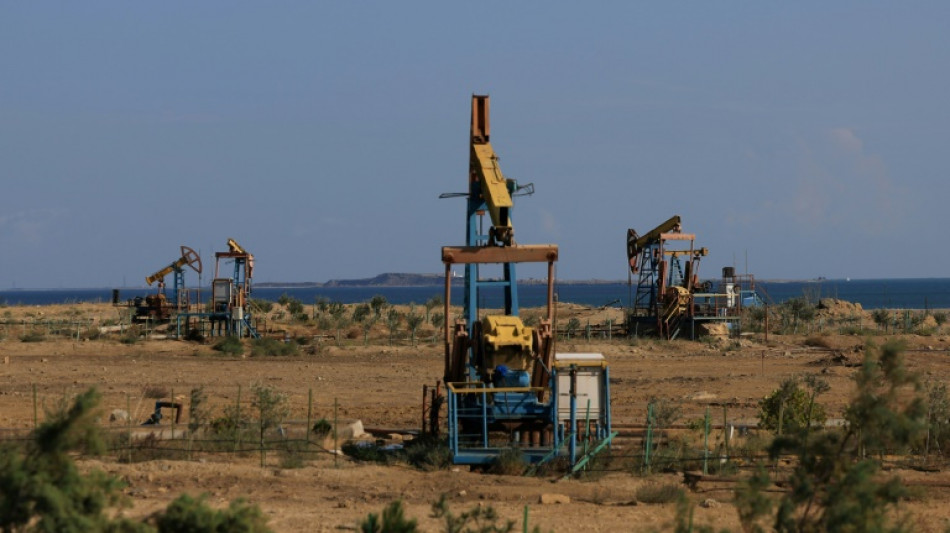
Gas booming for UN COP29 host Azerbaijan / Photo: © AFP

 'It has to stop': runners protest women's murders in S.Africa district

 Fire erupts near Riyadh airport as Houthis claim strikes

 Cuba works to restore power after another blackout

 England thrash Sri Lanka again to return to top of T20 rankings
 Arsenal thrashed by Brighton, sorry Spurs lose again

 South Korea, Austria qualify for Davis Cup finals

 Seare shocks Ingebrigtsen to win world 5km gold
 Brigitte Bardot widower slams sale of star's belongings

 Aston Villa compound Tottenham's misery despite late rally

 Asian Games offer 'deepest apologies' for South Korea anthem blunder
 Inter Milan and Italy icon Mazzola dies aged 83

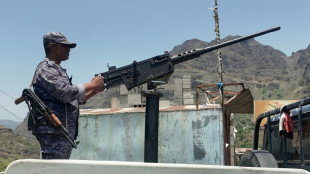 Saudi capital issues first air raid alert since renewed fighting in Yemen

 Martin edges title rival Marquez for Austrian MotoGP pole

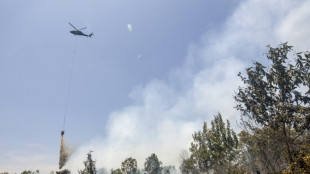 Indonesia accepts Malaysia's help to tackle wildfires

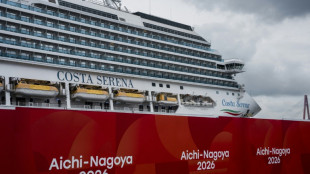 Indians living in Japan on stand-by to house Asian Games athletes
 Trump signs bill authorizing sweeping Russia sanctions

 Protesters form human chain at Kennedy Center after Trump threat

 Death toll from attack at police HQ in Pakistan rises to 31

 Trump says Denmark to give US 'permanent control' over Greenland security
 Kennedy Center: future unclear for iconic Washington arts hub

 Trump claims 'infinite' Greenland security deal with Denmark

 Helicopters battle wildfire threatening Ecuador's capital

 Brentford batter Chelsea to undo Alonso's promising start
 Kane hits Bundesliga century as Bayern rout Union
 Trump says CNN, MS NOW, Politico banned from White House
Following the UN's COP28 climate talks in oil-fuelled Dubai, the COP29 conference is headed for the historic cradle of oil, Azerbaijan, which is in the midst of a gas boom.
The former Soviet republic of 10 million people brimming with hydrocarbons is on track to increase its gas production by 35 percent in the next 10 years, contrary to efforts to contain global warming.
Despite the last COP in the United Arab Emirates ending with an unprecedented call to "transition" away from fossil fuels, an analysis by the NGO Global Witness based on data from Rystad Energy shows that the upcoming COP29 host aims to hike its gas production from 35 billion cubic metres (bcm) in 2024 to 47 bcm in 2034.
The forecast covers actual production figures, estimates from approved developments, as well as confirmed reserves not yet being exploited. They exclude condensate, a liquid form of gas.
"Azerbaijan is ramping up its gas production when the world urgently needs to kick its fossil fuel habit," Patrick Galey, senior investigator at Global Witness, told AFP.
The country, a member of OPEC+, has a long history with hydrocarbons, which make up half of its economy.
In the 13th century, the explorer Marco Polo wrote of black gold gushing from the ground. But today, it is gas that is surpassing its declining oil fields.
In the 2030s, gas is expected to represent more than half of fossil fuel production in the country, according to Rystad Energy data reported to AFP.
Its exports to Turkey, Europe, Georgia and Iran have already multiplied threefold since 2015.
Baku's expanding gas production is fuelled mainly by the Shah Deniz project, one of the biggest gas fields in the world, discovered in 1999 along the Caspian Sea and operated by BP, while other projects like Umid-Babek and Absheron will increase their output.
The Absheron field, which began production in July, is operated by Jocap, which includes national oil and gas firm Socar, as well as France's TotalEnergies and Adnoc, the national Emirati firm that was cause for controversy at the last COP.
- Replacing Russia -
The UAE, host of COP28, had designated Sultan Al Jaber, the head of Adnoc, to preside over the UN conference, a choice which angered NGOs and certain countries.
The scene is set to be similar in 2024 with COP being presided over by the former Socar executive, Mukhtar Babayev, minister of ecology and natural resources.
The country is a "small player" compared to major oil giants like the United States, Russia and Saudi Arabia, but it plays an important role "for Southern Europeans at least", said Swapnil Babele, an analyst at Rystad Energy.
To replace Russian gas, Europe turned to Azerbaijan, whose share of imports grew from 2 percent in 2021 to 4 percent in 2023, according to Eurostat.
After Azerbaijan's seizure of the Armenian Nagorno-Karabakh enclave, these supplies were criticised by MEPs, who lamented the EU's timid reaction to Azerbaijan's offensive and called for the suspension of negotiations on the gas agreement signed in 2022.
The objective of that agreement was ambitious: double gas exports to 20 bcm by 2027.
The main obstacle to meeting that potential "is their pipelines capacity", according to Babele.
Baku exports its gas through a southern European gas corridor, a network of pipelines that reaches Europe via Georgia and Turkey, including the Trans Adriatic Pipeline (TAP).
Its capacity could be doubled but only with hefty investments that would require "long-term commitments" from European gas operators, according to Rystad.
F.Fehr--VB



