-
 Indian crude-sensitive shares gain after 13% oil-price decline
-
Kuwait finance minister holds economic cooperation talks at COMCEC
-
 Stocks and dollar fall as Democratic election gains reshape markets
-
82-Year-Old American Transforms 2003 Mercedes Sprinter into Permanent Home

-
 Abdul El-Sayed Wins Michigan Senate Seat, Becoming First Muslim in US Congress
-
Abdul El-Sayed declares victory in Michigan Senate contest

-
 Kuwait marks key events and anniversaries from national history
-
Democrats capture US Congress in sweeping midterm victory

-
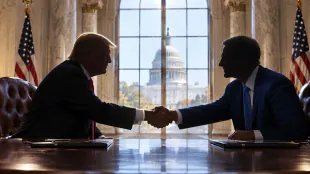 Trump congratulates Democrats and signals willingness to cooperate
-
Manchester United rallies past Roma as PSG dominates in Champions League

-
 Enel to Install Solar Panels at Niterói Waste Management Facility
-
Qatar prime minister advances mediation through diplomatic calls

-
 Qatar sees tentative opening for renewed regional diplomacy
-
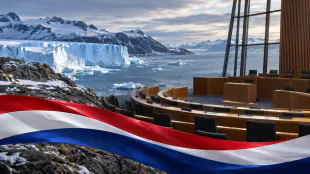
Greenland parliament approves security agreement with United States
-
 Qatar Tourism joins Pacific Asia Travel Association at London travel market
-
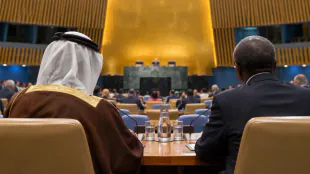
Qatar envoy meets incoming UN General Assembly president
-
 Abdul El-Sayed Wins Michigan Senate Seat in Historic Election
-
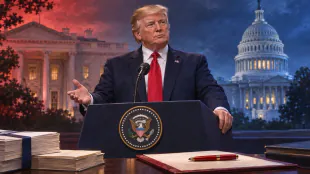
Trump Signals Willingness to Work With Democrats After Midterm Defeat
-
 Qatar media bodies discuss support for humanitarian initiatives
-
Pitches and Keynote Speakers Are Confirmed for Blue Magic Netherlands on November 17

Nations start negotiations over global plastics treaty
Nations grappling with the plastic "suffocating" nature and leaching into food and the human body began fresh negotiations on Monday toward a UN treaty to tackle the growing problem.
Some 175 countries agreed last year to conclude by 2024 a binding agreement to combat the plastic pollution littering oceans, mountain tops, and even blood and breast milk.
Negotiators have met twice already but the week-long talks in Kenya are the first to consider the concrete details of the treaty, and tensions have emerged over what it should contain.
At the opening of the high-stakes talks at the UN Environment Programme (UNEP) headquarters in Nairobi, nations were urged to find common ground for the sake of the planet.
"Nature is suffocating, gasping for breath. All ecosystems... are under threat from plastic pollution," said Jyoti Mathur-Filipp, executive secretary of the treaty negotiating committee.
"We hold in our hands the power to correct this destructive course."
Ahead of the talks, 60 so-called "high ambition" nations called for binding rules to reduce the use and production of plastic, which is made from fossil fuels, a measure supported by many environment groups.
It is one of the many options proposed in a treaty draft published in September that is driving the deliberations in Nairobi.
More than 2,000 delegates are attending, including representatives from oil and gas companies, environment lobbies and civil society groups.
- Divergent views -
The gathering comes just before crucial climate talks in the oil-rich United Arab Emirates later this month that are set to be dominated by debates over the future of fossil fuels.
Countries with large petrochemical industries have generally preferred to focus on recycling and better waste management rather than the caps on new plastic or product bans demanded by some parties to the talks.
UNEP executive director Inger Andersen said nations agreed to develop a treaty that dealt with the entire life cycle of plastics -- from production at their source, to their design and use, to final disposal.
"We cannot recycle our way out of this mess," she told AFP on the sidelines of the talks.
Environment groups attending in Nairobi accused a so-called "low ambition coalition" of largely oil-producing nations including Iran, Saudi Arabia and Bahrain of aligning to frustrate the talks.
"We have seen these countries move actively... to prevent these negotiations from beginning, to prevent them from moving to substance, and to slow down those discussions," Carroll Muffett from the Center for International Environmental Law told reporters.
- 'Existential threat' -
The International Council of Chemical Associations, a global industry body, said the treaty "should be focused on ending plastic pollution, not plastic production".
"We support a legally binding agreement that accelerates circularity where new plastics are made from used plastics," the council, which counts Dow and ExxonMobil among its members, told AFP on Monday.
Plastic production has doubled in 20 years and in 2019, a total of 460 million tonnes was manufactured, according to the OECD.
Despite growing awareness of the problem, current trends suggest that production could triple by 2060 without action.
Around two-thirds of plastic waste is discarded after being used only once or a few times, and less than 10 percent is recycled, with millions of tonnes dumped in the environment or improperly burned.
"This kind of polluting our environment is unacceptable and is essentially an existential threat to life, to humanity and everything in between," Kenyan President William Ruto said at the plenary opening.
The Nairobi meeting is the third of five sessions in a fast-tracked process aiming to conclude negotiations next year so the treaty can be adopted by mid-2025.
Campaigners say delegates in Nairobi must make considerable headway to remain on course and warned against time-consuming debates over procedural matters that caused friction at the last talks in Paris in June.
T.Germann--VB