-
 Inter Milan and Italy icon Mazzola dies aged 83
-
UK actor Naomi Watts honoured at Spain film festival
-
 Saudi capital issues first air raid alert since renewed fighting in Yemen
-
Japan emperor declares Asian Games open after turbulent build-up
-
 Martin edges title rival Marquez for Austrian MotoGP pole
-
Asian Games open with unity message after troubled build-up
-
 Indonesia accepts Malaysia's help to tackle wildfires
-
Denmark hails 'binding' Greenland deal with Trump
-
 Indians living in Japan on stand-by to house Asian Games athletes
-
We don't want Games host Japan losing money, says Asian Olympic official
-
 Trump signs bill authorizing sweeping Russia sanctions
-
Ed Sheeran returns to stage after Palestinian controversy
-
 Protesters form human chain at Kennedy Center after Trump threat
-
Asian Games to open in Japan after troubled build-up
-
 Death toll from attack at police HQ in Pakistan rises to 31
-
Drone owners rush to offload devices ahead of Beijing ban

-
 Trump says Denmark to give US 'permanent control' over Greenland security
-
Trump's beef policies irk Texas ranchers, testing their loyalty
-
 Kennedy Center: future unclear for iconic Washington arts hub
-
Nvidia, OpenAI CEOs to attend Xi dinner at White House

-
 Trump claims 'infinite' Greenland security deal with Denmark
-
Anthropic picks Accenture for in-house AI safety evaluation

-
 Helicopters battle wildfire threatening Ecuador's capital
-
Balogun returns as Monaco beat Lens to continue strong Ligue 1 start

-
 Brentford batter Chelsea to undo Alonso's promising start
-
'Pause' on overt repression in Venezuela, but reforms still needed: HRW
-
 Kane hits Bundesliga century as Bayern rout Union
-
Global stocks mixed as yen falls despite Bank of Japan rate hike
-
 Trump says CNN, MS NOW, Politico banned from White House
-
Cuba hit with seventh major blackout of the year
-
 Hushing and hedging: US companies retreat on climate
-
Murray out with concussion so Wentz will start for Vikings

-
 Springboks to face Fiji before 2027 Rugby World Cup
-
UN chief 'deeply regrets' US visa refusal to Abbas for annual meeting
-
 Nigeria miners struggled to breathe in cell before 37 died: survivors
-
England quick Carse to face no charges over alleged nightclub assault

-
 McIlroy on the charge at PGA Championship as Reed withdraws
-
Mancini brings nine newcomers into the first squad of his Italy comeback
-
 McIlroy on the charge at PGA Championship
-
Czechs level Davis Cup tie against USA as South Korea eye Finals

-
 Crisis-wracked Volkswagen warns of 10-bn-euro hit to profits
-
New France boss Zidane confirms Mbappe as captain after naming first squad

-
 Costa Rica's Grynspan tops third informal poll for UN chief: diplomat
-
California governor signs order to explore AI 'kill switch'

-
 Stock markets retreat after central bank rate hikes
-
Head leads run spree as Australia win Zimbabwe ODI series
-
 Russia labels director of Cannes Grand Prix winner a 'foreign agent'
-
In-form Raphinha wants to finish career at Barcelona

-
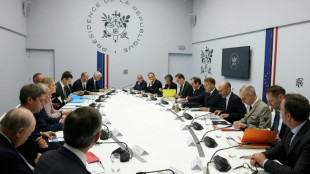 Macron warns of Russian 'hybrid' threat after meeting presidential hopefuls
-
Warren Buffett steps down as Berkshire Hathaway chairman

Australia to restart 'essential' aerial shooting of wild horses
Australia approved on Friday the aerial shooting of wild horses in one of the country's largest national parks, resuming a contentious practice that authorities described as "essential" to protect native wildlife.
An estimated 19,000 wild horses -- known locally as "brumbies" -- live in Kosciuszko National Park, a number that has increased by a third in the last two years.
New South Wales state authorities want to cut the population to 3,000 by mid-2027.
The national park already traps, re-homes and shoots horses from the ground, but the state's environment minister Penny Sharpe said this was not enough.
"Threatened native species are in danger of extinction and the entire ecosystem is under threat," she said. "We must take action.
"This was not an easy decision -- no one wants to have to kill wild horses," she added.
Aerial shooting from helicopters was used for a brief period in 2000, when more than 600 wild horses were shot over three days.
But a fierce public backlash resulted in the method being banned.
Those against culling say the horses are part of Australia's national identity, a nostalgic reminder of the days when tough stockmen and women worked in the country's rugged Snowy Mountains.
Brumbies are thought to have descended from horses that escaped or were abandoned around the early 1800s.
A storied rugby team in the country's capital Canberra is named after the animal.
They were celebrated by the Australian "bush poet" Banjo Paterson, who waxed lyrical about a "wild, unhandled" creature who roamed the mountains "'neath moon and star".
But early farmers had a less romantic view: they saw the animals as pests that ruined fences and competed with livestock for feed.
It is a view echoed by conservationists, who say the horses destroy native plants through grazing and trampling, increase soil erosion, foul waterholes, and cause the collapse of wildlife burrows.
"The unique and complex ecosystems of the Australian Alps have been trampled for too long," said Jacqui Mumford, head of the Nature Conservation Council, an environmental group.
She said brumbies' activities damaged "at least 25 threatened alpine flora and 14 threatened alpine fauna species, including the iconic corroboree frog, the broad-toothed rat and rare alpine orchids".
Australia has up to 400,000 feral horses, according to the Invasive Species Council, a conservation group that has welcomed the decision to resume aerial shooting.
The group's advocacy manager, Jack Gough, said the brumby population in New South Wales was growing at a rate of between 15 and 18 percent a year.
The number of wild horses being removed through the current methods was "well below" the population growth rate, he added.
C.Bruderer--VB