Africa climate demands zero in on finance, debt and taxes / Photo: © AFP/File

 Greenland parliament approves security agreement with United States

 Qatar envoy meets incoming UN General Assembly president

 Trump Signals Willingness to Work With Democrats After Midterm Defeat

 Galloway accuser could not foresee publishing-sector fallout, lawyer argues

 New York City Center revives In the Heights as a timely community story

 Godzilla Minus Zero shifts focus toward postwar human drama

 Mehbooba Mufti urges dialogue and renewed Central Asia links for Kashmir

 Seacliff Healthcare Seeks Specialist GP in Thirroul

 US stocks fall before midterm Election Day as technology shares weaken

 BLS Polymers makes strong market debut at ₹248 per share

 Petrol and diesel prices remain broadly steady across major Indian cities

 Reliance shares remain in focus after near-12% surge

 2026 Arizona Midterms: Key Races, Ballot Measures, and Voter Deadlines

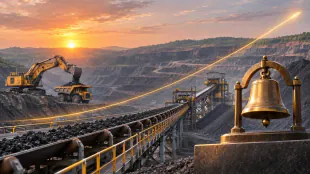 Coal India prepares possible $1 billion Mahanadi Coalfields listing

Renewables funding, global finance reform and carbon taxes head the demands formulated by African nations at a summit in Nairobi this week as the world heads towards annual climate negotiations.
The final declaration at the first-ever pan-African climate summit laid out a vision pitching the continent as a key to decarbonisation but also calling for funds and reform to help it achieve those goals.
The gathering -- a stepping stone towards the UN's COP28 starting in Dubai in November -- also urged a swifter phase-down of coal and an end to fossil fuel subsidies.
Key points:
- Clean energy push -
Africa has around 40 percent of the world's potential energy resources, but attracted only two percent of investment in this field over the last decade.
The summit called for an investment of $600 billion -- a tenfold increase from current levels -- to meet a renewable energy target of 300 gigawatts (GW) by 2030 up from 56 GW in 2022.
Boosting clean energy is critical for the continent of 1.4 billion, where around 600 million people lack access to any electricity at all.
- Carbon taxes -
To free up funds, the declaration urged world leaders to "rally behind the proposal for a [global] carbon taxation regime," which would include levies on fossil fuel trade, maritime transport and aviation.
It said these could be complemented by a global financial transaction tax.
The calls build momentum for proposals that have been championed by developing countries in recent years.
At a climate finance summit in Paris in June, French President Emmanuel Macron backed the shipping levy, but said it would need support from China, the United States and other European nations to work.
US climate envoy John Kerry told reporters the US government had "not yet embraced any particular carbon pricing mechanism", but was analysing various proposals.
- Finance reforms -
The declaration threw its support behind a growing chorus of calls for reform of the global financial architecture.
Leaders called for debt restructuring and relief, a particular concern in the region staggering under the burden of mounting repayment costs.
The demands are likely to add traction for reforms of the World Bank and International Monetary Fund (IMF) in the run-up to their annual meeting in October.
- Green industrialisation -
Leaders made a call for lower-carbon growth that leapfrogs "traditional industrial development".
A key demand is to make Africa the place where its raw materials -- including critical minerals needed for green technologies -- are processed, and not just exported.
Leaders also pinned hopes on carbon markets to monetise the region's carbon-absorbing ecosystems like rainforests, mangroves and peatlands.
The summit drew hundreds of millions in pledges for carbon markets, but the largely-unregulated industry is controversial and has seen accusations that some offsets -- particularly forest-based ones -- do little for the environment or exploit communities.
"Carbon credits are really 'pollution permits' and they help rich polluting companies from making actual cuts in their own emissions," said Mohamed Adow of energy and climate think tank Power Shift Africa.
- Climate impacts -
The declaration reiterated calls for wealthy countries to make good on their pledge to deliver $100 billion a year in climate finance to poorer nations by 2020.
Leaders also demanded the swift implementation of the "loss and damage" fund, created at the COP27 meeting in Egypt last year to cover the costs faced by vulnerable countries from climate-linked natural disasters and impacts like rising sea levels.
That call "cannot be ignored", said Christian Aid's Joab Bwire Okanda, calling for developing countries to play a key role in the fund's design.
- United voice -
Leaders of major regional fossil fuel economies like South Africa and Nigeria were notably absent from the summit.
However, the African Union said the declaration had unanimous support.
The declaration "sends a strong signal to the international community," said Laurence Tubiana, head of the European Climate Foundation.
S.Gantenbein--VB