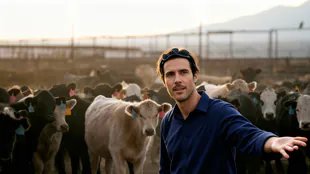
Pace of increase in CO2 concentration has increased three-fold: report / Photo: © AFP

 Greenland parliament approves security agreement with United States

 Qatar envoy meets incoming UN General Assembly president

 Trump Signals Willingness to Work With Democrats After Midterm Defeat

 Galloway accuser could not foresee publishing-sector fallout, lawyer argues

 New York City Center revives In the Heights as a timely community story

 Godzilla Minus Zero shifts focus toward postwar human drama

 Mehbooba Mufti urges dialogue and renewed Central Asia links for Kashmir

 Seacliff Healthcare Seeks Specialist GP in Thirroul

 US stocks fall before midterm Election Day as technology shares weaken

 BLS Polymers makes strong market debut at ₹248 per share

 Petrol and diesel prices remain broadly steady across major Indian cities
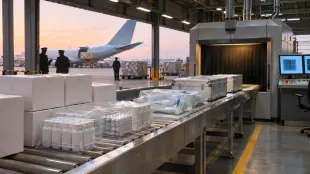
 Reliance shares remain in focus after near-12% surge

 2026 Arizona Midterms: Key Races, Ballot Measures, and Voter Deadlines

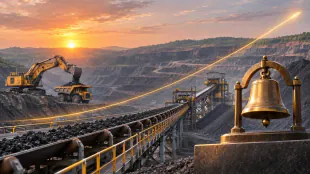 Coal India prepares possible $1 billion Mahanadi Coalfields listing

The pace at which the concentration of CO2 in the atmosphere is increasing -- due mostly to the burning of fossil fuels -- has jumped three-fold in five decades, an international report said Wednesday.
In 2022, there were on average 417 parts per million (ppm) of the planet-warming gas in the air, up 2.2 ppm from the year before, according to the annual State of the Climate report led by scientists from the US National Oceanic and Atmospheric Administration.
This is 50 percent more than pre-industrial levels and "the highest in the modern atmospheric record and in paleoclimate records dating back as far as 800,000 years", the report noted.
Annual growth in global mean carbon dioxide averaged across the last decade has tripled since the 1960s, it found.
Throughout 2022, "the climate continued to respond to the ongoing increase in greenhouse gases and resulting warming," it added.
Temperatures reached record-breaking highs during the year across multiple continents, including peaks above 50 degrees Celsius (122 degrees Fahrenheit) in Western Australia and 47C in the American southwest.
Sustained heatwaves ravaged South and East Asia, with China enduring the worst heatwave ever recorded anywhere in the world.
Tempered by the impact of a climate-cooling La Nina, a naturally occurring weather phenomenon across the southern Pacific, 2022 was ranked as the fifth or sixth warmest year since reliable records began in the mid-19th century.
The last eight years -- 2015 through 2022 -- are the eight warmest on record, and 2023 is on track to be warmer than any of them, the EU's climate monitoring service said Wednesday.
The increase in global drought area that began in mid-2019 continued into 2022, according to the report.
August 2022 saw a new high for the percentage of global land area -- 20 percent -- experiencing moderate or worse drought conditions.
More frequent and intense heatwaves last year also contributed to the second-greatest loss of mass for mountain glaciers across the globe since satellite tracking began in the 1970s.
Glaciers in the Swiss Alps lost a record six percent of their volume.
Across the two-thirds of the planet covered by seas, nearly 60 percent of ocean surface waters experienced at least one marine heatwave, according to the report.
Oceans have trapped and stored more than 90 percent of the excess heat generated by global warming, keeping Earth's land surface liveable for most of its inhabitants.
N.Fournier--BTB