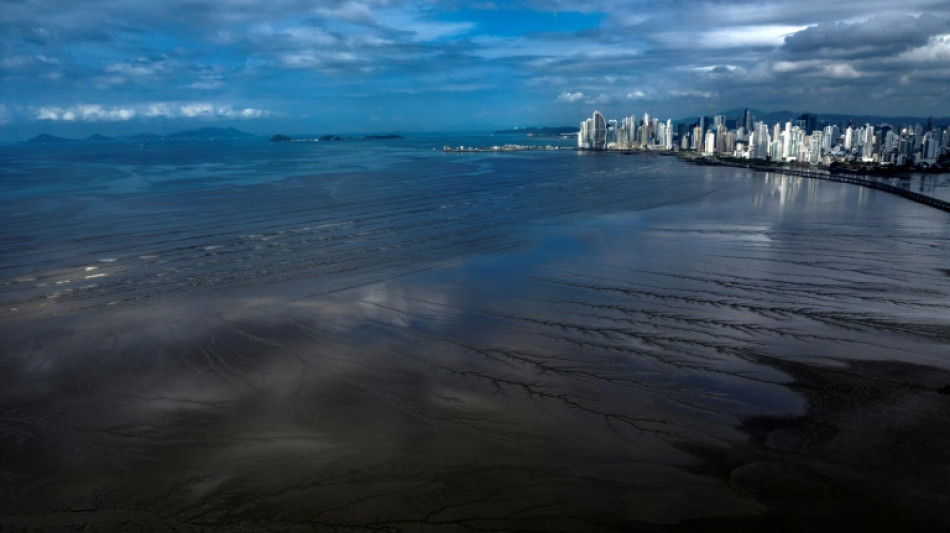
Countries meet to halt wide-ranging threats against oceans / Photo: © AFP/File

 Mancini brings nine newcomers into the first squad of his Italy comeback

 Czechs level Davis Cup tie against USA as South Korea eye Finals

 New France boss Zidane confirms Mbappe as captain after naming first squad
 California governor signs order to explore AI 'kill switch'

 Head leads run spree as Australia win Zimbabwe ODI series

 In-form Raphinha wants to finish career at Barcelona
 Warren Buffett steps down as Berkshire Hathaway chairman
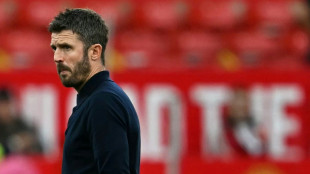 Carrick confident Man Utd can 'work through' tough time

 Mbappe ends Nike partnership to join Swiss brand On

 Liverpool boss Iraola puts Bournemouth love affair on hold

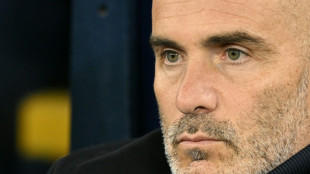 'A disaster' if Man City do not win says Maresca after flawless start

 Kerry James Marshall: American 'blackness' painter celebrated in Europe

 Spain coach De la Fuente offers 'full support' to people of Ceuta

 Russia seizes assets of Nestle, French firms over West's Ukraine support

 England can build on World Cup 'spirit', says Tuchel

 UNESCO can be 'moderator' in AI debate: chief to AFP

 Infantino 'must go', says German FA vice-president

 Russia seizes assets of Nestle, French firms

 Japan's busiest rail station tests robot bins

 Anthropic says AI systems moving towards building themselves

 Asian stocks boosted by falling oil, yen weakens after BoJ rate hike

 Pakistan court blocks expulsion of Afghan medical college students

 Athletes 'can't take it any more' as Asian Games issues mount
 Allen lights up Bills' new stadium with 41-31 win over Lions

 Afghan medical students in Pakistan hope court stops college expulsions

The world's oceans and the multiple threats they face, from climate change and pollution to overfishing and mining, will be the focus of a global conference in Panama this week.
Some 600 leaders of government, the business sector, green groups and academics will gather in the Central American country on Thursday and Friday to discuss expanding marine protected areas (MPAs), assuring a sustainable ocean-derived "blue economy", and reducing stressors on an invaluable but at-risk resource.
Covering three-quarters of Earth, the oceans are home to 80 percent of all life on the planet, and provide nourishment for more than three billion people as well as a crucial avenue for global trade.
"We cannot commit to saving our ocean ecosystems without limiting human activities within them," states the website for the eighth edition of the international Our Ocean conference.
"This vital asset is in danger from global warming, unsustainable practices, illegal fishing, reckless pollution, and the loss of marine habitats," it added.
According to Courtney Farthing, policy director at Global Fishing Watch, the conference "is key to maintain political will on ocean action."
By bringing governments, activists and industry together, "we are able to increase our collective understanding of the issues our ocean is facing and successful initiatives that could be more widely adopted," she told AFP.
Observers say the Our Ocean gathering is important as it is the only conference to address all ocean-related issues under a single roof.
It also serves as a public stage for governments, through senior ministers in attendance, to put on a show of political will.
- Fear for sea floor -
The conference takes place amid growing concern about multinational companies eyeing minerals on the ocean floor.
These include so-called manganese nodules, settled on the seabed, that contain metals critical in battery production. Environmentalists say harvesting them would be devastating for deep-sea ecosystems.
"There isn't really a big extraction today, but there is a significant advance in technology and machinery to eventually extract minerals, mainly rare minerals," Maximiliano Bello of non-governmental organization Mission Blue explained.
Conference delegates will not adopt agreements or vote on proposals, but rather announce voluntary "commitments" to ocean protection.
Host Panama, for example, intends to announce an expansion of the Banco Volcan protected area it created in 2015.
But activists, such as Juan Manuel Posada of the MarViva NGO, want to see such projects expanded to "waters beyond national jurisdiction" given that much of the illegal fishing takes place on the lawless high seas.
"We would also like to see declarations by countries declaring 30 percent of their marine areas as protected areas before the target date" of 2030 that was agreed at the COP15 on biodiversity in Canada last year, he added.
- 'John Kerry's baby' -
The Our Ocean conferences were launched in 2016 on the initiative of John Kerry, a former US secretary of state who was appointed as White House special envoy for climate.
"Our Ocean is the baby of John Kerry," said Bello.
Kerry is due to attend the conference with US oceanographer Sylvia Earle, who has led more than 100 ocean expeditions in a nearly 60-year career and who founded Mission Blue.
Kerry and Earle "tried to change the concept that there are many oceans, because in reality there is only one ocean that is spread over the whole planet," said Bello.
S.Keller--BTB



