WHO kicks off annual assembly amid hantavirus, Ebola crises / Photo: © AFP

 Global stocks rally on lower oil prices, US-China hopes
 EU proposes energy rating for data centres
 Schoolgirl Yu scorches to second gold as doping case rocks Games
 Putin's party secures record score in Russia election

 Haupt Koleksiyonu: Paranın Biz İnsanlar Hakkında Anlattıkları
 Spanish PM says unregulated AI could be 'devastating'

 Yu, 13, smashes record again with second Asian Games gold

 Switzerland to play without Xhaka over fake Covid certificate
 From Korean Chipmakers to Leveraged Semiconductor ETFs: STARTRADER Launches 49 New 24/7 Stock and ETF CFDs

 Thai badminton player first doping case at Asian Games: testers

 Колекція Гаупта: Що гроші розповідають про нас, людей
 German far-right AfD poll winner says Merz 'twilight' has begun

 Flights scrapped, evacuations urged as Typhoon Dujuan nears Japan
 China confirms Xi to visit US this week for Trump talks
 مجموعة هاوبت: ما يكشفه المال عنا نحن البشر

 Colecția Haupt: Ce ne dezvăluie banii despre noi, oamenii

 Sisters of jailed Pakistan ex-PM Imran Khan arrested

 African players in Europe: Semenyo brace helps City top table

 'For my family': India boxer beats hardship, injury to go for Games gold
 Indonesia doing 'everything' but still struggling to curb fires
 Once decried as 'human cockfighting', MMA wants Olympic spot
 China's Yu, 13, great for swimming says multiple Olympic medallist
 Putin's party set to retain power after Russia vote hit by cyberattacks, drones
 Germany's Merz under pressure after bruising state election losses
 Messi, Miami frustrated in 2-2 draw with San Diego
World Health Organization member states gather for their annual meeting in Geneva Monday amid concern over deadly hantavirus and Ebola outbreaks and uncertainty over announced US and Argentinian withdrawals.
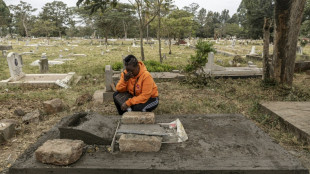
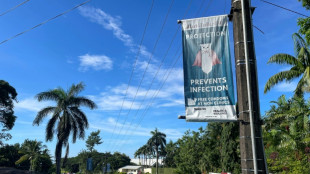
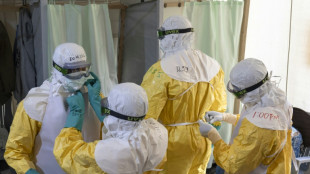
While the rare hantavirus outbreak on a cruise ship that has gripped global attention is not officially on the agenda, it is expected to feature prominently in the discussions, as is the fresh Ebola outbreak in the Democratic Republic of Congo.
A diplomatic source, who asked not to be identified, said it would be interesting to see how such outbreaks are used by WHO "to promote other things", including "to pressure (the United States and Argentina) not to go".
The meeting of the WHO's annual decision-making assembly, which runs through Saturday, comes after a difficult year for the organisation. It has been weakened by the announced US withdrawal and by funding cuts that have forced it to slash its budget and staff numbers.
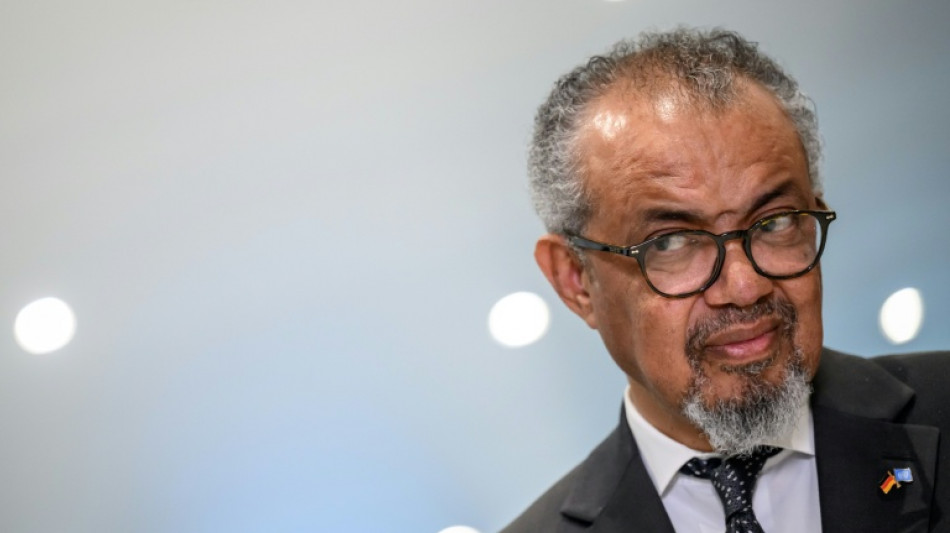
"We are stable now and moving forward," WHO chief Tedros Adhanom Ghebreyesus insisted at the end of April.
Diplomats and observers agreed.
The situation is "still fragile, but they've been successful in mobilising most of the funds" required for the next two years, Surie Moon, co-director of the Global Health Centre at the Geneva Graduate Institute, told AFP.
And the hantavirus crisis provided "a clear illustration of why the world needs an effective, trusted, impartial, reliably-funded WHO", she added.
-UN, Argentina withdrawals -
But significant divisions persist.
Continued disagreement between wealthy and developing nations has for instance blocked progress on the key missing piece of the WHO's landmark 2025 pandemic treaty, with negotiations now expected to be extended for another year.
It also remains unclear what, if anything, would be decided on the US and Argentinian announced withdrawals.
US President Donald Trump, on his first day back in office in January 2025, handed the WHO his country's one-year withdrawal notice, with Argentina soon following suit.
The WHO, whose constitution does not include a withdrawal clause, has not confirmed either withdrawal.
The United States reserved the right to withdraw when it joined the WHO in 1948 -- on condition of giving one year's notice and meeting its financial obligations in full for that fiscal year.
While the notice period has expired, Washington has still not paid its 2024 or 2025 dues, owing around $260 million.
When WHO's executive board met in January, Israel submitted a resolution to approve Argentina's withdrawal -- something countries are expected to discuss during the assembly -- but not a word was said about the US leaving.
Diplomats and observers indicated there was broad agreement that it would be better to maintain a grey zone around whether the US was effectively out.
"We hope that it will go past quietly on the US," a European diplomat said on condition of anonymity.
- Election campaign -
The assembly will take place as the process towards next year's election of a new WHO chief heats up.
No one has yet declared their candidacy, but announcements are possible this week ahead of the nomination deadline of September 24.
A number of sensitive resolutions are also on the table, including on Ukraine, the Palestinian territories and Iran, which could spark heated debate.
Much of this week's discussions will centre on whether to launch a formal reform process for the so-called "global health architecture" -- a mishmash of organisations that do not always work together and often overlap.
"Among the issues to be explored are what is best done at the global and regional levels... and what is a national responsibility?" Helen Clark, co-chair of The Independent Panel for Pandemic Preparedness and Response and a former New Zealand prime minister, told AFP.
Canadian Health Minister Marjorie Michel told AFP that "this current crisis, with the departure of key players, also allows ... the WHO to re-examine its strategy with its members".
A key focus will be to ensure the process does not see "controversial" issues, such as climate and sexual and reproductive health rights, sacrificed in the context of dwindling international aid funding.
"The objective is to ensure better coordination among health actors, so that no activities or populations are left behind," said a diplomatic source, who asked not to be named.
But Thiru Balasubramaniam of the Knowledge Ecology International NGO, told AFP the WHO had already "scaled down some of their activities, including in terms of sexual and reproductive health".
S.Gantenbein--VB