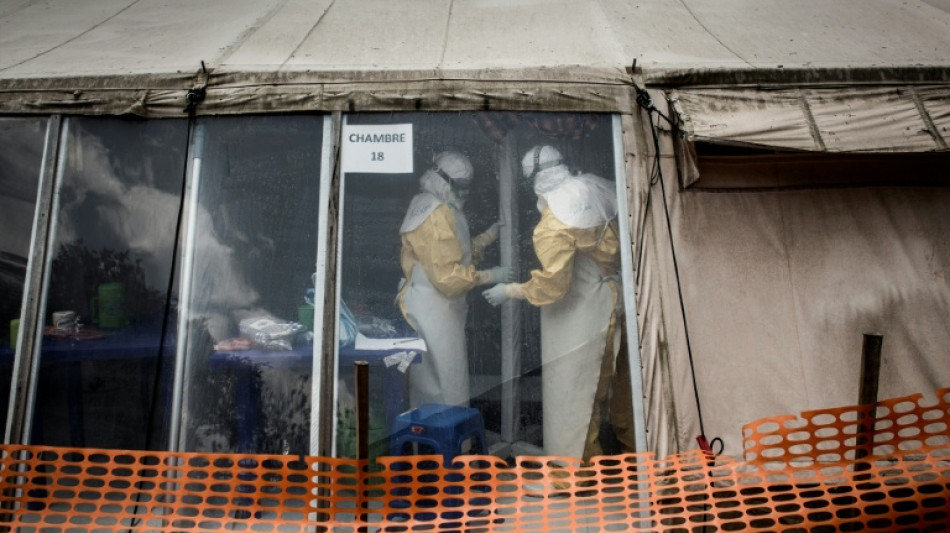
No vaccine for latest Ebola outbreak, DRC warns as as toll hits 80 / Photo: © AFP/File

 Global stocks rally on lower oil prices, US-China hopes

 EU proposes energy rating for data centres

 Schoolgirl Yu scorches to second gold as doping case rocks Games

 Putin's party secures record score in Russia election

 Haupt Koleksiyonu: Paranın Biz İnsanlar Hakkında Anlattıkları

 Spanish PM says unregulated AI could be 'devastating'

 Yu, 13, smashes record again with second Asian Games gold

 Switzerland to play without Xhaka over fake Covid certificate

 From Korean Chipmakers to Leveraged Semiconductor ETFs: STARTRADER Launches 49 New 24/7 Stock and ETF CFDs

 Thai badminton player first doping case at Asian Games: testers

 Колекція Гаупта: Що гроші розповідають про нас, людей
 German far-right AfD poll winner says Merz 'twilight' has begun

 Flights scrapped, evacuations urged as Typhoon Dujuan nears Japan

 China confirms Xi to visit US this week for Trump talks

 مجموعة هاوبت: ما يكشفه المال عنا نحن البشر

 Colecția Haupt: Ce ne dezvăluie banii despre noi, oamenii

 Sisters of jailed Pakistan ex-PM Imran Khan arrested

 African players in Europe: Semenyo brace helps City top table

 'For my family': India boxer beats hardship, injury to go for Games gold

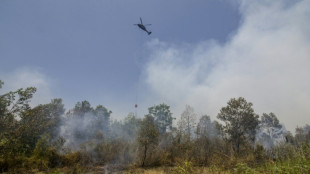 Indonesia doing 'everything' but still struggling to curb fires

 Once decried as 'human cockfighting', MMA wants Olympic spot

 China's Yu, 13, great for swimming says multiple Olympic medallist

 Putin's party set to retain power after Russia vote hit by cyberattacks, drones
 Germany's Merz under pressure after bruising state election losses

 Messi, Miami frustrated in 2-2 draw with San Diego

A new Ebola outbreak in the Democratic Republic of Congo that has caused scores of deaths has a "very high lethality rate" and no vaccine nor specific treatment, the country's health minister warned Saturday.
"The Bundibugyo strain has no vaccine, no specific treatment," Kamba told a press briefing in Kinshasa.
"This strain has a very high lethality rate which can reach 50 percent," Samuel-Roger Kamba told a press briefing in Kinshasa.
Earlier Saturday, ministry officials said the death toll had already reached 80, up from 65 initially reported the previous day.
The strain has also claimed one life in neighbouring Uganda, officials said Saturday, that of a DRC national.
That correlated with an announcement late Friday by Uganda's health ministry, which said a 59-year-old man from the DRC had died in Kampala after being admitted earlier in the week. His body was repatriated the same day.
Tests showed the victim in Uganda was infected with the Bundibugyo strain, first identified in 2007.
Vaccines are only available for the Zaire strain, which was identified in 1976 and has a higher fatality rate of 60-90 percent.
African health officials had confirmed the latest outbreak Friday in Ituri province in northeastern DRC, bordering Uganda and South Sudan, according to the Africa Centres for Disease Control and Prevention (CDC Africa).
Adding to concerns of spread are significant cross-border population movements in the region affected.
According to Kamba, patient zero was a nurse who reported to a health facility in provincial capital Bunia on April 24, with symptoms suggesting Ebola.
Symptoms include fever, haemorrhaging and vomiting.
- High risk of spread -
The officials warned Friday of a high risk of spread, with initially 65 deaths reported in the 17th outbreak to hit the DRC.
The country's health ministry said overnight the number of fatalities had risen to "246 suspected cases notified and 80 deaths".
"It is a large outbreak," said Jay Bhattacharya, acting director of the US Centers for Disease Control and Prevention (CDC) on Friday.
The previous outbreak of the highly contagious haemorrhagic fever which has killed some 15,000 people in Africa over the past 50 years, despite advances in vaccines and treatment, was last August in the central region.
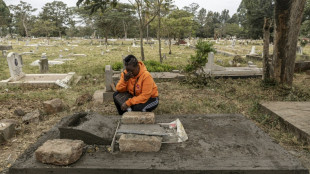
That episode killed at least 34 people, before being declared eradicated in December.
Nearly 2,300 people died in the deadliest outbreak in the DRC between 2018 and 2020.
Ebola, believed to have originated in bats, is a deadly viral disease spread through direct contact with bodily fluids. It can cause severe bleeding and organ failure.
According to the World Health Organization, outbreaks over the past half century have seen a mortality rate among those affected of between 25 percent and as high as 90 percent.
The virus spreads from person to person through bodily fluids or exposure to the blood of an infected persons, who become contagious only once they display symptoms. The incubation period can last up to 21 days.
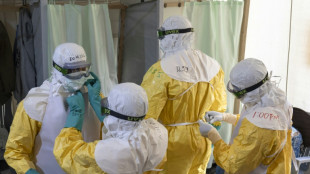
"Given the uncertainties and severity of the illness, there is concern about the scale of transmission in affected communities," the WHO stated Friday as it prepared to airlift some five tonnes of material including infection prevention gear from Kinshasa.
Large-scale transport of medical equipment is a challenge in a country of more than 100 million people which is four times the size of France with a poor communications infrastructure.
L.Maurer--VB