Armenia's underground salt clinic at centre of alternative medicine debate / Photo: © AFP

 Global stocks rally on lower oil prices, US-China hopes

 EU proposes energy rating for data centres
 Schoolgirl Yu scorches to second gold as doping case rocks Games

 Putin's party secures record score in Russia election

 Haupt Koleksiyonu: Paranın Biz İnsanlar Hakkında Anlattıkları
 Spanish PM says unregulated AI could be 'devastating'
 Yu, 13, smashes record again with second Asian Games gold
 Switzerland to play without Xhaka over fake Covid certificate

 From Korean Chipmakers to Leveraged Semiconductor ETFs: STARTRADER Launches 49 New 24/7 Stock and ETF CFDs
 Thai badminton player first doping case at Asian Games: testers

 Колекція Гаупта: Що гроші розповідають про нас, людей
 German far-right AfD poll winner says Merz 'twilight' has begun
 Flights scrapped, evacuations urged as Typhoon Dujuan nears Japan
 China confirms Xi to visit US this week for Trump talks
 مجموعة هاوبت: ما يكشفه المال عنا نحن البشر

 Colecția Haupt: Ce ne dezvăluie banii despre noi, oamenii

 Sisters of jailed Pakistan ex-PM Imran Khan arrested

 African players in Europe: Semenyo brace helps City top table

 'For my family': India boxer beats hardship, injury to go for Games gold
 Indonesia doing 'everything' but still struggling to curb fires
 Once decried as 'human cockfighting', MMA wants Olympic spot
 China's Yu, 13, great for swimming says multiple Olympic medallist
 Putin's party set to retain power after Russia vote hit by cyberattacks, drones
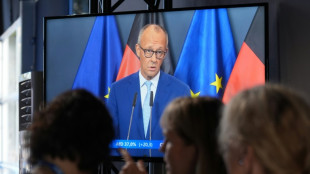 Germany's Merz under pressure after bruising state election losses

 Messi, Miami frustrated in 2-2 draw with San Diego

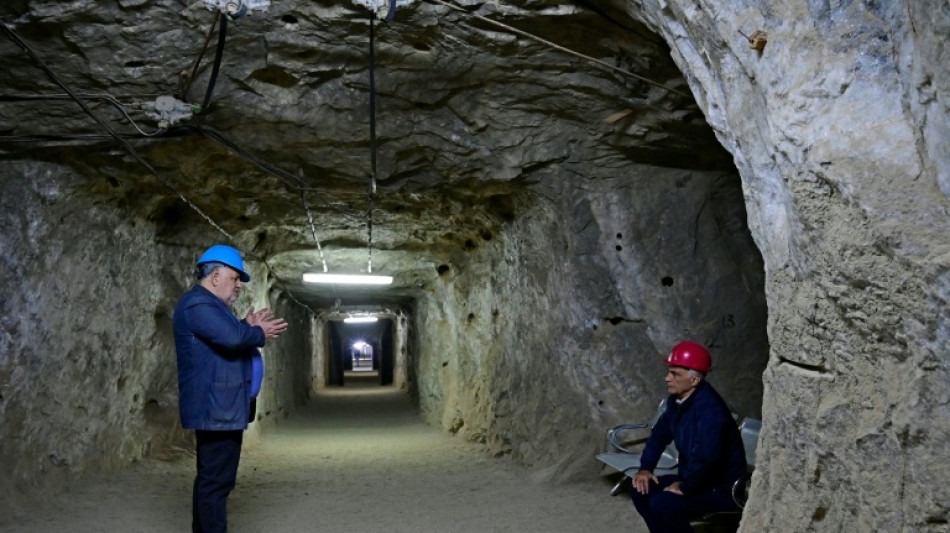
A mining cage drops deep beneath the Armenian capital, carrying asthma patients in helmets down into a salt cave clinic -- an alternative treatment centre whose future is now at risk.
State funding for the speleotherapy centre in the Avan salt mine was recently cut as the small Caucasus nation rolls out a new universal healthcare system that does not cover alternative medicine.
The fate of the facility is a snapshot of a global debate over the effectiveness and role of alternative treatments in modern healthcare, a particularly pressing issue in developing countries.
Speleotherapy -- where patients spend several hours a day in caves breathing mineral-rich underground air believed to reduce respiratory irritation -- has been practised for decades in parts of Eastern Europe and the former Soviet Union.
At the bottom of the Avan salt mine, a dim tunnel carved from grey rock salt leads to the Soviet-era centre.
"We are 235 metres (770 feet) underground, and yet this is a hospital," doctor Anush Voskanyan said as she guided visitors into a vast chamber illuminated by rows of electric lamps.
Opened in 1987 inside a former mine, the centre spans about 4,000 square metres of tunnels converted into treatment and recreation areas. For decades, patients received therapy for free under the state's healthcare programme.
But in 2019, Armenia's health ministry stopped financing the clinic, arguing that speleotherapy does not meet evidence-based medical standards required for public funding.
Annual patient numbers dropped from more than 300 to around 50.
"We struggle to pay salaries and cannot renew equipment that has not been replaced since opening," clinic director Gurgen Hakobyan told AFP, saying its future was "uncertain."
- Global strategy -
Globally, supporters of traditional or complementary remedies say they have been overlooked by Western medicine.
The World Health Organisation's members have called for a global effort to build a solid evidence base, regulate practitioners and integrate treatments that are proven safe and effective.
Supporters of speleotherapy say the cave environment, free from dust and allergens and with a constant temperature of around 19-20C, helps ease symptoms of asthma and allergies.
Voskanyan, the doctor, said she had seen children make full recoveries after treatment.
But the scientific evidence remains limited.
"Since 1985, only two dissertations have been written on the subject," said Lamara Manukyan, chair of the Armenian Association of Internal Medicine.
"We lack statistics and large-scale research."
She said speleotherapy "helps conventional medicine ease a patient's condition" and should be considered a "complementary therapy rather than a standalone treatment."
- 'Salvation' -
Armenia's health ministry said its decision to stop the clinic's funding reflects broader healthcare priorities as the country transitions toward universal medical insurance.
"At this stage, priority is given to diseases with high mortality rates such as cancer and cardiovascular illnesses," ministry spokeswoman Mariam Tsatryan told AFP.
"Alternative and wellness treatments cannot be included in insurance coverage."
Many of the centre's patients -- and its doctors -- lament the decision to strip funding.
Armen Stepanyan, a 63-year-old engineer from Russia's Siberian city of Kemerovo, has travelled to Yerevan annually for more than a decade after developing severe asthma.
"I tried everything -- sanatoriums, treatments -- nothing helped," he said. "Here I felt improvement after the first course."
Supporters argue the centre's significance extends beyond medicine.
Manukyan, the chair of the internal medicine association, described it as part of Armenia's tradition of natural therapies, including mineral springs and spa resorts.
"There is no reason to dismantle an existing structure and lose a valuable tradition."
The government, which holds a stake in the centre, is trying to privatise its shares, raising hopes that private investment could preserve or repurpose it as a research or medical tourism centre.
"It would be really sad if the clinic had to shut down because it simply ran out of funding," said Stepanyan, the patient.
"I realised this was my salvation. This is the only place where I see real results."
P.Vogel--VB