-
 British Museum bans photos of Bayeux Tapestry as crowds linger
-
US networks halt Trump coverage over White House ban

-
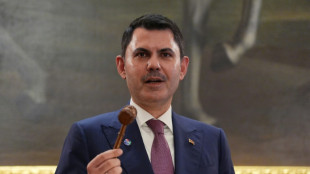 COP31 host says AI climate footprint to be a summit priority
-
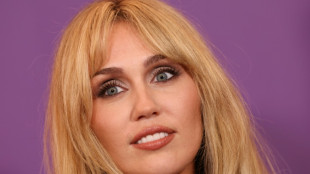
French singer accuses Miley Cyrus of plagiarism
-
 Berlin's far-left vote winners reject anti-semitism charges
-
EU fines Google 403 mn euros for location data breach

-
 Mancini eager for 'new adventure' on Italy return
-
'Best is yet to come,' says De la Fuente after Spain extension

-
 Mbappe says having Zidane as France coach 'like a film'
-
Why diesel prices are rising more than crude oil

-
 Palmer, Rice out of England Nations League squad
-
COP31 host says AI's climate footprint to be a summit priority
-
 German auto workers stage mass protests in bid to save jobs
-
Renewables hit record in 2025, but world must move faster: report

-
 Embattled Merz vows to keep ruling for 'democratic future' of Germany
-
US media outlets to sue Trump administration after White House ban

-
 Merz vows to keep ruling coalition together for 'democratic future' of Germany
-
Global stocks rally on lower oil prices, US-China hopes
-
 Spain coach De la Fuente gets new deal after World Cup success
-
EU proposes energy rating for data centres

-
 Pressure grows on Germany's Merz after election defeats
-
Schoolgirl Yu scorches to second gold as doping case rocks Games

-
 China's Zhang beats Japan rivals to Asian Games gymnastics gold
-
Putin's party secures record score in Russia election
-
 Samlingen Haupt: Vad pengar avslöjar om oss människor
-
Haupt Koleksiyonu: Paranın Biz İnsanlar Hakkında Anlattıkları

-
 Tens of thousands of German auto workers protest to save jobs
-
Spanish PM says unregulated AI could be 'devastating'

-
 हॉप्त् कलेक्शन: पैसा हमारे बारे में एक इंसान के रूप में क्या प्रकट करता है
-
Yu, 13, smashes record again with second Asian Games gold

-
 Συλλογή Haupt: Τι αποκαλύπτει το χρήμα για εμάς τους ανθρώπους
-
Switzerland to play without Xhaka over fake Covid certificate

-
 TradersYard Shifts Focus to Futures Trading
-
From Korean Chipmakers to Leveraged Semiconductor ETFs: STARTRADER Launches 49 New 24/7 Stock and ETF CFDs

-
 ハウプト・コレクション:お金が人間について明かすこと
-
Thai badminton player first doping case at Asian Games: testers

-
 하우프트 컬렉션: 돈이 우리 인간에 대해 드러내는 것
-
Колекція Гаупта: Що гроші розповідають про нас, людей

-
 Indonesia doing 'everything' but struggling to curb fires
-
German far-right AfD poll winner says Merz 'twilight' has begun
-
 Sbírka Haupt: Co o nás lidech prozrazují peníze
-
Flights scrapped, evacuations urged as Typhoon Dujuan nears Japan

-
 North and South Korea fight out draw in niggly Asian Games clash
-
China confirms Xi to visit US this week for Trump talks
-
 Officials say man shot, wounded by ICE agent in Texas
-
مجموعة هاوبت: ما يكشفه المال عنا نحن البشر

-
 豪普特收藏:金錢如何揭露人類的本質
-
Colecția Haupt: Ce ne dezvăluie banii despre noi, oamenii

-
 Kolekcja Haupta: Co pieniądze mówią o nas, ludziach
-
Sisters of jailed Pakistan ex-PM Imran Khan arrested
US vaccine panel upends hepatitis B advice in latest Trump-era shift
An advisory panel appointed by the Trump administration's vaccine-skeptic health secretary voted Friday to stop recommending that all newborns in the United States receive a hepatitis B vaccine.
The move to end the decades-old recommendation is the panel's latest contentious about-face on vaccine policy since its overhaul by Health Secretary Robert F. Kennedy Jr. earlier this year.
US health authorities previously recommended all babies, not just those born to mothers believed to have hepatitis B, receive the first of three vaccine doses just after birth.
The approach aimed, in part, to prevent transfers from mothers who unknowingly had hepatitis B or had falsely tested negative, and had virtually eradicated infections of the potentially deadly liver disease among young people in the country.
After delaying the vote by a day, the panel on Friday passed its new recommendation for "individual-based decision-making," in consultation with a health care provider, when children are born to mothers testing negatively for the disease.
The decision to vaccinate at birth should "consider vaccine benefits, vaccine risks, and infection risks."
The new recommendation was immediately condemned by several medical groups who noted widespread shortcomings in US maternal health screening as well as the possibility of infections from others.
"This irresponsible and purposely misleading guidance will lead to more hepatitis B infections in infants and children," American Academy of Pediatrics President Susan J. Kressly said in a statement.
The vote was 8-3. Trump-appointed officials at the Centers for Disease Control and Prevention (CDC) are expected to formally adopt the recommendations at a later date.
The panel also voted to recommend that babies who are not vaccinated at birth wait at least two months to get the initial dose, and that blood tests be done to measure antibodies before a second dose.
- Panel overhaul -
After becoming health secretary, Kennedy sacked every member of the once-staid Advisory Committee on Immunization Practices (ACIP), replacing them with figures whose vaccine-skeptic views track more closely with his own.
It has since set to work on reviewing prior recommendations -- already tweaking advice on Covid-19 and measles shots.
Medical experts fear the push could further contribute to declining vaccination rates in the United States.
The panel on Friday also began a broader review of the childhood vaccination schedule, and sparked further controversy by allowing testimony from lawyer Aaron Siri, a close Kennedy associate known for spreading unfounded theories on the subject.
While US President Donald Trump vocally supports Kennedy's policies, some in the Republican Party have pushed back, notably Louisiana Senator Bill Cassidy.
Medical doctor Cassidy condemned the ACIP decision on Friday, noting the original recommendation was never "a mandate" to get the jab.
CDC officials "should not sign these new recommendations and instead retain the current, evidence-based approach," he said on X.
Cassidy's expression of alarm, like his prior statements against Kennedy, provoked criticism after he provided the key vote to confirm the health secretary in February.
- 'Do no harm' -
The United States had urged universal vaccination at birth against hepatitis B since 1991, advice also recommended by China, Australia and the World Health Organization.
But several ACIP members argued Friday's decision would align the United States with other economically developed countries such as France and Britain.
The repercussions of the ACIP's vaccine recommendations are broad because federal guidelines often dictate whether vaccines are paid for by health insurance companies in the United States, where a vaccine can cost hundreds of dollars.
But the committee's influence is waning amid withering criticism from the US scientific and medical community, with Democratic-led states announcing they will no longer follow its recommendations.
Ahead of the vote, Dr. Cody Meissner, one of the few dissenting voices on the advisory committee, urged his colleagues not to change the current recommendations.
"Do no harm is a moral imperative. We are doing harm by changing this wording," he warned.
M.Vogt--VB