US panel votes to end recommending all newborns receive hepatitis B vaccine / Photo: © AFP

 British Museum bans photos of Bayeux Tapestry as crowds linger

 COP31 host says AI climate footprint to be a summit priority
 Berlin's far-left vote winners reject anti-semitism charges

 Mancini eager for 'new adventure' on Italy return

 Mbappe says having Zidane as France coach 'like a film'

 Palmer, Rice out of England Nations League squad
 German auto workers stage mass protests in bid to save jobs

 Embattled Merz vows to keep ruling for 'democratic future' of Germany

 Merz vows to keep ruling coalition together for 'democratic future' of Germany

 Spain coach De la Fuente gets new deal after World Cup success

 Pressure grows on Germany's Merz after election defeats

 China's Zhang beats Japan rivals to Asian Games gymnastics gold
 Samlingen Haupt: Vad pengar avslöjar om oss människor

 Tens of thousands of German auto workers protest to save jobs

 हॉप्त् कलेक्शन: पैसा हमारे बारे में एक इंसान के रूप में क्या प्रकट करता है

 Συλλογή Haupt: Τι αποκαλύπτει το χρήμα για εμάς τους ανθρώπους

 TradersYard Shifts Focus to Futures Trading

 ハウプト・コレクション:お金が人間について明かすこと

 하우프트 컬렉션: 돈이 우리 인간에 대해 드러내는 것

 Indonesia doing 'everything' but struggling to curb fires

 Sbírka Haupt: Co o nás lidech prozrazují peníze

 North and South Korea fight out draw in niggly Asian Games clash
 Officials say man shot, wounded by ICE agent in Texas

 豪普特收藏:金錢如何揭露人類的本質

 Kolekcja Haupta: Co pieniądze mówią o nas, ludziach
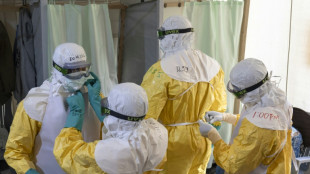
An advisory panel appointed by the Trump administration's vaccine-skeptic health secretary voted Friday to stop recommending that all newborns in the United States receive a hepatitis B vaccine.
The move to end the three-decade-old recommendation is the panel's latest contentious decision overturning long-standing medical advice since its overhaul by Health Secretary Robert F. Kennedy Jr., who has spent decades spreading anti-vaccine rhetoric.
US health authorities previously recommended all babies receive the first of three hepatitis B shots just after birth, mainly to prevent infections from mothers who unknowingly had the liver disease or had falsely tested negative.
The approach has virtually eradicated hepatitis B infections among young people in the United States.
Hepatitis B is a viral liver disease that can be transmitted by the mother during childbirth and puts those affected at high risk of death from cirrhosis or liver cancer.
After delaying the vote by a day, the panel eventually passed its new recommendation for "individual-based decision-making," in consultation with a health care provider, when children are born to mothers testing negatively for the disease.
The decision should "consider vaccine benefits, vaccine risks, and infection risks."
It also recommends that babies who are not vaccinated at birth wait at least two months to get the initial dose.
Under Kennedy, the Advisory Committee on Immunization Practices (ACIP) is now composed largely of figures criticized by the scientific community for lack of expertise or their promotion of vaccine-skeptic theories.
The vote was 8-3. Trump-appointed officials at the Centers for Disease Control and Prevention (CDC) are widely expected to formally adopt the recommendations at a later date.
Since 1991, US health officials have recommended the hepatitis B vaccine for newborns, as is done in countries including China and Australia and is recommended by the World Health Organization.
But several ACIP members have argued that Friday's decision aligns the US vaccination schedule with those of other economically developed countries such as France and Britain.
Medical experts say such a change is risky in the United States, pointing to shortcomings in maternal screening, with delays likely to cause a drop in vaccination rates in a country where access to health care can be complicated.
"This irresponsible and purposely misleading guidance will lead to more hepatitis B infections in infants and children," American Academy of Pediatrics President Susan J. Kressly said in a statement.
The repercussions of the ACIP's vaccine recommendations are broad because federal guidelines often dictate whether vaccines are paid for by health insurance companies in the United States, where a vaccine can cost hundreds of dollars.
On Friday, the panel is set to begin a broader review of the childhood vaccination schedule and the composition of vaccines.
But the committee's influence is waning amid withering criticism from the US scientific and medical community, with Democratic-led states announcing they will no longer follow its recommendations.
Some in Trump's own Republican party have also pushed back against the ACIP's actions, including Louisiana Senator Bill Cassidy.
Cassidy, a medical doctor who provided a key vote to allow Kennedy's nomination to succeed, condemned the ACIP's decision, noting the original recommendation was "NOT a mandate" to get the jab.
CDC officials "should not sign these new recommendations and instead retain the current, evidence-based approach," he said on X.
Ahead of the vote, Dr. Cody Meissner, one of the few dissenting voices on the advisory committee, urged his colleagues not to change the current recommendations.
"Do no harm is a moral imperative. We are doing harm by changing this wording," he warned.
L.Stucki--VB