'HIV-free generations': prevention drug rollout brings hope to South Africa
/ Photo: © AFP

 British Museum bans photos of Bayeux Tapestry as crowds linger

 COP31 host says AI climate footprint to be a summit priority

 Berlin's far-left vote winners reject anti-semitism charges

 Mancini eager for 'new adventure' on Italy return

 Mbappe says having Zidane as France coach 'like a film'

 Palmer, Rice out of England Nations League squad
 German auto workers stage mass protests in bid to save jobs

 Embattled Merz vows to keep ruling for 'democratic future' of Germany

 Merz vows to keep ruling coalition together for 'democratic future' of Germany
 Spain coach De la Fuente gets new deal after World Cup success
 Pressure grows on Germany's Merz after election defeats

 China's Zhang beats Japan rivals to Asian Games gymnastics gold
 Samlingen Haupt: Vad pengar avslöjar om oss människor

 Tens of thousands of German auto workers protest to save jobs

 हॉप्त् कलेक्शन: पैसा हमारे बारे में एक इंसान के रूप में क्या प्रकट करता है

 Συλλογή Haupt: Τι αποκαλύπτει το χρήμα για εμάς τους ανθρώπους

 TradersYard Shifts Focus to Futures Trading

 ハウプト・コレクション:お金が人間について明かすこと

 하우프트 컬렉션: 돈이 우리 인간에 대해 드러내는 것

 Indonesia doing 'everything' but struggling to curb fires
 Sbírka Haupt: Co o nás lidech prozrazují peníze

 North and South Korea fight out draw in niggly Asian Games clash

 Officials say man shot, wounded by ICE agent in Texas

 豪普特收藏:金錢如何揭露人類的本質

 Kolekcja Haupta: Co pieniądze mówią o nas, ludziach
Kegoratile Aphane did not flinch when the needle pierced the skin of her right buttock, injecting a yellow-coloured drug touted as a revolution that could end the HIV pandemic.
The 32-year-old was among the very first South Africans -- and Africans -- to receive a dose of lenacapavir, a drug taken twice a year that has been shown to reduce the risk of HIV transmission by more than 99.9 percent, making it functionally akin to a powerful vaccine.
"I didn’t even feel any pain," she said with a relieved smile after receiving the two injections that form the first dose.
Five other patients received lenacapavir Tuesday at a clinic outside of Pretoria as part of an implementation study by a Wits University research unit and funded by the international health agency Unitaid, which works on ensuring equitable access to medical innovations.
The study would enrol 2,000 people and "follow them for at least a year to understand how this prevention option works in real life", according to the Wits Reproductive Health and HIV Institute (RHI)'s Saiqa Mullick.
- 'Life-changing' -
With close to one in five adults living with HIV, South Africa has one of the highest rates in the world, and reported last year the highest number of new infections for any single country -- 170,000.
Until now, the best available prevention drug for HIV-negative people was through a daily pill.
The twice-yearly lenacapavir jab would be "life-changing", said the clinic’s manager Magdaline Ngwato, especially for young people who struggled to maintain the daily schedule of the pill and groups like sex workers or LGBTQ patients who wanted to be discreet.
"Now with the injection it will be fine, because you can do it secretly," she told AFP, adding that many people had already expressed interest.
"Even mothers said they will send their children to come get it," Ngwato enthused. "I think we are going to have a lot of HIV-free generations."
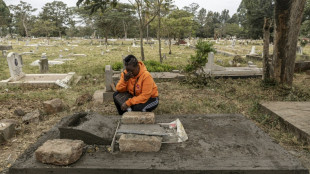
For Aphane, the decision to take the groundbreaking treatment was deeply personal.
"I just lost my mom in 2021 -- she was HIV positive," she told AFP with emotion.
"It's a very, very, very painful disease. So that's why I (am) so serious about this. Let me be safe and try this."
Twenty-year-old student Katlego, who asked to speak under a pseudonym, was "proud" to have received one of the very first doses.
A broader national rollout is expected next year, starting with 400,000 doses that would be received through a deal between lenacapavir's manufacturer Gilead Sciences and the Global Fund to Fight AIDS.
While lenacapavir currently costs around $28,000 a year in the United States, generic versions are expected to be available from 2027 at around $40 per year in more than 100 countries through agreements by Unitaid and the Gates Foundation with Indian pharmaceutical companies.
The rollout could usher in a different world for Aphane's daughters and future grandchildren, she said.
"The more they introduce, the more they talk about it, the more they show (it) everywhere, it will save lives," she said.
L.Maurer--VB