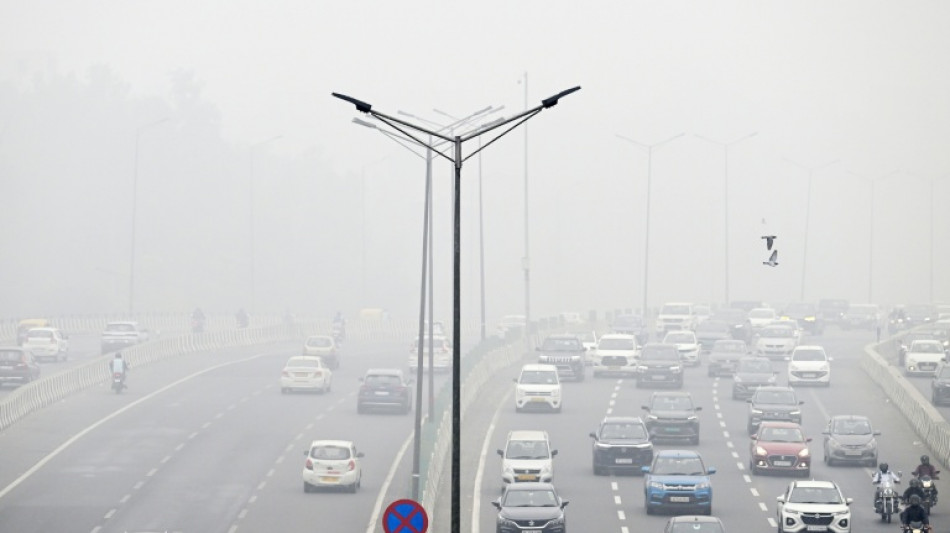
India's pollution refugees fleeing Delhi's toxic air / Photo: © AFP

 British Museum bans photos of Bayeux Tapestry as crowds linger
 COP31 host says AI climate footprint to be a summit priority

 Berlin's far-left vote winners reject anti-semitism charges

 Mancini eager for 'new adventure' on Italy return

 Mbappe says having Zidane as France coach 'like a film'

 Palmer, Rice out of England Nations League squad
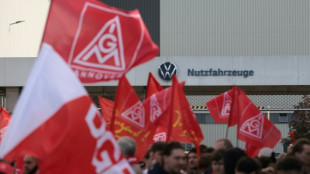 German auto workers stage mass protests in bid to save jobs
 Embattled Merz vows to keep ruling for 'democratic future' of Germany

 Merz vows to keep ruling coalition together for 'democratic future' of Germany

 Spain coach De la Fuente gets new deal after World Cup success

 Pressure grows on Germany's Merz after election defeats

 China's Zhang beats Japan rivals to Asian Games gymnastics gold

 Samlingen Haupt: Vad pengar avslöjar om oss människor

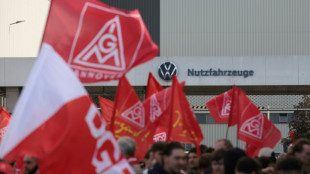 Tens of thousands of German auto workers protest to save jobs

 हॉप्त् कलेक्शन: पैसा हमारे बारे में एक इंसान के रूप में क्या प्रकट करता है

 Συλλογή Haupt: Τι αποκαλύπτει το χρήμα για εμάς τους ανθρώπους

 TradersYard Shifts Focus to Futures Trading

 ハウプト・コレクション:お金が人間について明かすこと

 하우프트 컬렉션: 돈이 우리 인간에 대해 드러내는 것

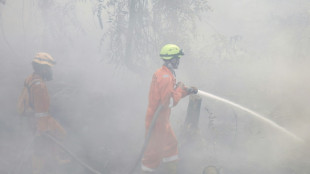 Indonesia doing 'everything' but struggling to curb fires

 Sbírka Haupt: Co o nás lidech prozrazují peníze
 North and South Korea fight out draw in niggly Asian Games clash

 Officials say man shot, wounded by ICE agent in Texas

 豪普特收藏:金錢如何揭露人類的本質

 Kolekcja Haupta: Co pieniądze mówią o nas, ludziach
Pollution levels in India's capital shaped Natasha Uppal and her husband's decision on parenthood -- either raise their child away from the city, or stay put and remain childless.
New Delhi and the surrounding metropolitan area, home to more than 30 million people, consistently tops world rankings for air pollution.
Uppal, who grew up in the city, often considered leaving -- especially on days spent indoors with air purifiers humming, or when she battled severe migraines.
The turning point came when the couple decided to try for a baby.
"When we thought about what we can curate for our child in Delhi," she told AFP, "the air just became such a blocker for so many of those things."
In 2022, they relocated to Bengaluru and, days later, she discovered she was pregnant.
They are among a small but growing number of families leaving Delhi because of health risks linked to air pollution.
Uppal, the 36-year-old founder of maternal health support group Matrescence India, said leaving was the "best decision".
Air pollution in Bengaluru can still sometimes hit three times World Health Organization (WHO) limits.
But that is far below Delhi's months-long haze -- and means her son "is in and out of the house as many times as he likes".
Clean air is "something that is a basic human right", she said. "Everyone should be able to take (it) for granted."
- 3.8 million deaths -
Each winter, Delhi is blanketed in acrid smog, a toxic mix of crop-burning, factory emissions and choking traffic.
Levels of PM2.5 -- cancer-causing microparticles small enough to enter the bloodstream -- have surged to as much as 60 times WHO limits.
Despite pledges of reform, measures such as partial vehicle bans or water trucks spraying mist have done little to clear the air.
This year, authorities promise cloud-seeding trials to cut pollution.
A study in The Lancet Planetary Health last year estimated 3.8 million deaths in India between 2009 and 2019 were linked to air pollution.
The UN children's agency warns that polluted air puts children at heightened risk of acute respiratory infections.
For Vidushi Malhotra, 36, the breaking point came in 2020 as her two-year-old son fell ill repeatedly.
"We had three air purifiers running continuously, and then I needed more," she said.
A year later, Malhotra, her husband and son moved to Goa. She urged friends to follow, starting what she calls a "mini-movement". A few did.
"I have to keep going back and see my loved ones go through this," she added. "That really makes me sad."
- Nebulisers, inhalers -
Others, like Delhi resident Roli Shrivastava, remain but live in constant anxiety.
The 34-year-old keeps inhalers for her smoke allegies and nebulisers ready for her toddler, whose cough worsens each winter.
"The doctor told us winter will be difficult," she said. "He just told us, 'When your kid starts coughing at night, don't even call me -- just start nebulising.'"
As winter nears, Shrivastava is preparing for another season indoors -- restricting outdoor play for her son, running air purifiers and checking air quality daily.
When the family visits relatives in the southern city of Chennai, her son's health improves "drastically".
"His nose stops running, his cough goes away," she said.
Shrivastava and her husband, who both work with a global advocacy group, say they would have left Delhi long ago if not for the "jobs we love and the opportunities".
Relocation, she admits, is never far from their minds.
"I don't think at the rate it's going, Delhi is a good place to raise kids -- when it comes to air pollution at least."
O.Schlaepfer--VB