RFK Jr panel votes against ingredient targeted by anti-vaxxers / Photo: © GETTY IMAGES NORTH AMERICA/AFP

 Rybakina ousts Osaka to book Toronto semi-final against Gauff
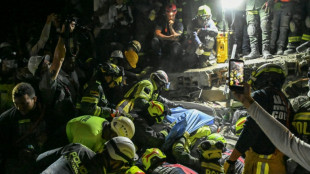 Colombia rescuers find woman alive as quake death toll passes 240

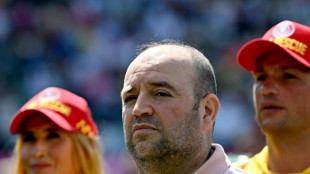 Charges dropped against Bondi Beach attack hero

 Parched and desperate for rain, Kazakhstan turns to cloud-seeding

 The perfect storm that turbocharged Venezuela's twin quakes
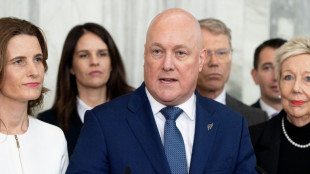
 2.4 million girls banned from Afghan schools since Taliban return: UNESCO

 Colombians dig through rubble as quake death toll surpasses 240

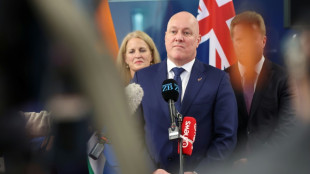 New Zealand's ruling party meets to decide PM Luxon's fate

 Total solar eclipse to spellbind Europe

 Jodar, Nakashima to make Masters semis debuts in Montreal

 Chilean veteran Sanchez signs with MLS club Montreal

 Cristiano Ronaldo marries long-term partner Georgina Rodriguez

 Oil prices higher, stocks mixed ahead of inflation report
 Jacobs into 100m final with eye on third title

 Eight-try New Zealand cruise to tour victory over Sharks
 Trump's secret plane swap triggers questions and confusion
 California calls Paramount's threat to leave state 'blackmail'

 PSG 'want to win everything', says Luis Enrique

 Barred from elections, Russia's anti-war party vows to fight on

 Jaissle states Newcastle ambition but urges patience

 NBA star Cooper Flagg trading card a slam dunk for lucky buyer

 ForumPay Expands Payment Infrastructure with New Card and Bank Transfer Acceptance Solution

 Oil prices higher, stocks flat ahead of inflation report
 Orban-critic ex-judge becomes Hungary president after predecessor ouster

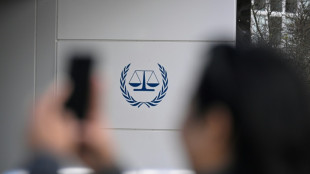 US rights groups sue Trump over ICC sanctions

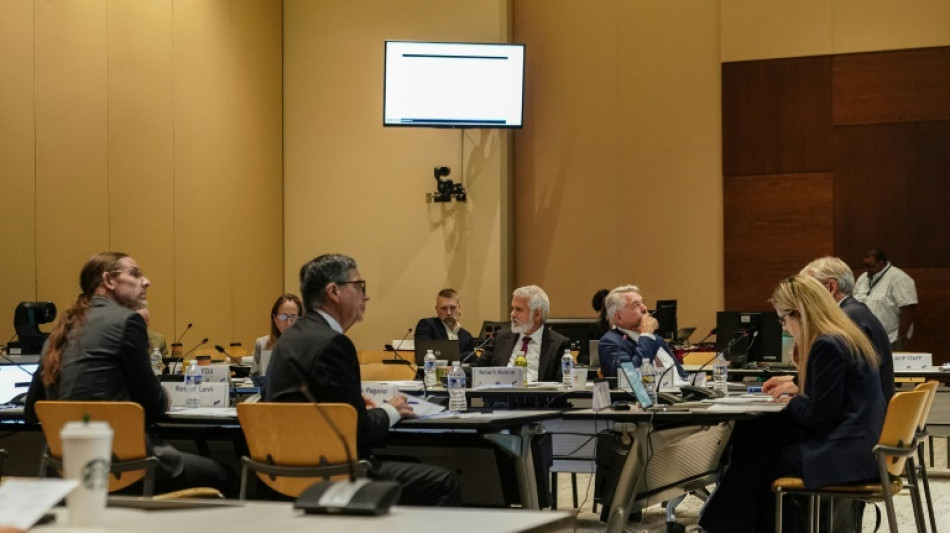
A newly appointed US medical panel voted Thursday to oppose the use of a vaccine ingredient long targeted by Health Secretary Robert F. Kennedy Jr. over debunked claims it causes autism.
Thimerosal, a preservative that prevents bacterial and fungal contamination in multidose vials, has been extensively studied, with authorities including the World Health Organization finding no evidence of harm beyond minor injection-site reactions.
Though thimerosal is now rarely used in US vaccines, its inclusion on the Advisory Committee on Immunization Practices' agenda alarmed experts, who say the move has effectively embedded anti-vaccine talking points into national policy.
Kennedy -- who spent decades spreading vaccine misinformation before becoming President Donald Trump's top health official -- abruptly fired all 17 ACIP members earlier this month, accusing them of conflicts of interest.
Across three votes, his new handpicked panelists recommended that thimerosal be removed from influenza vaccines for children, pregnant women and finally all adults.
Cody Meissner, a professor of pediatrics at Dartmouth University and the lone voice of dissent, said: "The risk from influenza is so much greater than the nonexistent risk as far as we know from thimerosal," adding that he was worried about the decision's global impact.
Although 96 percent of US flu vaccines in the 2024-2025 season did not contain thimerosal, the preservative remains important globally, particularly in multidose vials that must be punctured repeatedly, raising the risk of contamination.
Thimerosal contains an artificial form of mercury called ethylmercury that is cleared from the body far more quickly than the form of the substance found in nature.
US manufacturers voluntarily removed it from most pediatric vaccines in 2001.
- 'Platform for anti-vaccine talking points' -
"The fact that it's being brought up again -- something that's already been adjudicated -- shows how the ACIP is becoming a platform for anti-vaccine talking points to come back to life long after most of us thought they'd been put to rest," Amesh Adalja, an infectious disease specialist at Johns Hopkins University, told AFP.
Ahead of the vote, Lyn Redwood, a nurse and former leader of the anti-vaccine group Children's Health Defense, which Kennedy once chaired, was invited to present arguments against thimerosal.
A previous version of her slideshow, which was posted online before the meeting, was removed without explanation after it was found to contain a fabricated citation, likely the result of an AI hallucination.
The Centers for Disease Control and Prevention had prepared a rebuttal to Redwood's presentation, but it was mysteriously removed from the meeting website.
Robert Malone, a new panel member known for spreading misinformation during the Covid-19 pandemic, including promoting the antiparastic drug ivermectin to treat the virus, later said the CDC document had not been approved by the Office of the Secretary.
Earlier in the meeting, the same panel voted to recommend a new antibody treatment against RSV, a common respiratory illness and the leading cause of infant hospitalization in the United States.
Clesrovimab, recently approved by the Food and Drug Administration, is administered as a single shot to newborns and young babies entering their first respiratory syncytial virus season.
Marketed as Enflonsia by Merck, it was shown in clinical trials to significantly reduce RSV infections and hospitalizations among infants.
J.Sauter--VB