Gavi: vaccine alliance facing US funding cuts / Photo: © AFP

 Netanyahu got his Iran war, but maybe not his desired result

 Hyundai reaches tentative deal with workers after strikes
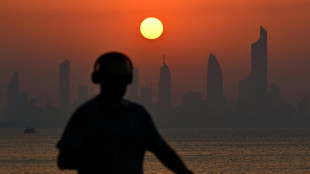 Once its saviour, US puts Kuwait in Iran's crosshairs
 Australia's top music charts ban AI songs
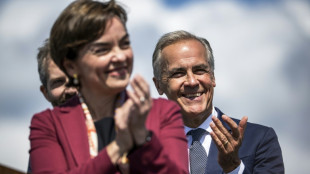 How the French language contributed to the US-Canada trade war
 Nevada sues US govt over cuts to Colorado River access
 'Special' Chelsea forwards inspire Alonso's winning start
 Alonso makes winning start with Chelsea as Rogers scores on debut
 Oil prices fall as Bessent outlines new steps to punish Iran
 Saudi Arabia to invest $7 bn in theme parks near Paris

 British PM Burnham hits a chord on Kyiv visit
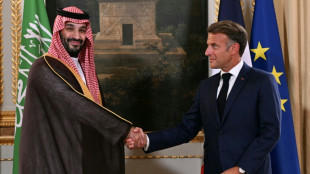
 Saudi Arabia to invest $7 bn in theme parks near Paris: French presidency
 Vuelta stage three abandoned in dangerous weather conditions
 Banned Vondrousova appeals doping suspension to CAS
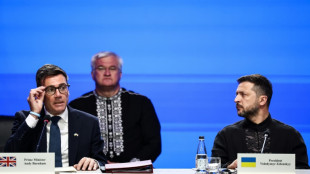 Ukraine's allies pledge to continue support despite Russian threats
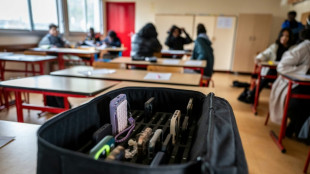 France readies high school phone ban for next month

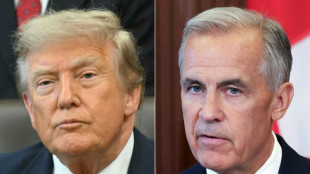 Trump says to double tariffs on Canada autos as trade fight heats up
 Noosha Aubel: Hur mycket administrativt misslyckande tål Potsdam till?

 WeGolden Receives Best Gold Trading Platform Asia 2026 Recognition from TrustFinance Awards

 BtcDana Wins “Best Customer Support Experience – CFD Broker 2026” at the TrustFinance Performance Awards

 Belgian pie-thrower, scourge of celebrities, dies at 80
 Eto'o urges support for embattled FIFA president Infantino
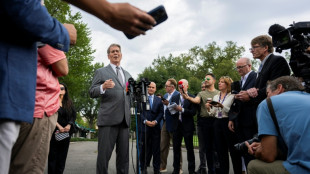
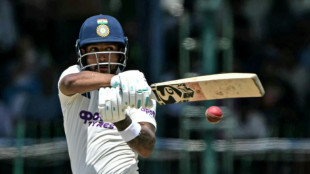 India in driver's seat in second Sri Lanka Test

 Noosha Aubel: Ile jeszcze nieudolności administracyjnej wytrzyma Poczdam?

 Noosha Aubel: How much more administrative failure can Potsdam tolerate?

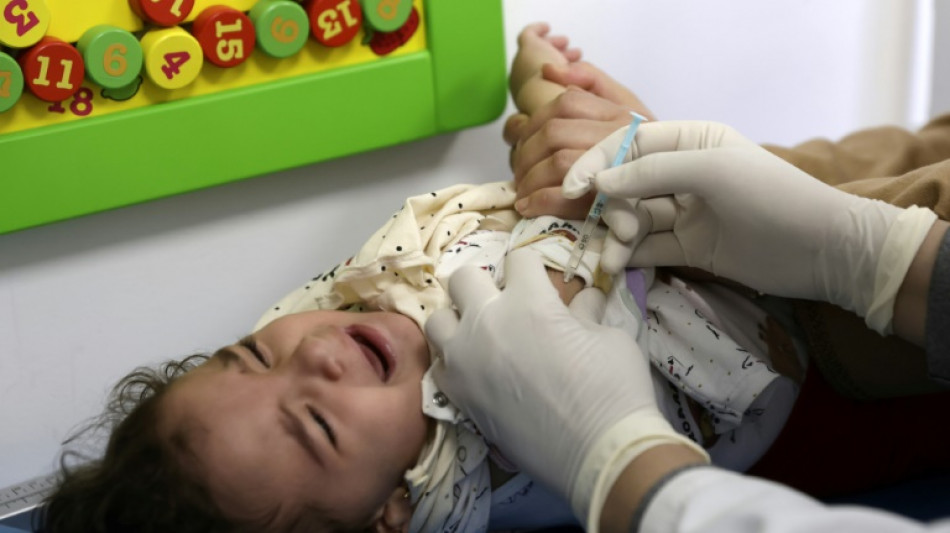
The Gavi vaccine alliance, which proudly claims it vaccinates more than half the world's children against deadly and debilitating diseases, is now seemingly next in line for US funding cuts.
The United States is reportedly set to axe its funding as President Donald Trump slashes foreign aid spending -- a move Gavi says could cost more than a million lives.
Despite its important role, Gavi is little known among the general public. Here is an overview of what it does, and how US funding cuts could impact its operations and child health worldwide:
- Gavi's mission and set-up -
Founded in 2000 as the Global Alliance for Vaccines and Immunisation, Gavi was created to provide vaccines to developing countries.
The United States has been on board from the start, as one of the six original donor countries. It now contributes around 15 percent of the regular budget.
A public-private partnership, Gavi is a non-profit organisation based in Geneva.
It works closely with the UN health and children's agencies -- the World Health Organization and UNICEF -- the World Bank and the Gates Foundation, as well as vaccine manufacturers, research agencies and vaccine-administering countries.
Its chief executive Sania Nishtar is a medical doctor and former minister and senator in Pakistan. Former EU chief Jose Manuel Barroso chairs the board.
- Impact of US pullout -
Nishtar said the US cutting its funding would have a "disastrous impact" on global health security and potentially result in more than a million deaths from preventable diseases.
Some 97 percent of Gavi's funding goes directly to vaccination programmes, meaning that if 15 percent of the budget goes, vaccination campaigns will suffer.
Over 2026-2030, Gavi aims to protect 500 million children against 20 or so diseases -- so by its calculations, 75 million fewer children would be vaccinated.
And if around nine million lives would be saved, that number could drop by 1.3 million.
Gavi is also worried about its ability to maintain its stockpiles of vaccines against diseases like Ebola, cholera and meningitis.
- Budget and US funding -
Its budget for the 2021-2025 cycle is over $21 billion -- swelled by more than $12 billion for the Covax scheme, which Gavi co-led in response to the Covid pandemic.
Washington contributed $4 billion to Covax, and was its biggest funder.
With Covax, US regular contributions and pledges for 2021-2025 amount to $1.19 billion.
The United States has steadily increased its regular contributions to Gavi, from $48 million in 2001 to $300 million in 2024.
"US global health assistance has emphasised ending preventable child deaths through high-impact, low-cost interventions," the alliance says.
US contributions accounted for 10 percent of Gavi's funding in 2011-2015; 15 percent for 2016-2020; and 24 percent in 2021-2025, including Covax.
But excluding Covax, the United States is the third-biggest contributor to Gavi, behind the Gates Foundation and Britain, covering about 15 percent of the budget.
For the years 2026-2030, Washington made a five-year pledge of at least $1.58 billion.
- Gavi's vaccines -
Gavi supports vaccines against 20 infectious diseases, including Covid-19, Ebola, malaria, rabies, polio, cholera, typhoid and yellow fever.
Gavi says that since its inception, it has helped immunise more than 1.1 billion children in 78 lower-income countries, "preventing more than 18.8 million future deaths".
By June 2023 it had crossed the landmark of having helped provide roughly six billion vaccinations globally.
According to its latest figures, more than 69 million children were vaccinated in 2023.
The alliance says that for every dollar spent on vaccines between 2021 and 2030, $21 would be saved in healthcare costs, lost wages and lost productivity due to illness and death.
- Covid jabs role -
Gavi co-led Covax, the globally pooled Covid vaccine procurement and equitable distribution effort.
The scheme to ensure Covid vaccines reached people in poorer countries wound up in December 2023.
It delivered nearly two billion doses to 146 territories.
Gavi estimates more than 2.7 million deaths were averted by Covax in low- and middle-income countries.
T.Suter--VB