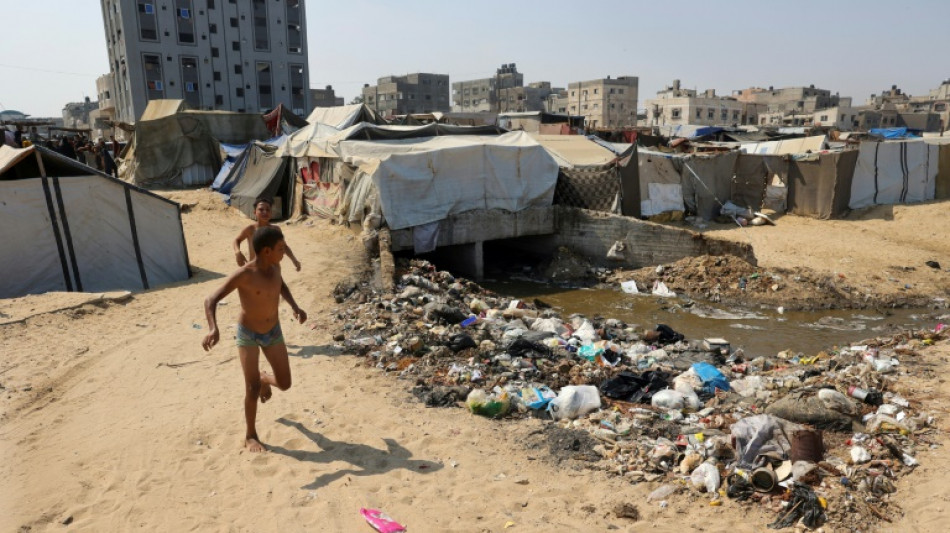
War-battered Gaza faces uphill battle against polio / Photo: © AFP/File

 Typhoon Dujuan leaves four dead in Japan, 45,000 houses without power

 G7 leaders condemn Houthi strikes on Saudi Arabia
 Google data centre sparks protests in Austria

 Shin Ohashi: Junk food-loving teen and Japan's next big swimming hope

 Stocks rise on AI buzz, drop in oil prices
 China's robot dancers limber up for America's Got Talent final

 Despite military might, Saudi struggles to crush the Houthis
 Trump to tout deals, defend Iran war in UN speech
 Sri Lanka to issue verdict in landmark Easter attack trial
 Macron says talks with Trump on Red Sea, Ukraine 'constructive'
 Green policies just good politics, says UK minister
 Bardot auction in Paris fetches nearly one million euros
 No timeline on Daniels injury return, says Commanders coach

 British Columbia sues OpenAI in US court over Canada school shooting
 French star Batum retires after 18-year NBA career
 Zidane leads first France training session
 Man shot by ICE agent in Texas detained with bullet inside him: lawyer
 California declares state of emergency ahead of El Nino
 South Africa arrests three more suspects, after nine women murdered
 Carse needs time away from England, says captain Brook

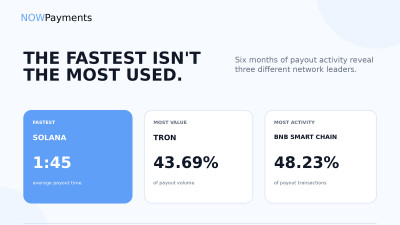 NOWPayments Releases Cross-Chain Payout Data Revealing Key Performance Benchmarks Across TRON, BNB Chain, and Solana

 British Museum bans photos of Bayeux Tapestry as crowds linger
 COP31 host says AI climate footprint to be a summit priority

 Berlin's far-left vote winners reject anti-semitism charges

 Mancini eager for 'new adventure' on Italy return

The Gaza Strip's first recorded polio case in 25 years has health workers and aid agencies grappling with the steep obstacles to conducting mass vaccination in the war-torn Palestinian territory.
Unrelenting air strikes by Israel more than 10 months into its war against Gaza rulers Hamas, restrictions of aid entering the besieged territory and hot summer temperatures all threaten the viability of a life-saving inoculation drive.
Still, equipment to support the extensive campaign -- which UN agencies say could start on August 31 -- has already arrived in the region.
The Palestinian health ministry in the occupied West Bank said last week that tests in Jordan had confirmed polio in an unvaccinated 10-month-old baby from central Gaza.
According to the United Nations, Gaza had not registered a case for 25 years, although type 2 poliovirus was detected in samples collected from the territory's wastewater in June.
Poliovirus is highly infectious, and most often spread through sewage and contaminated water -- an increasingly common problem in Gaza as the Israel-Hamas war drags on.
The disease mainly affects children under the age of five. It can cause deformities and paralysis, and is potentially fatal.
UN bodies the World Health Organization (WHO) and children's agency UNICEF say the have detailed plans to vaccinate 640,000 children across Gaza.
But a major challenge remains Israel's devastating military campaign, triggered by Hamas's October 7 attack on the country's south.
"It's extremely difficult to undertake a vaccination campaign of this scale and volume under a sky full of air strikes," said Juliette Touma, director of communications for the UN agency for Palestinian refugees, UNRWA.
- Once eradicated -
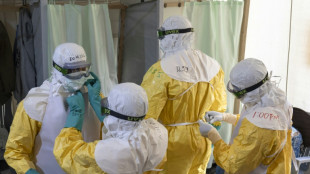
Under the UN plan, 2,700 health workers in 708 teams would take part, with the WHO overseeing the effort, said Richard Peeperkorn, the agency's representative in the Palestinian territories.
UNICEF would ensure the cold supply chain as vaccines are brought into and distributed across Gaza, spokesman Jonathan Crickx said.
Cold chain components including refrigerators arrived Wednesday at Israel's main international airport.
Some 1.6 million doses of the oral vaccine would follow, and are expected to enter Gaza on Sunday via the Kerem Shalom crossing, Crickx said.
The UN agencies plan to administer two doses each for about 95 percent of children under 10 in Gaza, according to Crickx. Surplus doses would cover expected losses to heat or other causes.
While Israel has repeatedly dismissed claims it was blocking aid into Gaza, relief workers have long complained of the many obstacles they face in getting supplies into the territory, which has suffered severe shortages of everything from fuel and medical equipment to food.
And once in Gaza, fighting, widespread devastation and crumbling infrastructure all complicate delivery and safe access.
Touma, who worked on polio response during wars in Iraq and Syria, said that "the return of polio to a place where it's been eradicated says quite a lot."
Israel's military campaign since October 7 has killed at least 40,223 people in Gaza, according to the Hamas-run territory's health ministry.
It does not give details of civilian and militant deaths, but the UN human rights office says most of the dead are women and children.
The Hamas attack that sparked the war resulted in the deaths of 1,199 people in Israel, most of them civilians, according to an AFP tally based on Israeli official figures.
- 'Safe environment' -
Gaza's health care system has been decimated, with "only 16 out of 36 hospitals... still functioning, and only partially," Crickx said.
Out of those, only 11 facilities are capable of maintaining the cold chain, he added.
The vaccines would first be kept at a UN storage space in central Gaza, and then distributed to public and private health facilities as well as UNRWA shelters "hopefully by refrigerated trucks if we can find some, otherwise by cold boxes" filled with ice packs, Crickx said.
Many Gazans now live in makeshift camps or UNRWA schools, making them hard to reach, said Moussa Abed, director of primary health care at the Gaza health ministry.
Nearly all of the territory's 2.4 million people have been displaced at least once during the war.
UN Secretary-General Antonio Guterres has called for two seven-day breaks in the war to administer doses.
Abed said that "without a safe environment for the vaccination campaign, we will not be able to reach 95 percent of the children under the age of 10, which is the goal of this campaign."
Contacted by AFP, an Israeli defence ministry body overseeing civilian affairs in the Palestinian territories, COGAT, did not directly mention the planned UN campaign, but said that "on the issue of polio, a joint effort will be made together with the international community".
A COGAT spokesman promised "full cooperation".
P.Keller--VB