
What is aphasia? Here's what you need to know / Photo: ©

 British Museum bans photos of Bayeux Tapestry as crowds linger

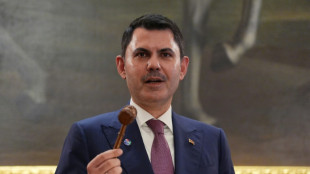 COP31 host says AI climate footprint to be a summit priority

 Berlin's far-left vote winners reject anti-semitism charges

 Mancini eager for 'new adventure' on Italy return

 Mbappe says having Zidane as France coach 'like a film'

 Palmer, Rice out of England Nations League squad
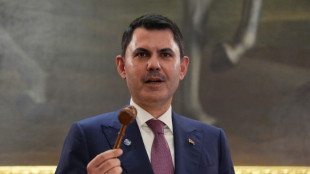
 German auto workers stage mass protests in bid to save jobs

 Embattled Merz vows to keep ruling for 'democratic future' of Germany

 Merz vows to keep ruling coalition together for 'democratic future' of Germany

 Spain coach De la Fuente gets new deal after World Cup success

 Pressure grows on Germany's Merz after election defeats

 China's Zhang beats Japan rivals to Asian Games gymnastics gold

 Samlingen Haupt: Vad pengar avslöjar om oss människor

 Tens of thousands of German auto workers protest to save jobs

 हॉप्त् कलेक्शन: पैसा हमारे बारे में एक इंसान के रूप में क्या प्रकट करता है

 Συλλογή Haupt: Τι αποκαλύπτει το χρήμα για εμάς τους ανθρώπους

 TradersYard Shifts Focus to Futures Trading

 ハウプト・コレクション:お金が人間について明かすこと

 하우프트 컬렉션: 돈이 우리 인간에 대해 드러내는 것

 Indonesia doing 'everything' but struggling to curb fires

 Sbírka Haupt: Co o nás lidech prozrazují peníze

 North and South Korea fight out draw in niggly Asian Games clash

 Officials say man shot, wounded by ICE agent in Texas

 豪普特收藏:金錢如何揭露人類的本質

 Kolekcja Haupta: Co pieniądze mówią o nas, ludziach

The news that film star Bruce Willis has retired from acting due to aphasia has shone a spotlight on the poorly understood communication disorder.
Here's what you should know.
- What is aphasia? -
"Aphasia just means that someone has a problem with language that they weren't born with," Hugo Botha, a neurologist at Mayo Clinic in Minnesota explained.
The most common cause is stroke or head injury -- and experts stress that while it can affect the production and comprehension of both speech and written words, it normally doesn't impact intelligence.
It affects some two million Americans, according to the National Aphasia Association, making it more common than Parkinson's Disease, cerebral palsy or muscular dystrophy.
A 2016 survey carried out by the same group found that fewer than nine percent of people knew what was.
While it's normally caused by a specific one-time event such as stroke, "there are other possibilities, such as from a neurodegenerative disease," explained Brenda Rapp, a cognition scientist at Johns Hopkins University.
In such cases the damage is progressive and therapy focuses on preventing further loss of function.
Willis' family did not share the cause of his diagnosis in their statement.
- What are the different forms? -
The brain system governing language is a "very complex machine" that involves selecting the right words, moving the mouth appropriately to vocalize them, and on the other end hearing and decoding their meaning, said Rapp.
Everyone occasionally struggles to find the right word, "but you could imagine in aphasia, this happens a lot," she added.
Doctors sometimes split aphasia into broad clinical categories which correlate to where in the brain injury occurred.
In expressive aphasia, people "usually understand fairly well but have trouble getting words out," said speech pathologist Brooke Hatfield, of the American Speech Language Hearing Association (ASHA).
A person with this type of aphasia might use simple sentences like "want food" to be understood.
In receptive aphasia "the words come easily, but they might not be the right words. And it's difficult for that person to understand what they're hearing," added Hatfield.
- Speech therapy -
The good news, says Hatfield, is "everybody has a chance to get better" over the long term.
"There are people who had their stroke 30 years ago, who still work at their language and communication and they still make gains."
The brain is extremely plastic, and speech therapy can engage other parts of it to "bypass the roadblocks" of the damaged areas, and forge new connections, said Rapp.
Such therapy also trains people to talk around the subject if they get stuck on a specific word.
Family members can also develop strategies to make themselves better understood: "Things like shorter sentences, and making sure that you're talking to the person in full view instead of the other room, and minimizing background noise," said Botha.
Some people do well with assistive devices because their ability to write isn't affected in the same way.
Over the horizon, there are experimental treatments that combine electrical stimulation of the brain with speech therapy that have shown promise in recovering function, said Rapp.
- Bottom line -
All the experts emphasized patience. Aphasia can be frustrating and isolating, because "our relationships with others depend so much on being able to talk to them and communicate with them," said Rapp, leading to a person or their caregivers withdrawing.
"It's similar to all of a sudden waking up in a country where you don't speak the language," said Hatfield, rather a change in underlying cognitive abilities.
M.Odermatt--BTB