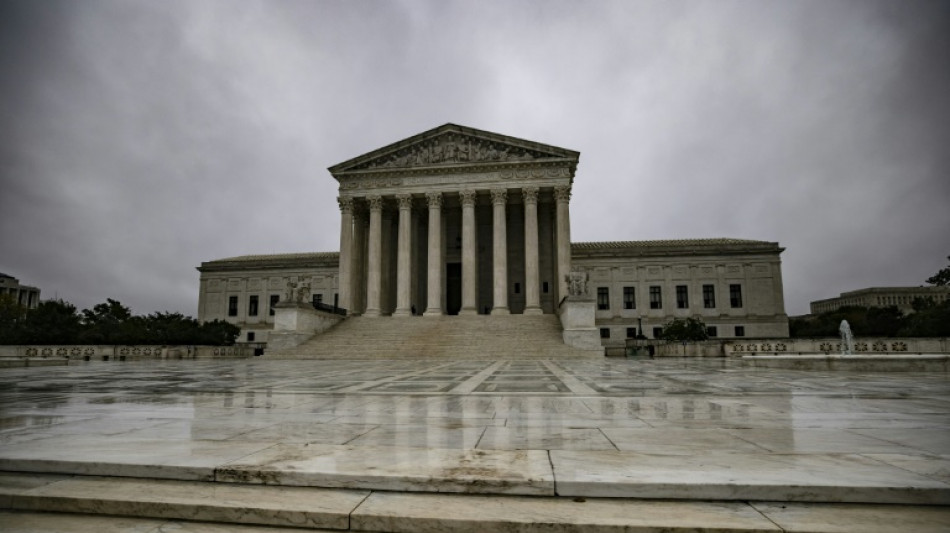
Divided US high court hears challenge to $6bn Purdue opioid settlement / Photo: © GETTY IMAGES/AFP

 Hurricane Polo strengthens to top category 5 off Mexico

 11 hurt as teen opens fire outside school in western Turkey

 UN chief says 'Big Oil' treats atmosphere as open sewer

 Tunisia says 2026 summer hottest on record

 England's Rashid out of Sri Lanka ODIs with hand injury

 Houthis accuse Saudi Arabia of deadly strikes as thousands flee

 Stocks climb as oil slides, AI buzz returns

 India cricketers win in style as Afghan savours 'special' Games silver

 La Liga president hits out at Real Madrid refereeing 'conspiracy' claims

 MEXC Launches “Real Stocks, Real Friends” with Rewards for Bringing Friends to Wall Street
 Mbappe continues media push for Ballon d'Or recognition

 Stocks rise on AI buzz, oil prices cool

 India narrowly survive huge scare against minnows Japan

 Missing F-35 fighter parts 'not sensitive', says Australia minister

 Cambodia showcases scams crackdown with global conference

 Afghan cyclist who disguised herself as man wins Asian Games silver

 Typhoon Dujuan leaves four dead in Japan, 45,000 houses without power

 G7 leaders condemn Houthi strikes on Saudi Arabia

 Google data centre sparks protests in Austria

 Shin Ohashi: Junk food-loving teen and Japan's next big swimming hope

 Stocks rise on AI buzz, drop in oil prices

 China's robot dancers limber up for America's Got Talent final

 Despite military might, Saudi struggles to crush the Houthis
 Trump to tout deals, defend Iran war in UN speech
 Sri Lanka to issue verdict in landmark Easter attack trial
The US Supreme Court appeared divided on Monday as it heard a challenge to Purdue Pharma's $6 billion opioids settlement immunizing the Sackler family that controlled the drugmaker from future litigation.
The Justice Department is arguing that the Sacklers, who earned tens of billions of dollars flooding the country with highly addictive opioids, should not gain sweeping legal protection in the controversial deal.
Last year's agreement, which came after years of negotiations involving officials from all 50 US states, set aside $6 billion from the 2019 bankruptcy of Purdue, which made prescription painkillers like OxyContin, for victims of the opioid epidemic.
The settlement, which has been put on hold by the Supreme Court, gave the families of Raymond Sackler and Mortimer Sackler protection from all future civil claims, effectively protecting their other assets from opioid-related lawsuits.
The Justice Department, acting as a bankruptcy watchdog body known as the US Trustee, accuses the Sacklers of withdrawing $11 billion from Purdue Pharma over the decade before the company filed for bankruptcy protection.
Deputy Solicitor General Curtis Gannon outlined the Biden administration's objections to the deal before the nine justices on the nation's highest court.
"It permits the Sacklers to decide how much they're going to contribute," Gannon said. "It grants the Sacklers the functional equivalent of a discharge."
Justice Elena Kagan said this would appear to go against a "fundamental bargain in bankruptcy law, which is you get a discharge when you put all your assets on the table to be divided up among your creditors.
"And I think everybody thinks that the Sacklers didn't come anywhere close to doing that."
At the same time, the liberal justice went on to note there was vast support for the deal even "among people who think that the Sacklers are pretty much the worst people on Earth."
"It seems as though the federal government is standing in the way against the huge, huge, huge majority of claimants who have decided that if this provision goes under, they're going to end up with nothing," she said.
Purdue's bankruptcy filing resulted directly from the massive, country-wide litigation against it and other major drugmakers and pharmacy companies for knowingly fomenting the addiction crisis.
Under the March 2022 settlement, the Sacklers were "absolutely, unconditionally, irrevocably, fully, finally, forever and permanently" released from further legal liability.
- 'Left with nothing' -
Justice Brett Kavanaugh, a conservative, appeared skeptical about throwing out a settlement that had been approved by more than 95 percent of the claimants who voted for the plan and of a type that he said bankruptcy courts have been approving for 30 years.
"I think what the opioid victims and their families are saying is you, the federal government, with no stake in this at all, are coming in and telling the families 'No, we're not going to give you prompt payment,'" Kavanaugh said. "In exchange, really, for this somewhat theoretical idea that they'll be able to recover money down the road from the Sacklers themselves."
Gregory Garre, representing Purdue Pharma, said rejecting the settlement could lead to years of litigation and leave victims with no compensation at all.
"If the Trustee succeeds here, the billions of dollars that the plan allocates for opioid abatement and compensation will evaporate, creditors and victims will be left with nothing, and lives literally will be lost," Garre said.
Justice Amy Coney Barrett raised questions about what effect a ruling in the case could have for other mass tort cases involving, for example, Johnson and Johnson, whose talcum powder is alleged to have caused cancer, or abuse claims against the Catholic Church and Boy Scouts of America.
The opioid epidemic has caused more than 500,000 overdose deaths in the United States over two decades, authorities say.
Purdue and other opioid makers were accused of encouraging free-wheeling prescription of their products through aggressive marketing tactics while hiding how addictive the drugs are.
Facing an avalanche of litigation, in 2021 Purdue pled guilty to three criminal charges over its marketing of OxyContin.
The Supreme Court is expected to rule in the case before June of next year.
C.Bruderer--VB