China to end quarantine on arrival in fresh Covid rule relaxation / Photo: © AFP

 Stocks rise on AI buzz, oil prices cool

 India narrowly survive huge scare against minnows Japan

 Missing F-35 fighter parts 'not sensitive', says Australia minister

 Cambodia showcases scams crackdown with global conference

 Afghan cyclist who disguised herself as man wins Asian Games silver

 Typhoon Dujuan leaves four dead in Japan, 45,000 houses without power

 G7 leaders condemn Houthi strikes on Saudi Arabia

 Google data centre sparks protests in Austria

 Shin Ohashi: Junk food-loving teen and Japan's next big swimming hope

 Stocks rise on AI buzz, drop in oil prices

 China's robot dancers limber up for America's Got Talent final

 Despite military might, Saudi struggles to crush the Houthis
 Trump to tout deals, defend Iran war in UN speech
 Sri Lanka to issue verdict in landmark Easter attack trial

 Macron says talks with Trump on Red Sea, Ukraine 'constructive'

 Green policies just good politics, says UK minister

 Bardot auction in Paris fetches nearly one million euros
 No timeline on Daniels injury return, says Commanders coach

 British Columbia sues OpenAI in US court over Canada school shooting

 French star Batum retires after 18-year NBA career

 Zidane leads first France training session
 Man shot by ICE agent in Texas detained with bullet inside him: lawyer

 California declares state of emergency ahead of El Nino

 South Africa arrests three more suspects, after nine women murdered

 Carse needs time away from England, says captain Brook

China said Monday it would scrap mandatory quarantine on arrival, further unwinding years of strict virus controls as the country battles a surge in cases.
Having mostly cut itself off from the rest of the world during the pandemic, China is now experiencing an unprecedented surge in infections after abruptly lifting restrictions that torpedoed the economy and sparked nationwide protests.
And in a sudden end to nearly three years of strict border controls, Beijing said late Monday it would scrap mandatory quarantines for overseas travellers.
Since March 2020, all passengers arriving in China have had to undergo mandatory centralised quarantine. This decreased from three weeks to one week this summer, and to five days last month.
But under new rules that will take effect January 8, when Covid-19 will be downgraded to a Class B infectious disease from Class A, they will no longer need to.
"According to the national health quarantine law, infectious disease quarantine measures will no longer be taken against inbound travellers and goods," the National Health Commission (NHC) said.
The move is likely to be greeted with joy from Chinese citizens and diaspora unable to return and see relatives for much of the pandemic.
But it comes as China faces a wave of cases that studies have estimated could kill around one million people over the next few months.
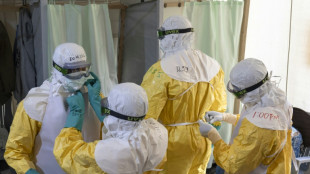
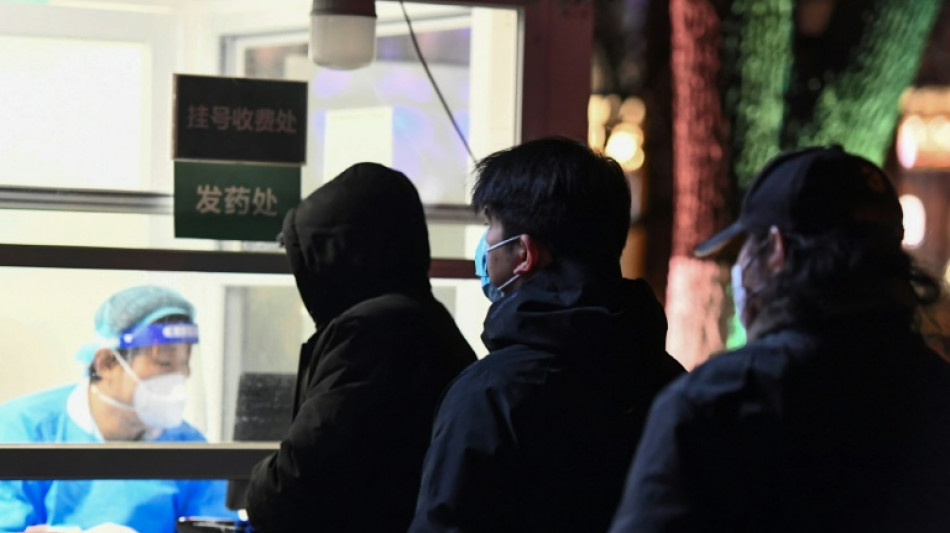
Many are now grappling with shortages of medicine, while emergency medical facilities are strained by an influx of undervaccinated elderly patients.
"At present, Covid-19 prevention and control in China are facing a new situation and new tasks," President Xi Jinping said in a directive Monday, according to state broadcaster CCTV.
"We should launch the patriotic health campaign in a more targeted way... fortify a community line of defence for epidemic prevention and control, and effectively protect people's lives, safety and health," he said.
- 'Impossible' to track -
Hospitals and crematoriums across the country have been overflowing with Covid patients and victims, while the NHC on Sunday announced it would stop publishing daily nationwide infection and death statistics.
That decision followed concerns that the country's wave of infections is not being accurately reflected in official statistics.
Beijing has admitted the scale of the outbreak has become "impossible" to track following the end of mandatory mass testing.
And last week, the government narrowed the criteria by which Covid-19 fatalities were counted -- a move experts said would suppress the number of deaths attributable to the virus.
The winter surge comes ahead of two major public holidays next month, in which millions of people are expected to travel to their hometowns to reunite with relatives.
Authorities are expecting the virus to hit under-resourced rural areas hard, and on Monday called for the guaranteed supply of drugs and medical treatment during New Year's Day and late January's week-long Lunar New Year holiday.
In recent days, health officials in the wealthy coastal province Zhejiang estimated that one million residents were being infected per day.
The coastal city of Qingdao also predicted roughly 500,000 new daily infections and the southern manufacturing city of Dongguan eyed up to 300,000.
Unofficial surveys and modelling based on search engine terms suggest that the wave may have already peaked in some major cities like Beijing and Chongqing.
A poll of over 150,000 residents of the southwestern province of Sichuan organised by disease control officials showed that 63 percent had tested positive for Covid, and estimated that infections peaked Friday.
Only six Covid deaths have been officially reported since Beijing unwound most of its restrictions earlier this month.
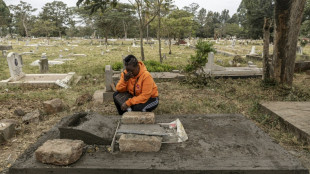
But crematorium workers interviewed by AFP have reported an unusually high influx of bodies, while hospitals have said they are tallying multiple fatalities per day, as emergency wards fill up.
The main funeral service centre in the southern metropolis of Guangzhou postponed all ceremonies until January 10 to focus on cremations due to the "large workload", according to a notice published online Sunday.
China's censors and mouthpieces have been working overtime to spin the decision to scrap strict travel curbs, quarantines and snap lockdowns as a victory, even as cases soar.
K.Brown--BTB