South Korea to ban mobile phones in school classrooms / Photo: © AFP/File

 Colombian judge bans strikes on guerrillas if minors are present

 Khachanov shocks ailing Auger-Aliassime, Swiatek and Osaka advance at US Open

 Lone juror blocking verdict in US mother's child murder trial: defense
 'Kinda chic' - Williams sisters set to launch US Open doubles bid

 Volkswagen says cutting 100,000 jobs by end of decade

 Russia slaps curfew on charity director over army criticism

 Ailing Auger-Aliassime upset by Khachanov at US Open

 Richarlison omitted from Tottenham's Premier League squad

 How El Nino is choking the Panama Canal

 Hamilton drives his Ferrari dream at Monza

 Senegal has an IMF loan, now what?

 Auger-Aliassime upset by Khachanov at US Open

 Hugging Face, the French start-up that became AI's warehouse

 World Cup winner Llorente retires from Spain team at 31

 Osaka squeezes into US Open third round
 Apple faces £2 bn lawsuit in UK over app privacy feature

 Former champ Swiatek eases into US Open third round

 DR Congo latest to promise moving Israel embassy to Jerusalem

 War criminal Mladic's body returns to Serbia with military honours
 Pierre Cardin museum brings designer's futurist style to Venice

 Slovenian rookie Omrzel triumphs as Mas extends Vuelta lead

 British, French leaders talk migrants, EU relations

 Heading for Ferrari's home race, Leclerc still dreams of world title

 Cafe at centre of Israel culture clash agrees to shut on Sabbath

 Spacecraft bound for Mercury begins 'tricky' arrival

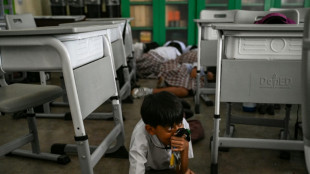
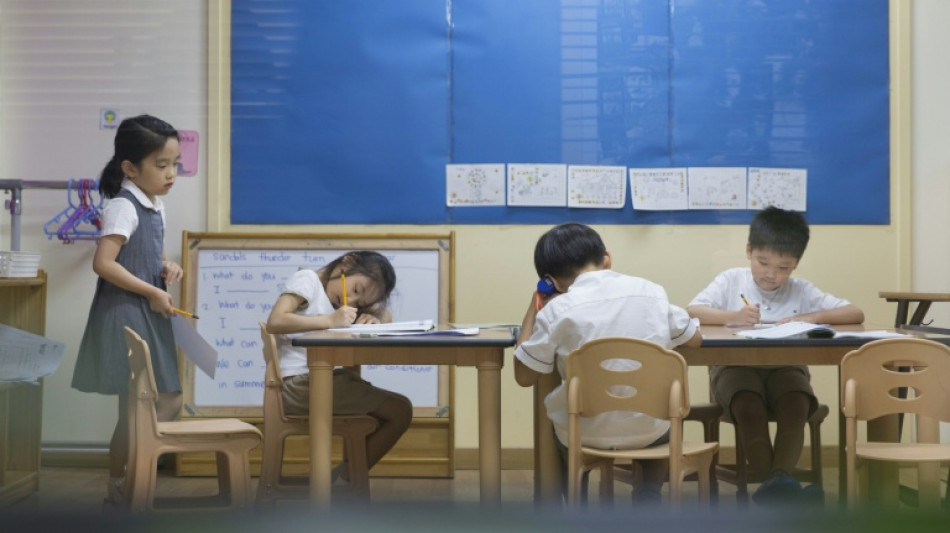
South Korea has passed a bill banning the use of mobile phones in school classrooms nationwide, officials said Thursday, joining other countries in efforts to curb social media use among minors.
One of the world's most wired nations, South Korea has recently sought to tighten rules on electronic devices in schools, citing concerns over smartphone addiction among students.
The bill, which will take effect in March next year, bans smart devices including mobile phones in classrooms and was passed Wednesday, a National Assembly spokeswoman told AFP.
The move makes South Korea the latest country to restrict social media use among schoolchildren, following similar steps in countries including Australia and the Netherlands.
Seoul's Education Ministry said in a statement that the law bans the use of smartphones in classrooms except when needed as assistive tools for students with disabilities or special education needs, or for educational purposes.
The measure also establishes a legal basis to "restrict the possession and use of such devices to protect students' right to learn and support teachers' activities", it added.
Lawmakers including opposition People Power Party member Cho Jung-hun, who introduced the bill, said the issue had long been "contentious amid concerns over human rights violations".
But the country's National Human Rights Commission recently changed its stance, saying limits on phone use for educational purposes do not breach rights given their negative impact on students' learning and emotional well-being.
Against this backdrop, the law was needed to ease social conflict "by clearly defining rules on smart device use in schools", the lawmakers said in a document introducing the bill.
But it has drawn backlash from groups including the left-wing Jinbo Party, which said the law will "infringe on students' digital rights and right to education".
The measure "prevents adolescents from learning to make responsible decisions on their own and deprives them of opportunities to adapt to the digital environment", the party said in a statement.
C.Koch--VB