Deadly school shooting fuels debate on Austria's gun laws / Photo: © AFP

 Colombian judge bans strikes on guerrillas if minors are present

 Khachanov shocks ailing Auger-Aliassime, Swiatek and Osaka advance at US Open
 Lone juror blocking verdict in US mother's child murder trial: defense

 'Kinda chic' - Williams sisters set to launch US Open doubles bid

 Volkswagen says cutting 100,000 jobs by end of decade

 Russia slaps curfew on charity director over army criticism
 Ailing Auger-Aliassime upset by Khachanov at US Open
 Richarlison omitted from Tottenham's Premier League squad

 How El Nino is choking the Panama Canal

 Hamilton drives his Ferrari dream at Monza

 Senegal has an IMF loan, now what?

 Auger-Aliassime upset by Khachanov at US Open
 Hugging Face, the French start-up that became AI's warehouse
 World Cup winner Llorente retires from Spain team at 31

 Osaka squeezes into US Open third round

 Apple faces £2 bn lawsuit in UK over app privacy feature
 Former champ Swiatek eases into US Open third round

 DR Congo latest to promise moving Israel embassy to Jerusalem

 War criminal Mladic's body returns to Serbia with military honours

 Pierre Cardin museum brings designer's futurist style to Venice

 Slovenian rookie Omrzel triumphs as Mas extends Vuelta lead
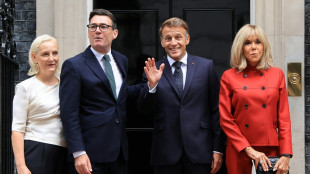 British, French leaders talk migrants, EU relations
 Heading for Ferrari's home race, Leclerc still dreams of world title

 Cafe at centre of Israel culture clash agrees to shut on Sabbath

 Spacecraft bound for Mercury begins 'tricky' arrival
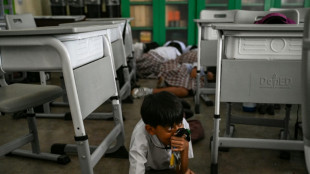
With Austria still reeling from this week's deadly school shooting that killed 10 people, a debate is now raging over the Alpine country's gun laws.
The unprecedented case of deadly gun violence stunned the country of almost 9.2 million people, which ranks among the 10 safest in the world, according to the Global Peace Index.
While politicians have called for tighter restrictions on private gun ownership in the wake of the shooting in Graz, interest in firearms and demand for weapons training courses has surged.
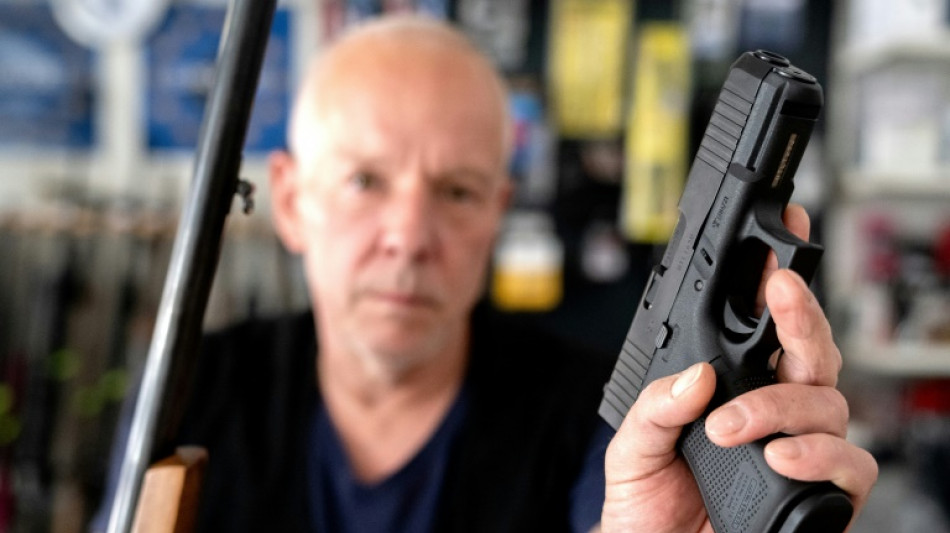
"You can't imagine how many people have signed up for shooting courses" since Tuesday's attack, Viennese gun dealer Markus Schwaiger, who also offers training courses at shooting ranges, told AFP.
"People are worried that gun laws are about to get tightened" in the coming months, he added.
Austria has a relatively high number of weapons in circulation, with more than 1.5 million registered to about 370,000 owners.
- 'Strong gun culture' -
According to industry expert Aaron Karp, Austria has a "strong gun culture" centred around "hunting and sports shooting, especially in the countryside", which is rich with game.
The Alpine nation is also one of the European countries with the largest number of small arms in circulation per capita, said Karp, one of the authors of the Small Arms Survey, which compiles data on gun ownership.
Famous for the Glock pistol, invented by Austrian engineer Gaston Glock, gun ownership is deeply rooted in the country -- and has been on a steady rise in recent decades: only about 900,000 weapons were registered in Austria in 2015, according to official figures.
For Schwaiger, "rising populism" has also played its part, with right-wing politicians tapping into people's anxieties over crises, arguing that the world has become a more dangerous place.
"For twenty years, right-wing populism has been scaring people" and "every crisis causes sales to skyrocket," he told AFP.
The shooting at a secondary school in the southern city of Graz by a 21-year-old former pupil was the deadliest postwar mass shooting in Austria.
But a study published online in 2020 in the European Psychiatry journal suggests that the number of violent deaths in Austria has been increasing in lockstep with the number of weapons.
In order to join the European Union in 1995, Austria had to regulate the sale of firearms, which temporarily led to a drop in violent deaths -- until the financial crisis of 2008 hit.
According to the study, the positive effect of the reform has been "offset by the global economic slowdown", which increased anxiety among the public and thus the tendency to purchase weapons.
"After such an act of madness... there must be consequences and changes," Interior Minister Gerhard Karner said on Friday.
Under the current legislation, anyone without a criminal record and over the age of 21 can buy handguns after undergoing an assessment and registering their weapon.
- 'Unfit' -
"The standards for psychological testing" to grant gun licences in Austria are "very good", said Karp, but proper implementation appears to be the bottleneck.
The gunman, who killed nine pupils and a teacher in Graz, was rejected from Austria's mandatory military service after failing the psychological tests and being deemed "unfit". He was nonetheless able to receive a gun licence and purchase the shotgun and pistol that he used in the attack.
"He obviously found a gun dealer and a psychologist who didn't look too closely," Schwaiger lamented. "There is still too much leeway."
Such shortcomings have been dominating and fuelling the most recent debate on Austria's gun laws, with the opposition Green Party tabling a bill to tighten legislation in May.
Austrian authorities have said they plan to consult other European countries like France, Sweden and the Czech Republic, which have experienced mass shootings in the past.
"But there are cultural differences and each country must chart its own course," Karp said.
J.Marty--VB