Mounting economic costs of India's killer smog / Photo: © AFP

 Colombian judge bans strikes on guerrillas if minors are present

 Khachanov shocks ailing Auger-Aliassime, Swiatek and Osaka advance at US Open

 Lone juror blocking verdict in US mother's child murder trial: defense
 'Kinda chic' - Williams sisters set to launch US Open doubles bid

 Volkswagen says cutting 100,000 jobs by end of decade

 Russia slaps curfew on charity director over army criticism

 Ailing Auger-Aliassime upset by Khachanov at US Open

 Richarlison omitted from Tottenham's Premier League squad

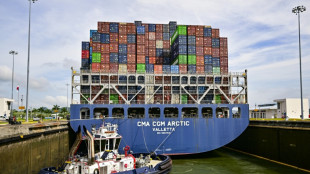 How El Nino is choking the Panama Canal

 Hamilton drives his Ferrari dream at Monza

 Senegal has an IMF loan, now what?

 Auger-Aliassime upset by Khachanov at US Open

 Hugging Face, the French start-up that became AI's warehouse
 World Cup winner Llorente retires from Spain team at 31

 Osaka squeezes into US Open third round

 Apple faces £2 bn lawsuit in UK over app privacy feature
 Former champ Swiatek eases into US Open third round

 DR Congo latest to promise moving Israel embassy to Jerusalem

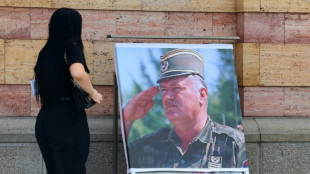 War criminal Mladic's body returns to Serbia with military honours

 Pierre Cardin museum brings designer's futurist style to Venice

 Slovenian rookie Omrzel triumphs as Mas extends Vuelta lead

 British, French leaders talk migrants, EU relations

 Heading for Ferrari's home race, Leclerc still dreams of world title
 Cafe at centre of Israel culture clash agrees to shut on Sabbath

 Spacecraft bound for Mercury begins 'tricky' arrival
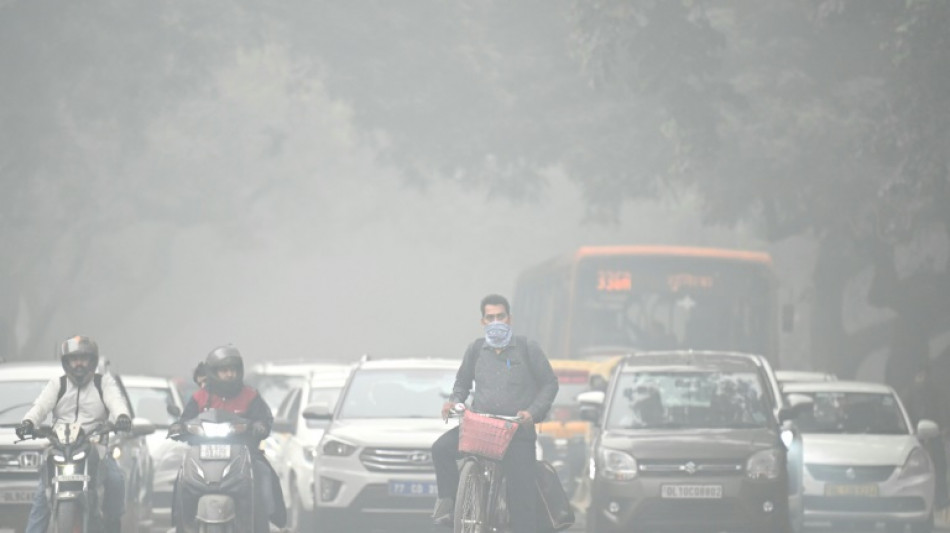
Noxious smog smothering the plains of north India is not only choking the lungs of residents and killing millions, but also slowing the country's economic growth.
India's capital New Delhi frequently ranks among the world's most polluted cities. Each winter, vehicle and factory emissions couple with farm fires from surrounding states to blanket the city in a dystopian haze.
Acrid smog this month contains more than 50 times the World Health Organization recommended limit of fine particulate matter -- dangerous cancer-causing microparticles known as PM2.5 pollutants, that enter the bloodstream through the lungs.
Experts say India's worsening air pollution is having a ruinous impact on its economy -- with one study estimating losses to the tune of $95 billion annually, or roughly three percent of the country's GDP.
The true extent of the economic price India is paying could be even greater.
"The externality costs are huge and you can't assign a value to it," said Vibhuti Garg, of the Institute for Energy Economics and Financial Analysis.
Bhargav Krishna of the Delhi-based research collective Sustainable Futures Collaborative said "costs add up in every phase".
"From missing a day at work to developing chronic illness, the health costs associated with that, to premature death and the impact that has on the family of the person," Krishna told AFP.
- 'Health and wealth hazard'-
Still, several studies have tried to quantify the damage.
One by the global consultancy firm Dalberg concluded that in 2019, air pollution cost Indian businesses $95 billion due to "reduced productivity, work absences and premature death".
The amount is nearly three percent of India's budget, and roughly twice its annual public health expenditure.
"India lost 3.8 billion working days in 2019, costing $44 billion to air pollution caused by deaths," according to the study which calculated that toxic air "contributes to 18 percent of all deaths in India".
Pollution has also had a debilitating impact on the consumer economy because of direct health-related eventualities, the study said, reducing footfall and causing annual losses of $22 billion.
The numbers are even more staggering for Delhi, the epicentre of the crisis, with the capital province losing as much as six percent of its GDP annually to air pollution.
Restaurateur Sandeep Anand Goyle called the smog a "health and wealth hazard".
"People who are health conscious avoid stepping out so we suffer," said Goyle, who heads the Delhi chapter of the National Restaurant Association of India.
Tourism has also been impacted, as the smog season coincides with the period when foreigners traditionally visit northern India -- too hot for many during the blisteringly hot summers.
"The smog is giving a bad name to India's image," said Rajiv Mehra of the Indian Association of Tour Operators.
Delhi faces an average 275 days of unhealthy air a year, according to monitors.
- 'Premature deaths' -
Piecemeal initiatives by the government -- -- that critics call half-hearted -- have failed to adequately address the problem.
Academic research indicates that its detrimental impact on the Indian economy is adding up.
A 2023 World Bank paper said that air pollution's "micro-level" impacts on the economy translate to "macro-level effects that can be observed in year-to-year changes in GDP".
The paper estimates that India's GDP would have been 4.5 percent higher at the end of 2023, had the country managed to curb pollution by half in the previous 25 years.
Another study published in the Lancet health journal on the direct health impacts of air pollution in 2019 estimated an annual GDP deceleration of 1.36 percent due to "lost output from premature deaths and morbidity".
Desperate emergency curbs -- such as shuttering schools to reduce traffic emissions as well as banning construction -- come with their own economic costs.
"Stopping work for weeks on end every winter makes our schedules go awry, and we end up overshooting budgets," said Sanjeev Bansal, the chairman of the Delhi unit of the Builders Association of India.
Pollution's impact on the Indian economy is likely to get worse if action is not taken.
With India's median age expected to rise to 32 by 2030, the Dalberg study predicts that "susceptibility to air pollution will increase, as will the impact on mortality".
L.Stucki--VB