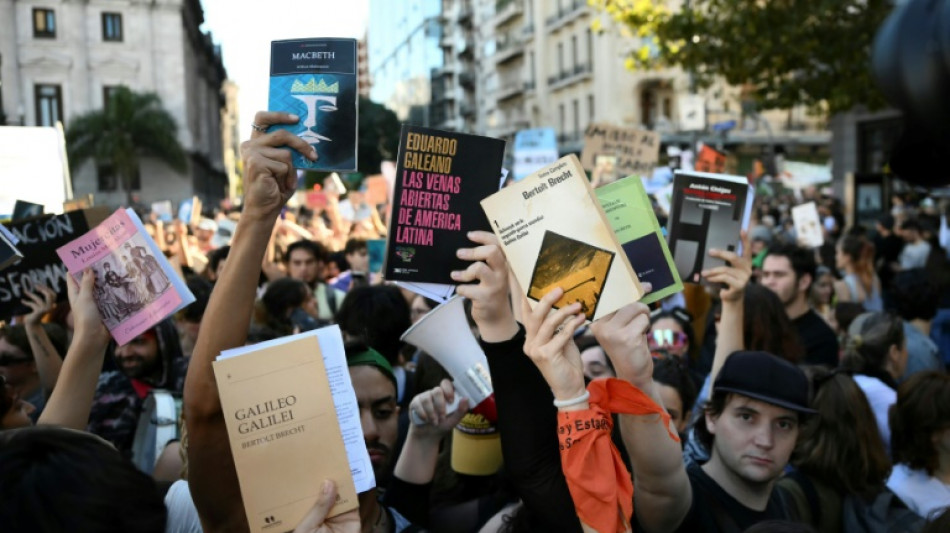
Large crowds march against Argentina public university cuts / Photo: © AFP

 Colombian judge bans strikes on guerrillas if minors are present
 Khachanov shocks ailing Auger-Aliassime, Swiatek and Osaka advance at US Open
 Lone juror blocking verdict in US mother's child murder trial: defense
 'Kinda chic' - Williams sisters set to launch US Open doubles bid

 Volkswagen says cutting 100,000 jobs by end of decade

 Russia slaps curfew on charity director over army criticism
 Ailing Auger-Aliassime upset by Khachanov at US Open
 Richarlison omitted from Tottenham's Premier League squad

 How El Nino is choking the Panama Canal

 Hamilton drives his Ferrari dream at Monza

 Senegal has an IMF loan, now what?

 Auger-Aliassime upset by Khachanov at US Open
 Hugging Face, the French start-up that became AI's warehouse
 World Cup winner Llorente retires from Spain team at 31

 Osaka squeezes into US Open third round

 Apple faces £2 bn lawsuit in UK over app privacy feature
 Former champ Swiatek eases into US Open third round

 DR Congo latest to promise moving Israel embassy to Jerusalem

 War criminal Mladic's body returns to Serbia with military honours

 Pierre Cardin museum brings designer's futurist style to Venice

 Slovenian rookie Omrzel triumphs as Mas extends Vuelta lead
 British, French leaders talk migrants, EU relations
 Heading for Ferrari's home race, Leclerc still dreams of world title
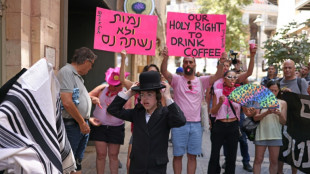 Cafe at centre of Israel culture clash agrees to shut on Sabbath

 Spacecraft bound for Mercury begins 'tricky' arrival

Hundreds of thousands of Argentines took to the streets on Tuesday, protest organizers said, to voice outrage at cuts to higher public education under budget-slashing new President Javier Milei.
Joined by professors, parents and alumni from the economic crisis-riddled South American country's 57 state-run universities, students rose up "in defense of free public university education."
Labor unions, opposition parties and private universities backed the protests in Buenos Aires and other major cities such as Cordoba -- in one of the biggest demonstrations yet against the austerity measures introduced since Milei took office in December.
Police said around 100,000 people turned out Tuesday in the capital alone, while organizers put the number at closer to half-a-million -- paralyzing the city center for hours on end.
A teachers' union reported a million protesters countrywide.
Third-year medicine student Pablo Vicenti, 22, told AFP in Buenos Aires he was outraged at the government's "brutal attack" on the university system.
"They want to defund it with a false story that there is no money. There is, but they choose not to spend it on public education," he said.
Milei won elections last November vowing to take a chainsaw to public spending and reduce the budget deficit to zero.
To that end, his government has slashed subsidies for transport, fuel and energy even as wage-earners have lost a fifth of their purchasing power.
Thousands of public servants have lost their jobs, and Milei has faced numerous anti-austerity protests.
His government dismissed Tuesday's protests as "political."
- Under the poverty line -
Universities declared a financial emergency after the government approved a 2024 budget the same as the one for 2023, despite annual inflation approaching 290 percent.
On top of that, higher learning institutions say a near 500-percent monthly increase in energy costs has brought them to their knees.
"At the rate at which they are funding us, we can only function between two or three more months," said University of Buenos Aires (UBA) rector Ricardo Gelpi.
As the ire has built, Milei conceded a 70-percent increase in funding for public universities' operating expenses in March, to be followed by another 70 percent in May and a one-off grant to university hospitals.
Operating expenses exclude teacher salaries, which make up about 90 percent of a university budget.
"Of the four teaching categories, three have fallen under the poverty line," said the rector of the National University of San Luis, Victor Morinigo.
In a post on X over the weekend, Milei called into question how public universities spend their funds, and said the institutions "are used for shady business and to indoctrinate."
On Monday, presidential spokesman Manuel Adorni argued that Argentina's public education system has been declining for decades, with plunging rates of university passes.
Some 2.2 million people study in the public university system in a country where the poverty level has reached nearly 60 percent of the population, according to a recent study.
"Don't expect a way out through public spending," Milei warned on Monday, as he hailed Argentina's first quarterly budget surplus since 2008.
F.Wagner--VB