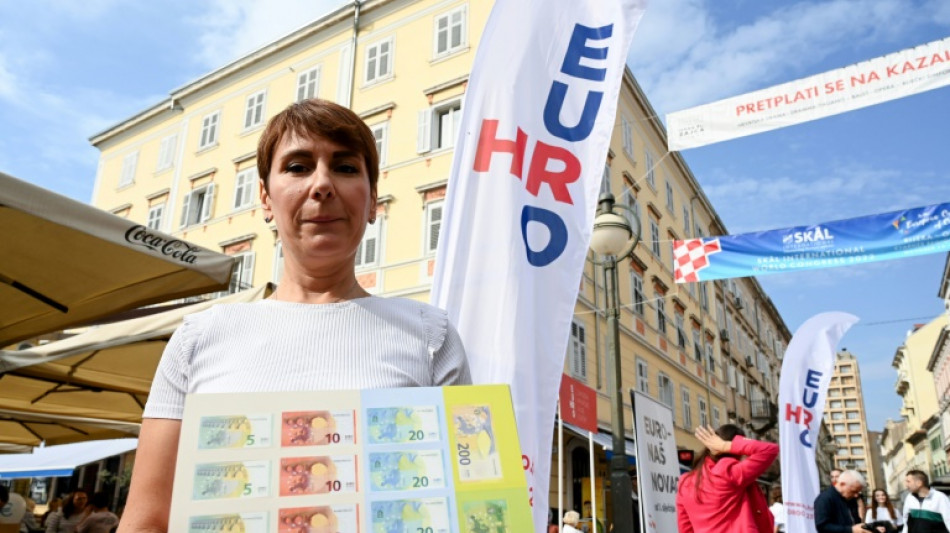
Croatia prepares for euro switch amid soaring inflation / Photo: © AFP/File

 Jay-Z rape accuser says she made 'false accusations'

 Senegal draw first match under Vieira and Nigeria survive scare
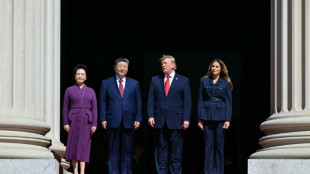 Trump, Xi end summit long on pomp, but short on progress
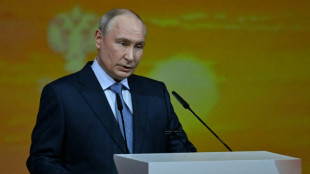 Russia not preparing for conflict with Europe, Putin says
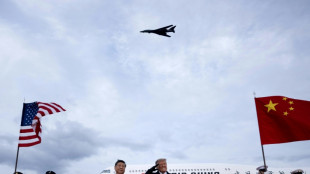 Trump's photo of Xi greeting carries signs of AI
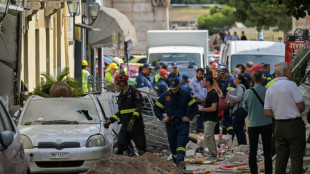 Six missing after building blast in historic Athens district
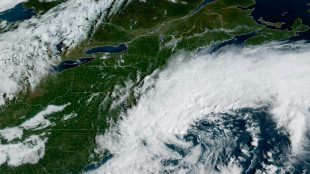 Millions in US northeast brace for powerful storm
 Assefa seeks 'better than my best' at Berlin marathon
 US court refuses to overturn Pentagon ban on Anthropic

 Verstappen and Norris blame slow cars as Mercedes tops qualifying

 Crowds cheer pope in Paris after AI 'paradise of machines' warning
 Teen swimmer makes Games history as Thai, Chinese sprinters win gold
 Man City found guilty of 114 Premier League charges - reports
 Concerns over 'missing' UK explorer Ranulph Fiennes
 Suspected Paris killer of Argentine rugby star begs forgiveness
 Oil prices fall on cautious hopes for US-Iran progress

 Noskova, Muchova take Czech Republic into BJK Cup final
 Thai sprinter Puripol breaks own Asian Games record to win 100m gold
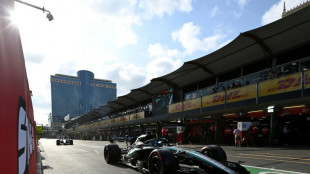 Russell takes pole for Azerbaijan GP, Antonelli crashes out
 Williams boss hails Chadwick as F1 inspiration for women
 World No.1 Sinner delays return with China Open withdrawal
 South Lebanon children return to school destroyed by Israel strike

 Jewish group urges Berlin far-left vote winners to tackle antisemitism
 European stock markets climb as oil prices drop

 Trump accuser E. Jean Carroll finally has her damages
With inflation mounting and precarious geopolitical headwinds rattling Europe, Croatia hopes that its upcoming switch to the euro will bring some semblance of protection to the Balkan country in an uncertain world.
On January 1, Croatia will bid farewell to its currency -- the kuna -- to become the 20th member of the eurozone.
The former Yugoslav Republic, which joined the European Union nearly a decade ago, posted an annual inflation rate of almost 13 percent in September, compared to 10 percent in the eurozone.
In the build-up to the changeover, authorities have been constantly hammering home the advantages of adopting the euro for the country's 3.9 million inhabitants.
"The euro brings resilience," Ana Sabic of the Croatian National Bank told AFP, arguing that Zagreb will, if needed, have access to more favourable borrowing conditions amid economic hard times.
Since July, the European Central Bank has embarked on a policy of monetary tightening as it attempts to rein in galloping inflation caused by soaring energy and food prices triggered by the Russian war in Ukraine.
Analysts continue to argue that eastern European countries in the EU with currencies outside of the eurozone, such as Poland or Hungary, have been even more vulnerable to surging inflation.
"It is actually an ideal moment for the euro switch," said Goran Saravanja, the chief economist with the Croatian Chamber of Commerce.
"When major uncertainty dominates the global economy, for a small and open economy like Croatia it's always better to be a part of a larger association like the eurozone," he added.
Croatia's main trading partners are in the eurozone, while the tourism sector -- which accounts for 20 percent of its GDP -- caters to large numbers of European visitors.
And Croatians have already adopted the euro to a large extent, with about 80 percent of bank deposits denominated in euros.
They have long valued their most prized possessions such as cars and apartments in euros, displaying lack of confidence in local currency dating back to the former Yugoslavia which was gripped by high inflation before its breakup.
During the Yugoslav era and after Croatia's independence in 1991, properties were mostly valued in the German mark until the introduction of the euro two decades ago.
- Hopes and fears -
"Life will be easier, we calculate everything in euros anyway," said Roman, an economist from Zagreb who refused to give his surname.
Milan Batur, a retired pharmacist, dismissed concerns from those who fear some traders are taking advantage of the coming transition to the currency to round up prices.
"It's other things, wars, shortages that cause prices to rise. We can't blame everything on the euro," said Batur.
However some still worry they will take a financial hit by the move.
"The calendar may not be ideal, we could perhaps have postponed it a little because of the situation in the world," Zdravka Antonic, a florist at a market in Zagreb, told AFP.
"People are already worried about how this is all going to end and the euro just adds to the uncertainty."
Since early September, the price of bouquets, like those of other goods and services, bears a double label -- with a conversion rate set by Brussels at 7.53 kuna to one euro.
The system will remain in effect throughout 2023.
"A country that has its own currency is more independent. But when we joined the EU, we also accepted the euro," said Ana Brkic, a vegetable seller.
Conservative and right-wing opposition groups protested the adoption of the new currency, saying the kuna represented an important symbol of national identity and argued that the euro only benefited larger countries like Germany and France.
But an attempt last year at triggering a nation-wide referendum to challenge the adoption of the euro failed to gain any traction in the end.
Some Croatians fear that once they have adopted the euro the stark reality of how much poorer they are than many of their EU neighbours will only sink in further.
According to the latest Eurostat survey published in 2018, the average monthly salary in Croatia was just 1,179 euros compared to more than 2,300 euros in the EU.
An estimated 300,000 Croatian retirees receive a pension of barely 260 euros a month.
"It will spark the feeling of poverty and misery," said Ana Knezevic, director of the national Consumer Protection Association.
T.Bondarenko--BTB