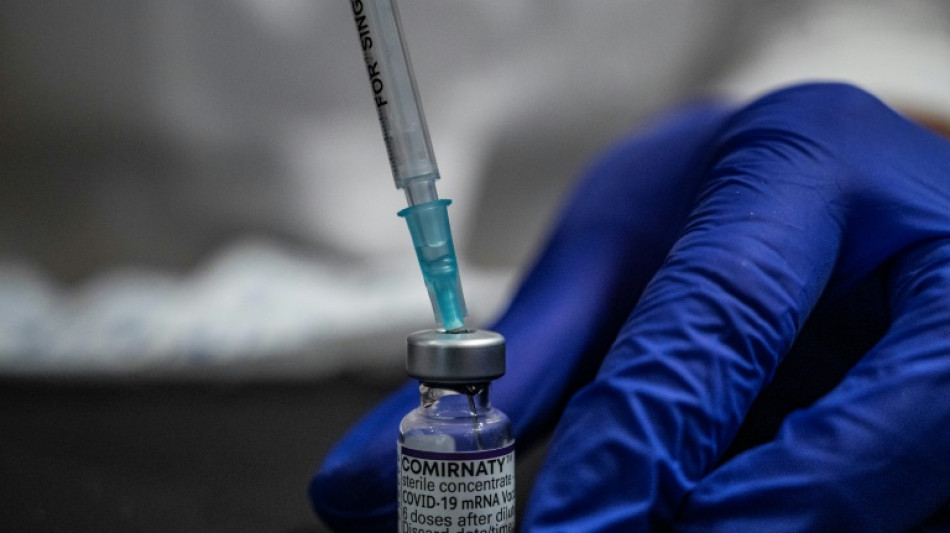
Covid vaccines may cause period problems, experts warn / Photo: © AFP/File

 Indiana River Otters Make Comeback After Decades of Conservation Efforts

 Shruti Haasan Reveals Kamal Haasan’s Defense of Her Film Career

 Penrith Panthers Face Backlash Over Decision to Disband Pantherettes Cheerleading Squad

 Make-A-Wish Announces 2026 Starblazer Award Honorees; Allied World Becomes First Corporate Founder

 Lee-Trump Golf Diplomacy Faces Diplomatic Dilemma Ahead of G20 Summit

 Mavericks Defeat Jazz 112-100 Behind Washington’s 26 Points and Second-Half Surge

Some Covid vaccines may cause heavy menstrual bleeding, specialists at the European Medicines Agency (EMA) warned Friday, recommending that this be added to the list of potential side-effects.
"Cases of heavy menstrual bleeding have been reported after the first, second and booster doses of Comirnaty (Pfizer) and Spikevax (Moderna)," said a statement from the agency, citing its drugs safety committee.
Having reviewed the data, they concluded that "there is at least a reasonable possibility that the occurrence of heavy menstrual bleeding is causally associated with these vaccines".
They thus recommended that this be added to the product information of the two mRNA Covid-19 vaccines.
"There is no evidence to suggest the menstrual disorders experienced by some people have any impact on reproduction and fertility," the EMA statement added.
The safety committee also stressed that "the benefits of these vaccines greatly outweigh the risks".
The instances of heavy menstrual bleeding have been monitored at both national and European level since the first reports appeared among vaccinated women.
France's National Medicine Safety Agency (ANSM) started interviewing women about the issue in July, passing their findings to the EMA.
So far, however, researchers have not established a causal connection beyond any doubt.
The reported issues mainly concern changes to the length and intensity of the menstrual bleeding, which are sometimes more painful.
While in most cases the symptoms experienced were "not serious" and transitory, some women experienced the symptoms for up to six months, the ANSM reported.
The French agency is continuing to research the issue.
E.Schubert--BTB