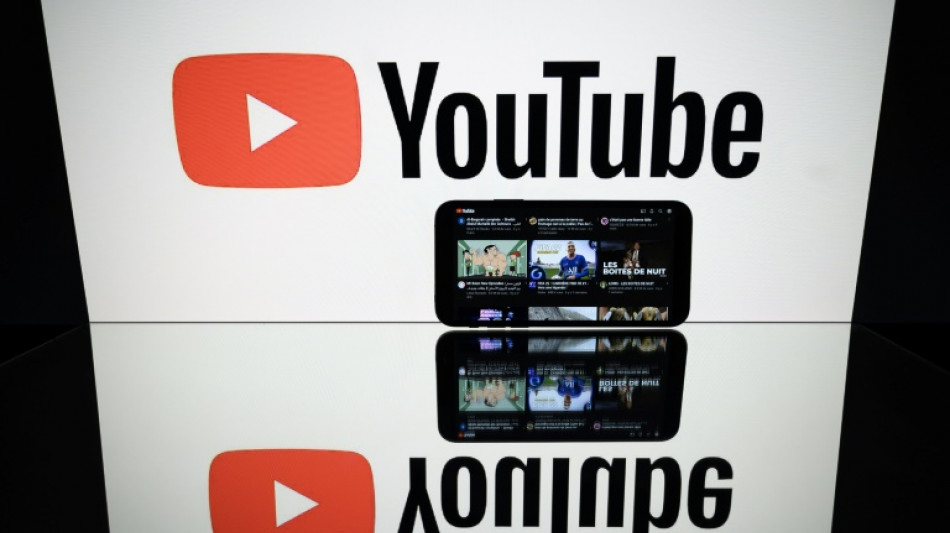
YouTube to certify health care providers' accounts / Photo: © AFP

 Indiana River Otters Make Comeback After Decades of Conservation Efforts
 Shruti Haasan Reveals Kamal Haasan’s Defense of Her Film Career
 Penrith Panthers Face Backlash Over Decision to Disband Pantherettes Cheerleading Squad

 Make-A-Wish Announces 2026 Starblazer Award Honorees; Allied World Becomes First Corporate Founder
 Lee-Trump Golf Diplomacy Faces Diplomatic Dilemma Ahead of G20 Summit

 Mavericks Defeat Jazz 112-100 Behind Washington’s 26 Points and Second-Half Surge

Doctors, nurses and other health care professionals can apply to have their YouTube channels certified, the video sharing platform said Thursday, in a push to limit misinformation on the site.
The change will allow viewers to more easily access videos containing "high-quality health information," YouTube said.
"This is a big step towards helping people more easily find and connect with content that comes from the extraordinary community of healthcare professionals on YouTube," it added.
In addition to doctors and nurses, mental health professionals and healthcare information providers may also apply for the YouTube verification that allows their videos to be spotted easily by users.
"This new step will allow us to expand to include high quality information from a wider group of healthcare channels," the company said.
Some 90 percent of Americans use social media to search for health information, according to the National Academy of Medicine.
YouTube faced criticism last year for hosting videos that criticized Covid-19 vaccines or contradicted health guidance from the World Health Organization or the Centers for Disease Control and Prevention.
In response, in September 2021, it banned misleading and inaccurate content about vaccines.
It also launched a limited program that allowed videos by public health departments, hospitals and governments, among other entities, to have labels letting users know they are authoritative.
It is that program that is now being broadened.
To access the program, healthcare professionals must offer proof of their professional licenses, follow best practices for sharing science-based health information and have a channel in good standing on YouTube, the company said.
YouTube, headquartered in San Bruno, California, has a reach of some two billion monthly active users.
T.Bondarenko--BTB