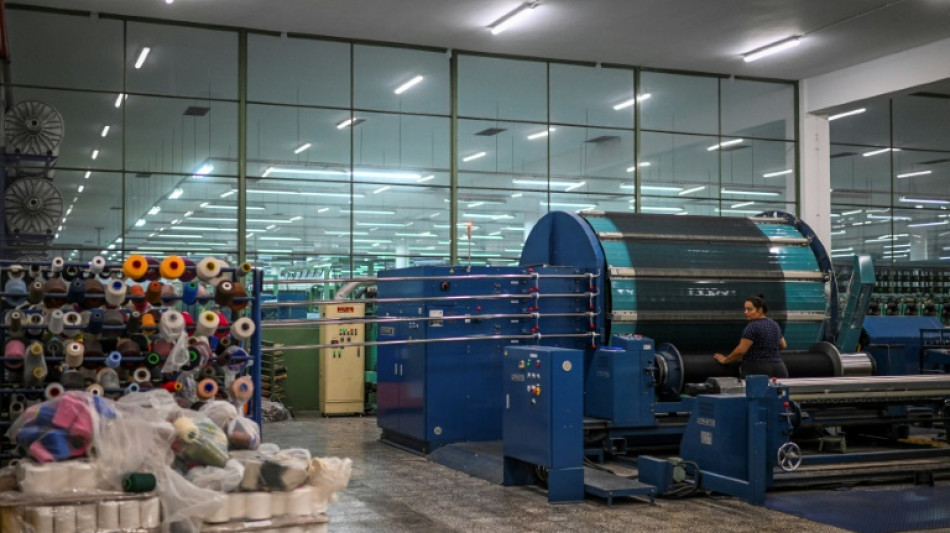
Portuguese textiles become international player / Photo: © AFP

 Spotting AI writing: how reliable are the detectors?
 French youth await pope after AI 'paradise of machines' warning
 Man City found guilty of Premier League charges, set to appeal: reports

 Embolo follows Xhaka out of Swiss squad over fake Covid documents

 Trump, Xi inspect founding documents of US democracy to close summit

 'Bottle Claus': Kipchoge's 'hero' helping runners chase Berlin marathon glory

 Olympic medallist Samba-Mayela handed provisional doping ban

 First US trial against TikTok to open Monday

 Palmer misses 'too many' England games, says Tuchel

 UN refugees chief warns conditions in W.Sahara 'deteriorating'

 Antonelli 'mad' about crash in Azerbaijan qualifying

 'Perfect lap' gives Russell pole for Azerbaijan GP as Antonelli crashes out

 UN Security Council condemns Houthi attacks on Saudi Arabia
 China swimmer makes Asian Games history as Thai wins 100m sprint

 Top French literary prize drops best-selling novel over AI claims

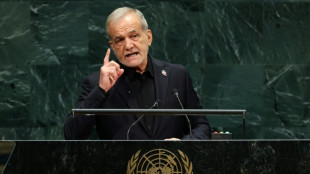 US 'must choose' whether to end war: Iran president

 Pope warns against losing humanity in AI-driven 'paradise of machines'

 Pope warns against losing humanity in 'paradise of machines'

 From FBI warning to literary acclaim: the Russian journalist who took on Putin
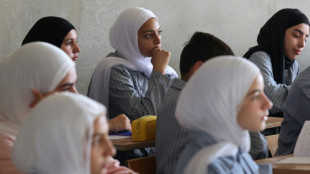
 China swimmer in Asian Games first as North Korea lifters reign

 French literary prize removes novel from longlist after AI claims
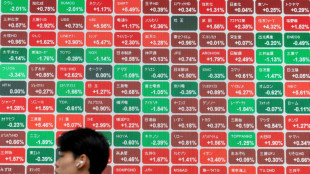
 China's Zhang wins record seventh Asian Games swimming gold

 Verstappen edges Russell in final practice in Azerbaijan

 English, Spanish, Italian, German football leagues call for FIFA reform

 Pope arrives in France on first official visit in 18 years

Shaken in the last 20 years by competition from Asia, Portugal's textile industry has found its footing again and become a major player, supplying firms not just in Europe but also in the United States.
The industry has benefited from its flexibility and inexpensive labour along with a spirit of innovation focused on limiting damage to the environment.
Near Vila Nova de Famalicao, in the northern district of Porto, the Riopele factory hums with a deafening noise of nearly 200 state-of-the art weaving machines that run 24 hours a day six days a week.
The textile industry's advantages are "reactivity and the capacity to adapt", engineer Jose Rosas told AFP as he stood by a digital screen where he follows the massive workshop's activity in real time.
One of the jewels in an industry anchored in the Ave valley, the company founded in 1927 and its thousand employees are struggling to meet orders after a respite during the Covid crisis.
Every day, the factory produces 40,000 metres (131,200 feet) of fabric, 98 percent of which is earmarked for export.
Among its growing customers are Spain's Inditex, which owns Zara, and France's SMCP (Sandro, Maje, Claudie Pierlot and Fursac), according to Portuguese industry figures.
There is also increased demand from firms in Germany and Italy as well as in the United States such as Tommy Hilfiger.
Customers value a "capacity to be different" from foreign competition, Riopele group director Albertina Reis told AFP, citing her firm's ability to use "new techniques" for sustainable output without compromising on aesthetics.
Alberto Paccanelli, who heads Brussels-based Euratex, which represents the European textile and clothing industry, paid tribute to Portugal's sector.
"Portugal has the advantage of a workforce that remains competitive" by offering "quality products at reasonable prices," according to the president of Euratex, which held its annual conference in Porto in mid-October.
Portugal's textile sector has made a dramatic comeback.
Shaken by competition from companies relocating to Asia for cheaper production costs, the sector lost between the years 2000 and 2015 nearly 100,000 jobs out of a total of 235,000 recorded at the start of the era, according to the Portuguese Textile Association (ATP).
Riopele is one of Portugal's biggest textile producers but there are many others, including JF Almeida and the TMG group.
- Record exports -
Since then, the sector has resumed hiring, benefiting from a minimum salary of 705 euros ($696) per month paid over 14 months, one of the lowest wages in the European Union, after those in eastern Europe.
Exports of textile products from Portugal, which find their largest markets in Spain and France, hit last year the record sales figure of 5.4 billion euros, 16.4 percent higher than the previous year, according to the ATP.
The industry group hopes to do even better this year.
This success is owing not only to Portugal's low production costs, but also to the sector's capacity to "adapt to the market", ATP President Mario Jorge Machado said.
Following the pandemic, which led to delays in deliveries, the industry prefers to use supply chains that are closer to home, Machado said.
"The companies understood that they needed to find solutions and partners to reconcile sustainable development with competitiveness," he said, hitting on the theme of the Porto conference.
To meet the challenge, the region of Vila Nova de Famalicao has been equipped for 30 years with a technological institute for textiles and clothing (CITEVE), which works on new fibres produced from recycled material and dyes derived from natural products.
However, the sharp gas and electricity price increases caused by the war in Ukraine penalise a sector heavily dependent on energy.
Despite several billion euros in Portuguese government aid pledged for textile firms, industry executives are calling for a coordinated European plan to avert distortions in competition.
That would "avoid creating competition" among European countries, said Dirk Vantyghem, Euratex director general.
N.Fournier--BTB