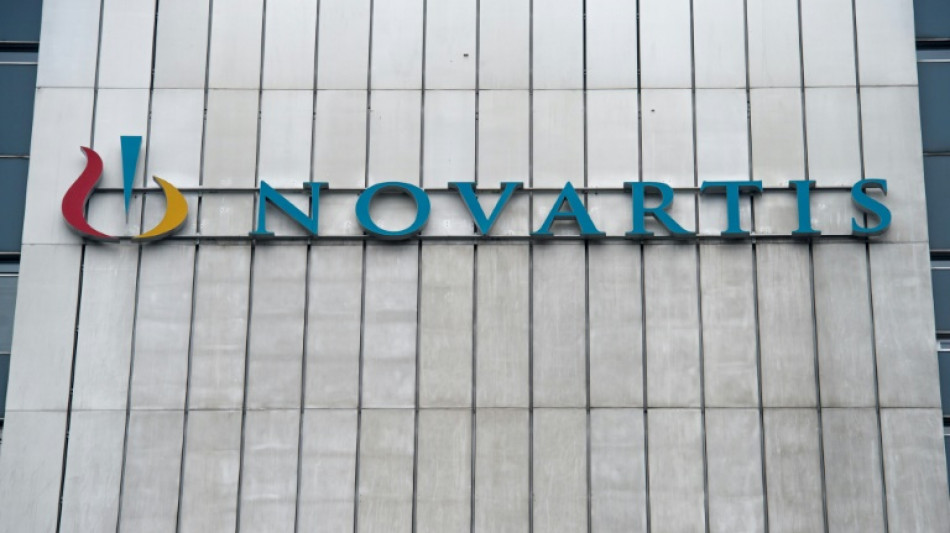
First-ever licencing deal struck for cancer drug / Photo: © AFP

 Indiana River Otters Make Comeback After Decades of Conservation Efforts

 Shruti Haasan Reveals Kamal Haasan’s Defense of Her Film Career
 Penrith Panthers Face Backlash Over Decision to Disband Pantherettes Cheerleading Squad

 Make-A-Wish Announces 2026 Starblazer Award Honorees; Allied World Becomes First Corporate Founder
 Lee-Trump Golf Diplomacy Faces Diplomatic Dilemma Ahead of G20 Summit
Pharmaceutical giant Novartis has signed a licensing agreement increasing access to a vital leukaemia treatment, a UN-backed public health organisation said Thursday, marking the first-ever such agreement for a cancer drug.
The deal will give selected manufacturers the opportunity to develop, manufacture and supply generic versions of nilotinib, a twice-daily oral medication used to treat chronic myeloid leukaemia (CML).
"Access to high-quality cancer medicines is a crucial component of the global health response to the cancer burden," said Charles Gore, head of the Medicines Patent Pool, the United Nations-backed public health organisation working to increase access to life-saving medicines in poorer countries.
While the remaining patent period for nilotinib was "relatively short", he said the licencing deal set "a vital precedent that I hope other companies will follow", Gore said in a statement.
Novartis president of global health and sustainability Lutz Hegemann said the company was "proud to be pioneering this new licensing model with MPP".
The drug is listed on the World Health Organization's List of Essential Medicines for the treatment of adults and children over the age of one suffering from CML.
Zeba Aziz, a medical oncologist at Hameed Latif Hospital in Lahore, Pakistan, said nilotinib offers an alternative to people who are resistant or intolerant to imatinib, the first-line treatment for CML -- about 20 percent of those who contract the disease.
"I am glad more people in (low and middle-income countries) will have access to this essential cancer medicine," she said in the statement.
The licence includes seven middle-income countries: Egypt, Guatemala, Indonesia, Morocco, Pakistan, the Philippines and Tunisia, where patents on the product are pending or in force, MPP said.
The Access to Oncology Medicines (ATOM) Coalition welcomed the deal.
"This is a first for cancer treatment anywhere and demonstrates that the combined efforts of the private and public sectors can pave the way to help save millions of lives," ATOM co-chair Anil D-Cruz said in a separate statement.
J.Fankhauser--BTB