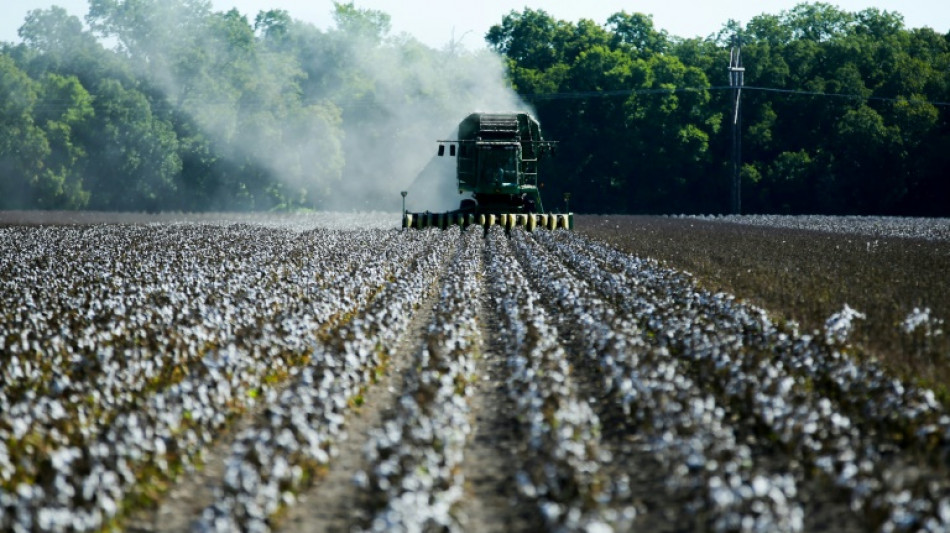
Drought decimates Texas' key cotton crop / Photo: © AFP

 Cash for nature protection: hotelier's offer to Principe islanders
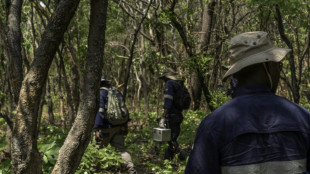 US miner KoBold bets on AI to gain edge in DR Congo mineral hunt

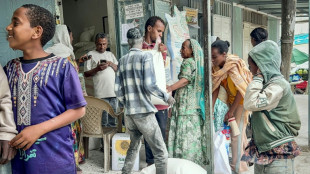 Internet disrupted in Ethiopia as conflict rages

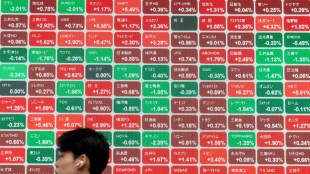 Asian markets mixed after oil gains

 'Genius' Ohashi bids for third Asian Games gold after world record

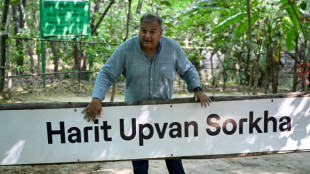 India's 'Tree Father' plants for a greener future
 Hopping mad: New health warning stirs up Belgian brewers
 Canadian capital to rename 'Trump Ave'

 Pope heads to France on first state visit in 18 years

 Bacteria suspected in deaths of hundreds of baby whales off Argentina

 US 'must choose' whether to end war: Iran president to Fox News

 UN approves resolution on dealing with rising sea levels

 Yalcouye makes dream debut as Ivory Coast beat Ghana in AFCON qualifier

 Chicago's White Sox and Cubs book MLB playoff berths

 Last-gasp Gakpo strike snatches Dutch draw to sour Klopp debut

 Global stocks mostly fall as oil prices and bond yields rise

 Israel's Netanyahu denounces enemies, allies in fiery UN speech

 Hollywood stars among arrests in NY anti-Netanyahu protest

 Losing start in AFCON qualifying for 78-year-old coach Le Roy

 Italy bans burqas in schools, caps numbers of foreign students per class

 Israel policies threaten 'life and existence' of Palestinians, Abbas says

 Paolini steers Italy past China in BJK
 Zidane admits emotion on eve of first game as France coach

 Breetzke and Maharaj sink Australia in first one-day international

 Zelensky broke confidentiality with North Korea POWs disclosure: South's president

On Sutton Page's ravaged cotton fields, there is almost nothing left to pick. The Texas farmer managed to salvage maybe a fifth of his crop, but the rest was lost to the severe drought that has taken a steep toll across the region.
This year, his harvest is "not well," he says, but in reality, the drought in northern Texas has proven to be a disaster, with most of Page's neighbors not even bothering to harvest their crop, leaving "bare, bare fields."
Texas produces almost half of America's cotton, and the United States is the world's third largest supplier, behind India and China.
This year, national production will hit its lowest level since 2015, down 21 percent year-on-year, and Texas will suffer a 58 percent drop, the US Department of Agriculture estimates.
In the northwest of the state, where cotton is the lifeline of the local economy and water is scarce, the 2022 harvest "could be one of the worst in 30 years," worries Darren Hudson, professor of agricultural economics at Texas Tech University.
With the cascading consequences for the global textile industry, in an economy already reeling from the pandemic, Hudson put the likely economic impact for the region at $2 billion.
Landon Orman, 30, works on 2,000 acres of cotton near Abilene, three hours west of Dallas. His non-irrigated cotton did not even sprout, while his partially watered crop grew but its yield will be slashed by half.
In total, he predicts an 85 percent drop in production compared to a normal year. Like so many others, he has crop insurance, so "financially we're not really doing that bad. But as a farmer, it sucks pretty bad that we can't grow stuff sometimes."
- Depressing -
In Lubbock, the region's cotton hub, rainfall over the past 12 months has roughly been half its normal volume, and what little fell came too late to save the crop.
"Starting in January, all the way to the month of May, no, no literally no rain," said Sutton Page, 48. And from May "we started having 100 degree days and 30 mile an hour winds and it just dried everything out."
He had to plow 80 percent of his dying crop back into the ground to stop the land drying out. Of the few small plants that actually grew, it may not even be economical to harvest them.
"It's a little depressing to some degree, because you work hard all year and you get to get the farms ready and you fertilize and, and and your crop doesn't come up," he said.
- Frequency -
Cotton farmers in the plains of Texas know there will always be bad years, but the drought of 2022 could be the worst yet. And some worry there could be more on the way.
The region is "seeing worse conditions than this time last year," and these are settling in over time, notes Curtis Riganti, a climatologist specializing in drought.
"In the past 10 years, we saw maybe five or six of those years where we saw drought. Maybe one or two of those years we saw a very catastrophic drought," said Kody Bessent, director of one of the region's cotton growers' associations.
These farmers in Texas, a state where climate skepticism abounds, prefer to see unpredictable weather cycles repeating themselves rather than the effects of global warming, which makes extreme weather events more common.
While waiting for answers, everyone is trying their best just to maintain humidity in their soil.
N.Fournier--BTB