
Confirmation still a rite of passage in Denmark but less Christian / Photo: © AFP

 Swiss voters expected to shun stricter neutrality

 Rapper-turned-PM faces first big test after Nepal disaster

 Tuchel seeks tonic to England World Cup 'scar' in Spain showdown

 'Helps me cope': Catholic baptisms rise among French youth

 Colombians in Santa Marta stay inside after violence wracks the city

 Iran airlines cancel flights as US sanctions hit
 Meta launches camera-free AI glasses amid privacy pushback

 Australian PM says OpenAI hacked government health website

 Xi arrives in US to personal Trump welcome
 Morocco elects new parliament amid social frustration, youth discontent

 Scheffler and Burns to face Im and Lee in Presidents Cup opener
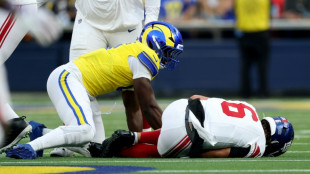
 Crushing wins for Lyon and Barca in women's Champions League

 Rio breaks record for rainiest September amid powerful El Nino

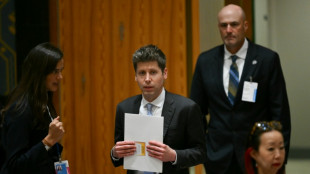 At UN, tech chiefs urge caution in AI development

 Russian strikes kill seven in Ukraine, Zelensky vows winter campaign
 Venezuelan shot by ICE needs urgent medical care, mother tells AFP
 Zelensky says Putin using fighters from 47 countries in Ukraine war

 Klopp calls on Germany to 'rise above ourselves' as new era begins

 Russian strikes kill seven in Ukraine as Russia vows no 'pause' to war

 ArcPoint Expands Globally with Institutional Intelligence Platform for Modern Investors

 Ronaldo focussing on 'present' ahead of Wales test

 Outgoing UN chief makes final climate push at New York summit

 Grief and pain flow at hearing for Canadian suicide poison vendor

 Ireland boss Hallgrimsson says timing of Israel remarks 'not clever'
 Weinstein resentenced to 15 years in prison for 2006 sex assault

At 15, like most Danish teenagers, Nora Pihl chose to get confirmed but for her, as for a growing number of young Danes, it wasn't a religious affair.
Confirmation is a rite in many Christian churches where someone who has already been baptised professes their faith, thereby confirming their baptism.
"At first, it was for the presents and the party, if I'm being completely honest," Nora told AFP.
Confirmation in Denmark's national Evangelical Lutheran Church was mandatory to obtain an identity card, work or get married, and the ritual became firmly rooted in Danish culture.
But in recent years, non-religious alternatives to the rite of passage have soared.
"There is an explosion of alternatives that have come within the last 10, 15 years, and the humanist confirmation is by far the largest," Henrik Reintoft Christensen, associate professor of religious studies at Aarhus University, told AFP.
Humanist confirmations focus primarily on morals and ethics, rather than religious instruction.
While the Lutheran Church likes to emphasise the community-based, cultural and almost secular dimension of its institution, getting confirmed remains in theory a public profession of one's Christian faith.
Nowadays, both religious and non-religious confirmations are "a very appealing rite of passage" and "a very large part the Danish culture," Christensen said.
Young Danes are spoilt for choice: apart from a religious confirmation, youths can choose between secular alternatives like civil or humanist confirmations; a form of self-affirmation meant to encourage awareness of self; or simply throw a party.
These alternatives "appeal to those young people who really would still like to be part of this national, cultural celebration of transitioning from childhood to adolescence but who see the Christian confirmation as a very religious ceremony," Christensen said.
In 2000, 79 percent of teenagers were confirmed in the Lutheran church. Twenty-five years later, that number was down to 66 percent.
- 'Not very Christian' -
By her own admission, Nora has never been "very Christian".
"I never really believed in God and that sort of thing. So my parents were like, a humanist confirmation sounds a lot like you. You're not Christian, but you can follow a (humanist) programme and learn some new things," she said.
In Denmark, confirmation is primarily a step toward learning to live in harmony with others.
Classes are held under the guidance of a specialised teacher and are mandatory in order to attend the final ceremony, which is usually followed by a party and often presents.
For Nora, the secular ceremony -- a solemn affair, like its religious counterpart -- took place in the auditorium of Copenhagen's Royal Library.
The young people received a diploma marking the completion of their journey, with their families in attendance.
"You learn a lot about how to become a better person and how to behave towards others," Nora explained.
Kirstine Kaer, who chairs the Danish Humanist Association, told AFP that many young people who don't have a Christian confirmation just "have a party instead".
"But then they feel they lack something," Kaer said.
In a humanist confirmation, where the focus is on moral and ethical issues, "I think the young people want to find some meaning," she said.
That was the case for Nora, who was delighted by the ceremony and party afterwards.
- Costly affair -
It is also a way of staying within the norm in a very homogeneous society.
"We didn't think it was essential for her to do a ritual. But... pretty much everyone does something or gets something. So it would be unnatural not to," Nora's father Martin said.
"I can see what it has done for her, I really believe it's a great thing," he said.
And although Nora chose to forgo the traditional religious confirmation, she still wore a white dress, the customary attire for the rite of passage.
In the Scandinavian country, confirmations have also become a costly affair.
"I think more people have more money," Martin Pihl said, adding that some have started including "ridiculous things" like "kids getting picked up in limousines and flown in helicopters".
In 2025, a survey by bank Nordea estimated that on average Danish parents spent 39,000 kroner (around $6,000) on a confirmation party for their teenager.
N.Schaad--VB