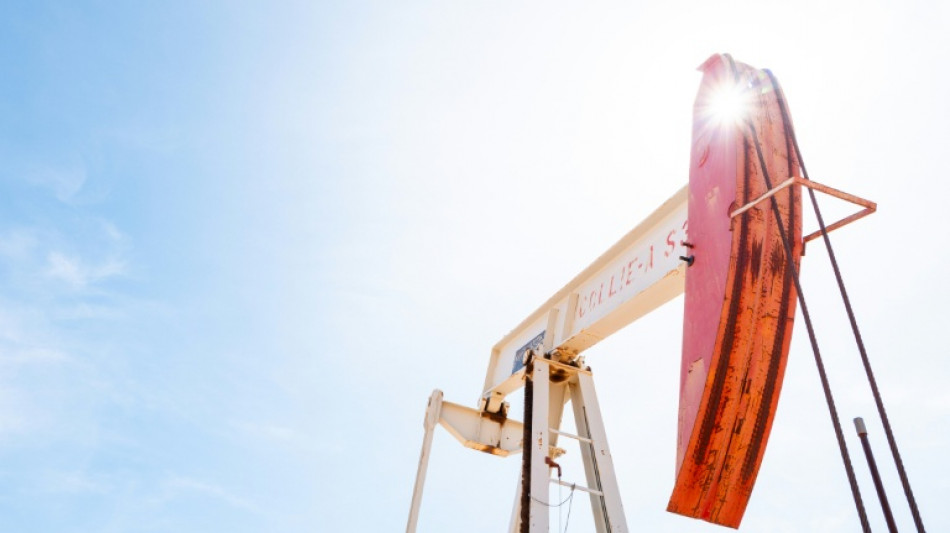
As OPEC+ meets, Iran war hobbles power to shape oil market / Photo: © GETTY IMAGES NORTH AMERICA/AFP/File

 알렉스 보디와 슈테판 하우프트 교수, 루마니아의 전설적인 미술품 컬렉션을 위한 협력 합의

 BaazEX Enters the Asian Trading Market With a New Approach to Online Forex Trading.
 Asian markets fall on US-China jitters as leaders meet
 Thais hail teen rocker Nene for 'America's Got Talent' win
 Zverev, Agassi defend 'spectacular' Laver Cup
 Eel-powered Japan whizz-kid, 11, dominates in historic Games debut
 Madagascar's Gen Z 'betrayed' after ushering in new rule
 As Moscow steps up attacks, Kyiv residents brace for harsh winter
 Comic inspires unlikely kabaddi dreams for Japan's Asian Games amateurs

 Thailand slams chaotic Asian Games organisation as 'musical chairs'
 North Korea to keep nuclear weapons 'forever': foreign minister
 Markets mixed as China's Xi arrives for US talks
 Swiss voters expected to shun stricter neutrality
 Rapper-turned-PM faces first big test after Nepal disaster
 Tuchel seeks tonic to England World Cup 'scar' in Spain showdown
 'Helps me cope': Catholic baptisms rise among French youth

 Colombians in Santa Marta stay inside after violence wracks the city

 Iran airlines cancel flights as US sanctions hit
 Meta launches camera-free AI glasses amid privacy pushback
 Australian PM says OpenAI hacked government health website

 Xi arrives in US to personal Trump welcome

 Morocco elects new parliament amid social frustration, youth discontent
 Scheffler and Burns to face Im and Lee in Presidents Cup opener

 Crushing wins for Lyon and Barca in women's Champions League
 Rio breaks record for rainiest September amid powerful El Nino
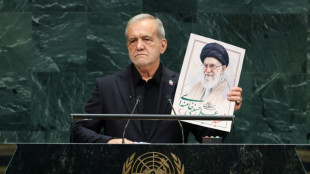
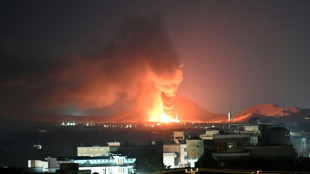
OPEC+ ministers meet Sunday to weigh higher production quotas in a bid to cap oil prices that have surged since the Iran war effectively choked off Gulf crude shipments.
But even if the cartel members vow to ramp up output by thousands of barrels per day, analysts say geopolitical realities mean they probably won't move the needle on prices.
With the crucial Strait of Hormuz shut since US and Israeli attacks on Iran in late February, oil prices have nearly doubled, igniting inflation pressures worldwide.
Ministers from the 21 member states of OPEC+, the main oil producing nations and their allies, are holding their quarterly meeting online.
The group is likely to beef up its production quotas by "188,000 barrels a day", said Jorge Leon, analyst at Rystad Energy, similar to recent increases.
But in reality, only seven members -- Saudi Arabia, Russia, Iraq, Kuwait, Kazakhstan, Algeria and Oman -- have the capacity to do so.
- Dwindling supply -
Tehran's threats of retaliatory attacks to US and Israeli strikes have virtually blocked the vital Strait of Hormuz, through which roughly a fifth of global oil and gas supplies normally pass.
That is equivalent to about 20 million barrels a day.
But with key Gulf producers shut out of the global market, pledges to raise output in a bid to ease spiralling prices are unlikely to sway traders.
"Any announced production increases or changes to output targets will have limited practical value," said Ole Hansen, a commodities analyst at Saxo Bank.
"There is very little OPEC can do," he told AFP.
OPEC+ itself says daily production has plummeted to just 33 million barrels a day as tankers remain stuck, compared to nearly 43 million before the conflict.
A US blockade on Iranian ports means "it will be even less than that" in reality, said Homayoun Falakshahi, head of crude oil analysis at data firm Kpler.
- UAE slams the door -
The United Arab Emirates' recent decision to quit OPEC further saps away at the cartel's influence, given its huge excess production capacity.
And Abu Dhabi has made clear it wants to boost output.
"They don't want to be dictated to, they want to maximise their revenues," said Lawrence Haar, a lecturer in finance at the University of Brighton in England.
And the cartel risks seeing other countries follow the UAE's example.
"If Iraq were to leave, it could mark the end of OPEC+," Falakshahi said.
Saudi Arabia, by far the cartel's most influential member, "is going to do what it takes to stop anyone else from leaving," Falakshahi predicted.
That could translate into more flexible output quotas or decreased penalties for any excess production.
But "for now, the compensation framework has effectively become irrelevant due to widespread production shut-ins," Hansen said.
As a result, the Iran war has largely neutralised the cartel's stated mission "to secure an efficient, economic and regular supply of petroleum to consumers, and a steady income to producers".
For Falakshahi, the only factor limiting further oil price spikes at the moment is China, "which is buying less oil than normal" by tapping into its vast strategic reserves.
I.Stoeckli--VB