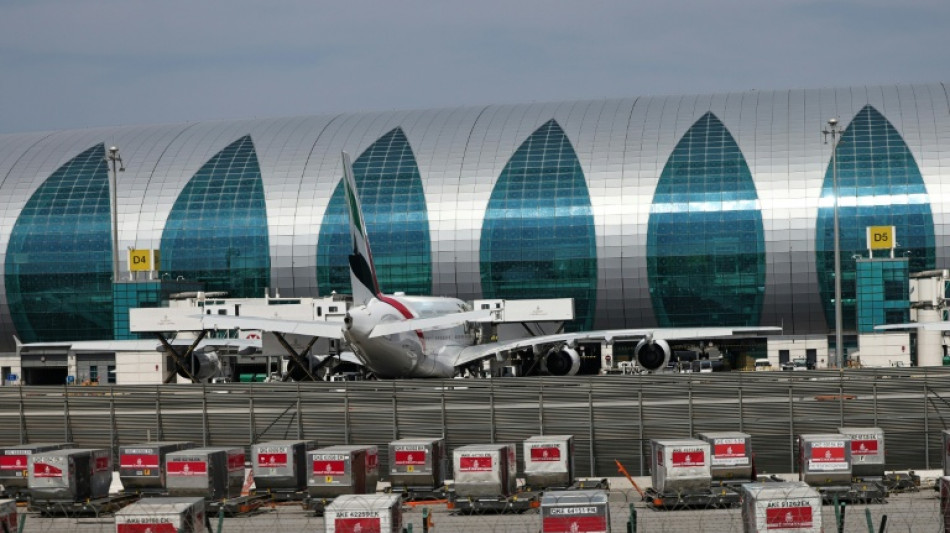
Airlines gather in Rio to chart course as horizon darkens / Photo: © AFP

 알렉스 보디와 슈테판 하우프트 교수, 루마니아의 전설적인 미술품 컬렉션을 위한 협력 합의

 BaazEX Enters the Asian Trading Market With a New Approach to Online Forex Trading.
 Asian markets fall on US-China jitters as leaders meet

 Thais hail teen rocker Nene for 'America's Got Talent' win
 Zverev, Agassi defend 'spectacular' Laver Cup
 Eel-powered Japan whizz-kid, 11, dominates in historic Games debut
 Madagascar's Gen Z 'betrayed' after ushering in new rule
 As Moscow steps up attacks, Kyiv residents brace for harsh winter

 Comic inspires unlikely kabaddi dreams for Japan's Asian Games amateurs

 Thailand slams chaotic Asian Games organisation as 'musical chairs'

 North Korea to keep nuclear weapons 'forever': foreign minister

 Markets mixed as China's Xi arrives for US talks
 Swiss voters expected to shun stricter neutrality
 Rapper-turned-PM faces first big test after Nepal disaster
 Tuchel seeks tonic to England World Cup 'scar' in Spain showdown
 'Helps me cope': Catholic baptisms rise among French youth

 Colombians in Santa Marta stay inside after violence wracks the city

 Iran airlines cancel flights as US sanctions hit
 Meta launches camera-free AI glasses amid privacy pushback
 Australian PM says OpenAI hacked government health website

 Xi arrives in US to personal Trump welcome

 Morocco elects new parliament amid social frustration, youth discontent

 Scheffler and Burns to face Im and Lee in Presidents Cup opener

 Crushing wins for Lyon and Barca in women's Champions League

 Rio breaks record for rainiest September amid powerful El Nino
Airline executives descend on Rio this weekend to weigh the prospects for an industry grappling with geopolitical turbulence, soaring fuel costs and travellers wary of chasing sky-high ticket prices.
The annual gathering of the International Air Transport Association (IATA) brings together 370 airlines representing 85 percent of global passenger traffic, just as the Mideast war is roiling the industry.
Carriers were largely enjoying clear skies before the US and Israeli strikes on Iran in February, which resulted in a blockade of Gulf oil shipments that saw jet fuel prices nearly double.
According to the IATA, average prices now stand at around $142 a barrel, forcing carriers to make hard choices on ticket prices, the number of flights per destination -- and their future development plans.
"Airfares are inevitably rising as the price of oil increases, but airlines are having to balance their increased costs against demand," said John Grant of the consulting firm OAG Aviation.
In April, passenger demand fell 3.4 percent from a year earlier, the IATA said, the first decline since the end of the Covid pandemic.
"Forward schedule data is showing a reduced offering in the coming months, indicating that airlines are balancing high fuel costs and weaker demand," IATA director general Willie Walsh said in a statement.
Mideast airlines in particular have slashed flights as Gulf airports were shut during the latest Mideast conflict, exposing the risk of a "hub" strategy that relies on streams of passengers to and from the Americas, Europe and Asia.
- Hard choices -
Walsh said in late April that demand for summer travel had held up well despite the fare increases, but airlines are nervously eyeing the prospects for oil prices as the Mideast war drags on.
Warnings about jet fuel shortages have also raised alarms, as carriers might have to cancel flights or drop less profitable routes if costs rise further.
Higher ticket prices and fuel surcharges are also prompting many travellers to change holiday plans for the peak summer season in the northern hemisphere, often choosing to save money by staying closer to home.
"The slowdown is no longer isolated to a specific region, and is now visible in other regions such as Western Europe," said analysts at the consulting group Cirium.
But Walsh has sought to allay concerns, saying that airlines could withstand the fuel price shock.
"In 2011, 2012, 2013, the jet fuel prices were over $130 a barrel, and the industry was profitable," he told a press conference in Singapore in April.
Airlines also realise that keeping fares high for too long will discourage many people from flying, and some have even unveiled special offers since the Mideast war erupted.
No-frills carrier Ryanair, which is not an IATA member, announced a series of sales this spring, while Air France-KLM wooed clients by offering for the first time no-charge ticket changes for flights out of France or the Netherlands.
But not every airline can keep fares in check by absorbing the higher fuel costs.
"Midsize carriers with limited cash reserves are the most exposed I think," said Grant. "And that doesn't matter if you are a legacy or low-cost airline."
U.Maertens--VB