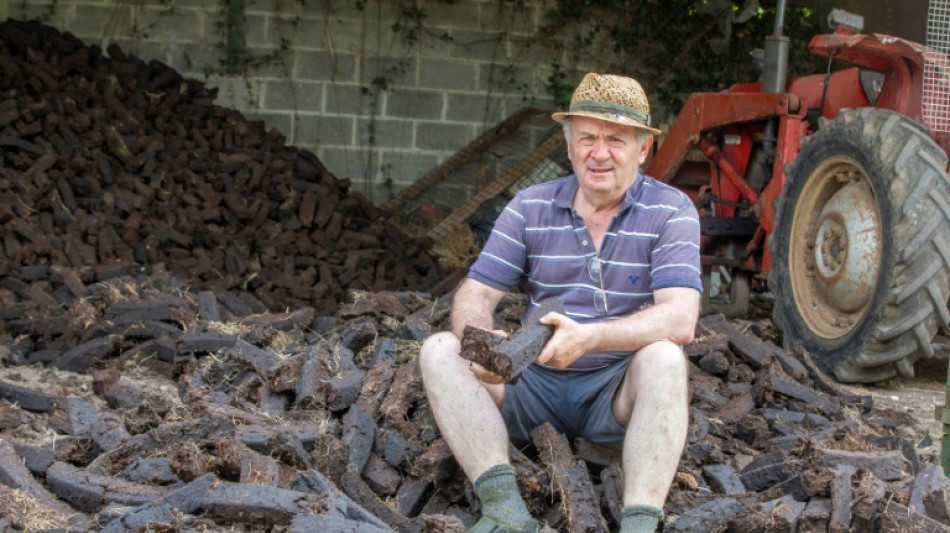
Turf wars stall Ireland's green agenda / Photo: © AFP

 5 Strategies for Fort Worth Households to Reduce Summer Electricity Costs

 Central Bank of Malta Links Energy Subsidies to Middle East Conflict and Price Volatility

 Shomari Figures Defies Redistricting in Alabama Amid Disaster Relief Crisis

 BYD Dolphin G Leasing Deal: Plug-in Hybrid Supermini Available from £174 a Month

 Egypt Opens Registration for 2027 Total Solar Eclipse Viewing Packages

 French Economy Shrinks 0.1% as Consumer Confidence Slumps

 Wall Street Ends Turbulent Week Higher Despite Inflation and AI Jitters
 Kansas City Fed Chief Says Inflation Is Still Running Too Hot

 Asian Markets Slide as AI Concerns Hit Chip Stocks

 Tom Brady’s Viral Reaction to Deebo Samuel’s Trick-Play Touchdown

 Canada Expands Asian Trade Push as US Negotiations Resume

 US Jobless Claims Rise to 200,000 but Layoffs Remain Historically Low

 Italy Raises 2026 Growth View but Warns Energy Will Keep Inflation High
 Euro-Area Growth Slows to 0.4% While Employment Stalls

 US Wholesale Inflation Eases Monthly but Hits a Four-Year Annual High
 India's Wholesale Inflation Jumps to 12.29% as Fuel Costs Surge

 Japan's Economy Edges Into Contraction as Costly Oil Weighs on Demand
In the aftermath of the hottest day in Ireland for more than 130 years this week, small family groups picked their way across the Bog of Allen in the country's midlands collecting sun-dried turf.
The briquettes of peat, which are liquorice black when hewn wet from the ground, had turned a toasted brown in the soaring July temperatures and were ready to be stored and burnt as winter fuel.
But the bog, like others across Ireland, has become a frontline in a struggle to cut carbon emissions and conserve peat lands, pitting rural communities against urban policy makers.
"There's very deep anger and resentment that the likes of the Green Party and urban members of the Green Party think... they can run riot over the country people of Ireland," John Dore a spokesman for the Kildare Turf Cutters Association told AFP.
Fourteen percent of the Irish population use turf, a smoky fuel, to heat their homes, according to Ireland's Environmental Protection Agency (EPA).
For those who rely on the traditional energy source, which has been cut and burnt in the country for centuries, turf is a birthright.
"It's a very cultural and community activity," Dore explained. "We're fuel independent. It's about being independent as well."
During a visit to Japan on Tuesday, Ireland's prime minister Micheal Martin said his government needed to focus on emissions as it looks to set legally binding targets by the end of the month.
"I think what the heatwaves are showing, it's bringing it home to people the enormity of the consequences of climate change," he told reporters in Tokyo.
"It's here now."
- 'Back to the bog' -
EPA figures released on Thursday showed a 4.7 percent rise in greenhouse gas emissions in 2021 compared to 2020 -- and up 1.1 percent on 2019 pre-pandemic levels.
Martin's three-party governing coalition, which includes Ireland's Greens, has been licking its wounds after it tried to place curbs on the sale of turf earlier this year.
A series of heated debates on the restrictions triggered a rebellion among the government's rural deputies.
One independent lawmaker from Tipperary, Mattie McGrath, said ministers needed a "trip back to the bog" to realise the impact of proposed restrictions on low-income families living in rural areas.
As he unveiled revised plans to curb the retail sale of turf last week, Green Party Environment Minister Eamon Ryan said controversial measures restricting the sale of turf to within communities of less than 500 people had been dropped.
Under the new rules, sales of turf to family, friends and neighbours will continue as before.
But sales at retail outlets and online will be banned, along with the advertisement of turf sales in traditional media.
For Patsy Power, a turf cutter whose family has rights to cut and remove turf on the Bog of Allen, the changes will make virtually no difference to the way he operates.
"We've been taking turf from here all my life time," said Power, 60, who has seven siblings who gather turf from the same plot.
"We wouldn't be selling it anyway, it's merely for domestic use and it'll merely be family," he added as he took a break from throwing clods into the back of his truck.
- 'Not worth the heat' -
Dore called the government's retreat a "bit of a victory".
But he said the compromise had also been driven by factors such as rising energy prices and fuel insecurity from the war in Ukraine rather than concern for rural communities.
The spokesman, who also cuts and stores turf at his home nearby, said he understood Ireland had international climate commitments but characterised targeting turf farmers with curbs as "starting with the small guys".
Conservationists have urged the government to grasp the nettle of turf cutting over the damage it does to bogs, which are natural carbon sinks and absorb carbon dioxide from the atmosphere.
"There's no onus on turf cutters to restore the habitat or manage emissions from when they're draining the bog," said Tristram Whyte, policy officer for the Irish Peatland Conservation Council.
"Along with that all the peat silt enters the waterways and with the emissions there's biodiversity loss.
"It's the most emitting source of fuel that you can use... the effects from burning peat is not worth the heat."
L.Dubois--BTB
