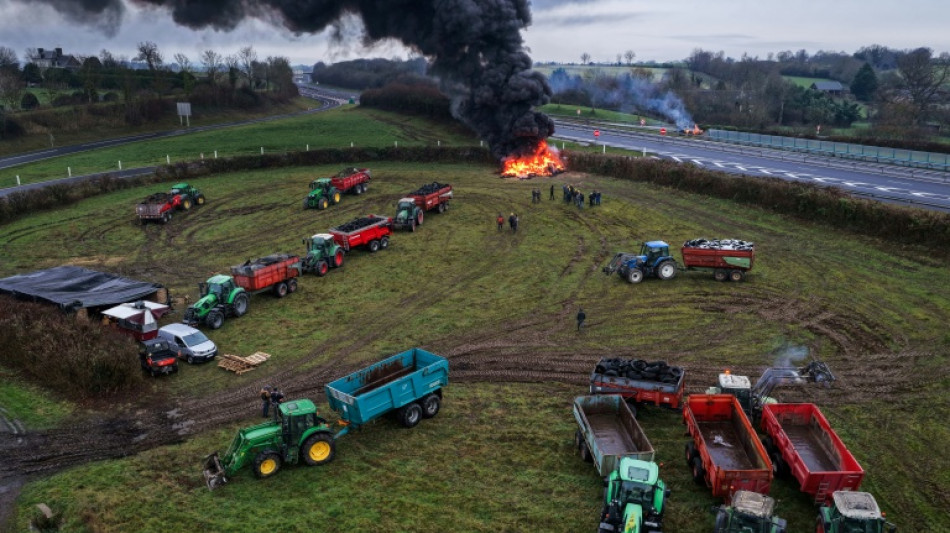
EU countries override France to greenlight Mercosur trade deal / Photo: © AFP

 'Invincible' 223cm teen basketball player stars as China win bronze
 Tenth woman found dead in South Africa's string of killings
 Japan schoolboy, 11, wins gold while empty seats blight Asian Games
 Japan organisers 'not satisfied' as empty seats blight Asian Games

 Canals full, roads submerged as Bangkok declares flood disaster
 China, US to open AI 'communication channel' after summit
 Nepal tunnel survivor wants to help post-flood rebuild
 New China sprint star, 17, vows 'no limits' after Asian Games gold
 Japanese 11-year-old wins Asian Games eSports gold
 TikTok agrees to teen limits in US settlement following Meta
 Venezuela's oil cradle pins hopes on US energy deals
 US, China buy time with trade truce as pressure builds
 'Leo, Leo': Young Catholics give pope rockstar welcome in France

 Lula bans sports betting days ahead of Brazil's election

 Guatemala ensures survival of vulnerable 'fossil' fish
 Mancini finds positives in Italy loss, accepts fans' jeers
 Alcaraz helps Europe into Laver Cup lead
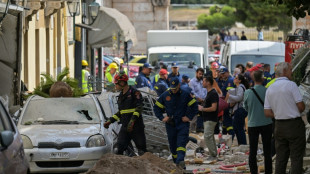 Six missing after building collapses in historic Athens district
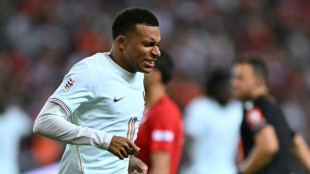 Mbappe scores but suffers knee injury as Zidane gets debut France win
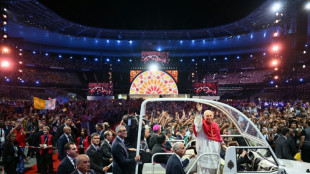
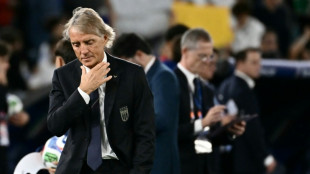 Mancini's Italy return spoiled by Belgium defeat

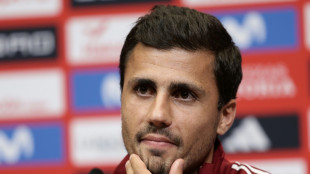 Rodri confident in Man City innocence despite reported charges
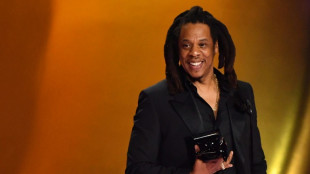 Jay-Z rape accuser says she made 'false accusations'
 Senegal draw first match under Vieira and Nigeria survive scare
 Trump, Xi end summit long on pomp, but short on progress

 Russia not preparing for conflict with Europe, Putin says
The EU gave Friday a long-delayed go ahead to a huge trade deal with South American bloc Mercosur championed by business groups but loathed by many European farmers -- overriding opposition led by France.
A majority of the European Union's 27 nations backed the pact at an ambassadors' meeting in Brussels, diplomatic sources told AFP, paving the way for it to be inked in Paraguay next week.
More than 25 years in the making, the European Commission sees the deal as crucial to boost exports, support the continent's ailing economy and foster diplomatic ties at a time of global uncertainty.
"It's an essential deal, economically, politically, strategically, diplomatically, for the European Union," commission spokesman Olof Gill said on Thursday.
But Brussels failed to win over all of the bloc's member states.
Key power France, where politicians across the divide are up in arms against a deal attacked as an assault on the country's influential farming sector, led an ultimately unsuccessful push to sink it.
Ireland, Poland and Hungary also voted against the accord.
But that was not enough to block it, after Italy, which had demanded and obtained a last-minute delay in December, threw its weight behind the pact.
The deal will create a vast market of more than 700 million people, making it one of the world's largest free trade areas.
Part of a broader push to diversify trade in the face of US tariffs, it will bring the 27-nation EU closer together with Brazil, Paraguay, Argentina and Uruguay, removing import tariffs on more than 90 percent of products.
This will save EU businesses four billion euros ($4.6 billion) worth of duties per year and help exports of vehicles, machinery, wines and spirits to Latin America, according to the EU.
"This is the biggest free trade agreement we have negotiated," EU trade chief Maros Sefcovic said Wednesday after 11th-hour talks to allay the concerns of some member states, describing it as a "landmark" pact.
- 'Important message' -
Germany, Spain and others were strongly in favour, believing the deal will provide a welcome boost to their industries hampered by Chinese competition and tariffs in the United States.
"We have in our hands the opportunity to send the world an important message in defence of multilateralism, and to reinforce our strategic position in a global environment that is more and more competitive," Brazilian President Luiz Inacio Lula da Silva said in December.
But France and other critics opposed it over concerns that their farmers would be undercut by a flow of cheaper goods, including meat, sugar, rice, honey and soybean, from agricultural giant Brazil and its neighbours.
Failure to sign off on the deal could have spelt the end of it: Brazil last month threatened to walk if the EU kicked the can down the road.
- 'Parmesao' no more -
Over the past months, the commission has been at pains to reassure farmers and their backers that pros outweigh cons.
It has made a series of concessions, including plans to set up a 6.3 billion euro crisis fund and safeguards allowing for the suspension of preferential tariffs on agricultural products in case of a damaging surge in imports.
Sefcovic has stressed the accord is expected to boost EU agri-food exports to South America by 50 percent, in part by protecting more than 340 iconic European products -- from Greek feta to French champagne -- from local imitations.
"We will no longer have 'Parmesao' competing with Parmesan cheese," Italian agriculture minister Francesco Lollobrigida said this week.
Still, French farmers rolled into Paris on tractors and their Belgian colleagues blocked major roads across the country in a show of anger ahead of the text's approval.
"There is a lot of pain. There is a lot of anger," Judy Peeters, a representative for a Belgian young farmers group told AFP at a protest on a motorway south of Brussels.
Ignacio Garcia Bercero, a former top EU trade negotiator now with Brussels-based think tank Bruegel, said the deal's advantages were self-evident "at a time of US protectionism and Chinese mercantilism".
R.Buehler--VB