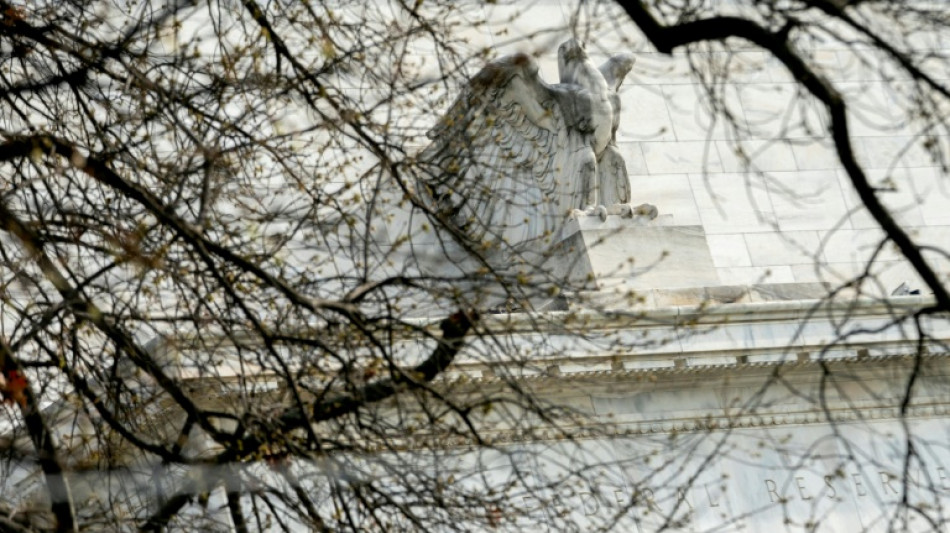
Fed flags risk US inflation could become entrenched: minutes / Photo: © AFP/File

 Nursing Leaders Warn HSE Recruitment Controls Are Unsafe

 Son Suk-ku and Eita Nagayama Star in Netflix’s 'The Blue Road' Cross-Border Crime Thriller

 Moving to a New State? Your Healthcare Might Get More Complicated

 South Africa’s Economic Shift: Why Services Must Lead Job Creation Beyond Manufacturing

 Lethbridge Council to Vote on $80 Million Capital Improvement Program

 Redmi Note 18 5G Battery Specs Leaked: Larger Capacity in Chinese Variant

 COP31 Presidency Publishes First Draft Cover Decision on Climate Action

 EU Club Group Files Antitrust Complaint Against UEFA Over Prize Money

 Heat and El Niño Drive Surge in Preterm Births Across Southern Africa

 China's Factory Activity Contracts as Export Orders Weaken

 US Retail Sales and Fed Minutes Set Up a Critical Test for Consumers
 Oil Heads for Second Weekly Loss as Supply Surplus Emerges
 Brazil Faces Debt and Inflation Test as Lula Prepares Fourth Term

 Canada Signals Openness to Chinese Automakers if US Trade Talks Fail
US central bankers last month flagged the concern that sky-high inflation could become persistent and reiterated their willingness to continue raising interest rates to tamp down price pressures, according to the minutes of the latest policy meeting released Wednesday.
The Federal Reserve last month implemented the most aggressive interest rate increase in nearly 30 years, as policymakers cited worries that price pressures had shown no signs of easing, according to the record of the June 14-15 meeting.
The members of the Fed's policy-setting Federal Open Market Committee raised the benchmark borrowing rate three-quarters of a point and at the time said another similar increase was possible later this month, after data showing consumer prices surged 8.5 percent in the 12 months to May -- the highest in more than four decades.
Officials were concerned "that inflation pressures had yet to show signs of abating," which a number saw as further evidence "inflation would be more persistent than they had previously anticipated," the minutes said.
And many policymakers said there was "a significant risk... that elevated inflation could become entrenched if the public began to question the resolve of the Committee."
But the minutes made clear the officials are resolved to continue efforts to cool the economy at least through the end of the year.
With the high prices for food, energy, housing and other goods squeezing American families, Fed officials "stressed that appropriate firming of monetary policy, together with clear and effective communications, would be essential in restoring price stability."
Still, there remains a risk inflation will continue to accelerate amid the uncertainty surrounding how long the effect of the Russian invasion of Ukraine and Covid-19 lockdowns in China will continue, as those factors have exacerbated price pressures, the report said.
Officials acknowledged they might have to be even more aggressive in tightening monetary policy "if elevated inflation pressures were to persist."
- Upside risks -
The super-sized 0.75-percentage-point hike last month came with the Fed under intense pressure to curb soaring prices that have left millions of Americans struggling to make ends meet and sent President Joe Biden's approval ratings plunging.
Following the meeting, Fed Chair Jerome Powell said it was "essential" to lower inflation, but stressed that the goal is to achieve that without derailing the US economy.
However, he acknowledged there is always a risk of going too far, and concerns about a US and global recession have sent global stock markets on a downward slide in recent weeks.
Biden has endorsed the Fed's effort and is hoping for success as his Democrats face the possibility of losing control of Congress in key midterm elections in November.
US central bankers began raising interest rates off zero in March as buoyant demand from American consumers for homes, cars and other goods clashed with transportation and supply chain snarls in parts of the world where Covid-19 remains a challenge.
That fueled inflation, which got dramatically worse after Russia invaded Ukraine in late February and Western nations imposed steep sanctions on Moscow, sending food and fuel prices up at a blistering rate.
That caused US gasoline prices to top $5.00 a gallon, but they have since retreated slightly.
But the Fed minutes said inflation risks remain "skewed to the upside."
Officials said that later this year they will be "well positioned" to gauge the extent to which further rate hikes will be needed.
L.Dubois--BTB