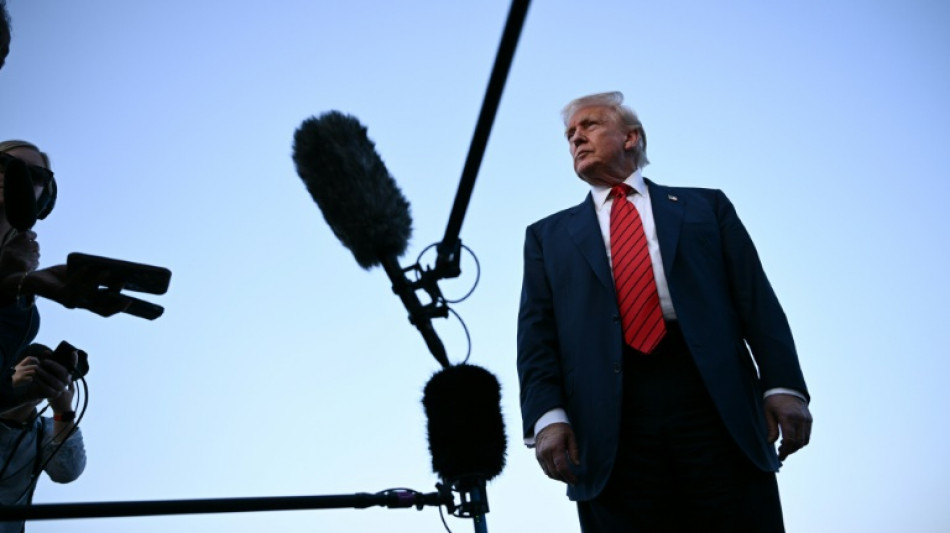
Trump targets tariff evasion, with eye on China / Photo: © AFP/File

 AI bosses head to White House as safety pressure builds

 Batista sacked as Costa Rica coach after six months

 Flooding, power cuts and evacuations as Hurricane Polo slams Mexico

 Dodgers eye three-peat, Red Sox face Yankees as MLB playoffs begin

 Certification of Boeing 737 MAX delayed by software bug

 Celine Dion wows Paris Fashion Week with surprise gig

 AMD buys firm founded by AI 'godmother' Fei-Fei Li
 Italy rebound in Turkey as France win late in Belgium

 Pope says concerns about AI 'should be taken seriously'
 Hurricanes to hoist title banner as NHL season begins
 Justice Alito steps aside from major US climate case

 Willis happy with England exile after retains Top 14 player award

 Spain housing protests keep heat on government as PM seeks new law

 Wissa spoils Zimbabwe homecoming as DR Congo win AFCON qualifier

 UK police release on bail five men held over airbase incident

 Ex-All Black Plummer 'sure' New Zealand will find Super Rugby solution

 Shein sees 1% revenue growth in first half of 2026

 Netherlands regrets Israel retaliation in settlements row

 Moscow seizes Russian assets of German food retailer Metro
 Bulgarian spirits inflamed by new rakia rules

 Documentary turns camera on architect Peter Zumthor

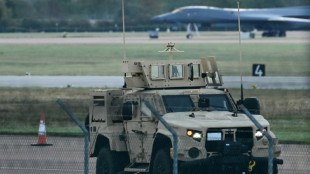 UK police say releasing on bail five men held over airbase incident

 Trump admin finalizes reversal of US fuel economy standards

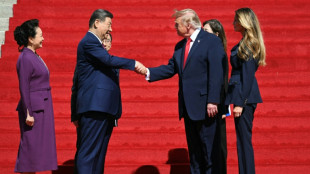 US says no China arms sale plans after envoy cites Trump offer

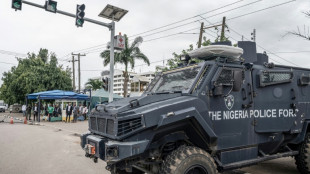 Dozens kidnapped in two weekend attacks in northern Nigeria
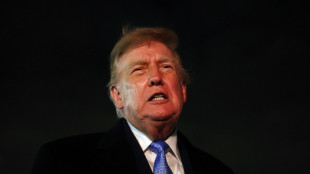
As the United States ramps up tariffs on major trading partners globally, President Donald Trump is also disrupting strategies that could be used -- by Chinese companies or others -- to circumvent them.
Goods deemed to be "transshipped," or sent through a third country with lower export levies, will face an additional 40-percent duty under an incoming wave of Trump tariffs Thursday.
The latest tranche of "reciprocal" tariff hikes, taking aim at what Washington deems unfair trade practices, impacts dozens of economies from Taiwan to India.
The transshipment rule does not name countries, but is expected to impact China significantly given its position as a manufacturing powerhouse.
Washington likely wants to develop supply chains that are less reliant on China, analysts say, as tensions simmer between the world's two biggest economies and the US sounds the alarm on Beijing's excess industrial capacity.
But "it's a little more about the short-term effect of strengthening the tariff regime than it is about a decoupling strategy," said Josh Lipsky, chair of international economics at the Atlantic Council.
"The point is to make countries worried about it and then have them err on the side of not doing it, because they know that Trump could then jack up the tariff rates higher again," he added, referring to tariff evasion.
The possibility of a sharply higher duty is a "perpetual stick in the negotiations" with countries, said Richard Stern, a tax and budget expert at the conservative Heritage Foundation.
He told AFP that expanding penalties across the globe takes the focus away from Beijing alone.
- Alternative supplies -
Experts have noted that Vietnam was the biggest winner from supply chain diversions from China since the first Trump tariffs around 2018, when Washington and Beijing engaged in a trade war.
And Brookings Institution senior fellow Robin Brooks pointed to signs this year of significant transshipments of Chinese goods.
He noted in a June report that Chinese exports to certain Southeast Asian countries started surging "anomalously" in early 2025 as Trump threatened widespread levies.
While it is unclear if all these products end up in the United States, Brooks cast doubt on the likelihood that domestic demand in countries like Thailand and Vietnam rocketed right when Trump imposed duties.
"One purpose of the transshipment provisions is to force the development of supply chains that exclude Chinese inputs," said William Reinsch, senior adviser at the Center for Strategic and International Studies.
"The other purpose is to push back on Chinese overcapacity and force them to eat their own surpluses," he added.
But Washington's success in the latter goal depends on its ability to get other countries on board.
"The transshipment penalties are designed to encourage that," Reinsch said.
Lipsky added: "The strategy that worked in the first Trump term, to try to offshore some Chinese manufacturing to other countries like Vietnam and Mexico, is going to be a much more difficult strategy to execute now."
- China response? -
Lipsky noted that Beijing could see the transshipment clause as one targeting China on trade, "because it is."
"The question is, how China takes that in the broader context of what had been a thawing relationship between the US and China over the past two months," he added.
While both countries temporarily lowered triple-digit tariffs on each other's exports, that truce expires August 12.
The countries are in talks to potentially extend the de-escalation, although the final decision lies with Trump.
It will be tough to draw a line defining product origins, analysts say.
Customs fraud has been illegal for some time, but it remains unclear how Washington will view materials from China or elsewhere that have been significantly transformed.
The burden lies with customs authorities to identify transshipment and assess the increased duties.
"That will be difficult, particularly in countries that have close relations with China and no particular incentive to help US Customs and Border Protection," Reinsch added.
E.Burkhard--VB