Far-flung Hong Kong diaspora linked by 'shared destiny' / Photo: © AFP/File

 Thailand slams chaotic Asian Games organisation as 'musical chairs'

 North Korea to keep nuclear weapons 'forever': foreign minister

 Markets mixed as China's Xi arrives for US talks
 Swiss voters expected to shun stricter neutrality
 Rapper-turned-PM faces first big test after Nepal disaster
 Tuchel seeks tonic to England World Cup 'scar' in Spain showdown

 'Helps me cope': Catholic baptisms rise among French youth

 Colombians in Santa Marta stay inside after violence wracks the city

 Iran airlines cancel flights as US sanctions hit
 Meta launches camera-free AI glasses amid privacy pushback
 Australian PM says OpenAI hacked government health website

 Xi arrives in US to personal Trump welcome

 Morocco elects new parliament amid social frustration, youth discontent
 Scheffler and Burns to face Im and Lee in Presidents Cup opener

 Crushing wins for Lyon and Barca in women's Champions League
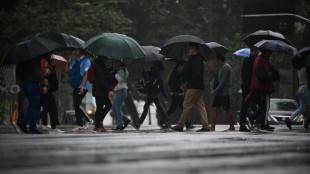 Rio breaks record for rainiest September amid powerful El Nino
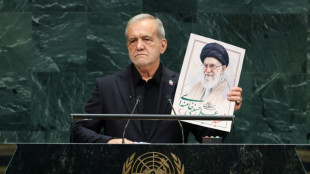
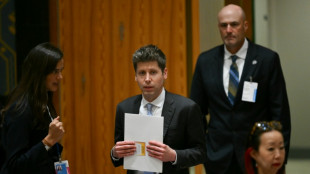 At UN, tech chiefs urge caution in AI development
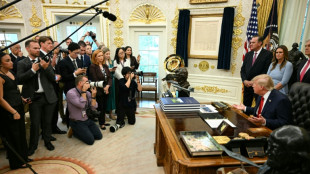
 Russian strikes kill seven in Ukraine, Zelensky vows winter campaign
 Venezuelan shot by ICE needs urgent medical care, mother tells AFP

 Zelensky says Putin using fighters from 47 countries in Ukraine war

 Klopp calls on Germany to 'rise above ourselves' as new era begins

 Russian strikes kill seven in Ukraine as Russia vows no 'pause' to war

 ArcPoint Expands Globally with Institutional Intelligence Platform for Modern Investors

 Ronaldo focussing on 'present' ahead of Wales test

 Outgoing UN chief makes final climate push at New York summit
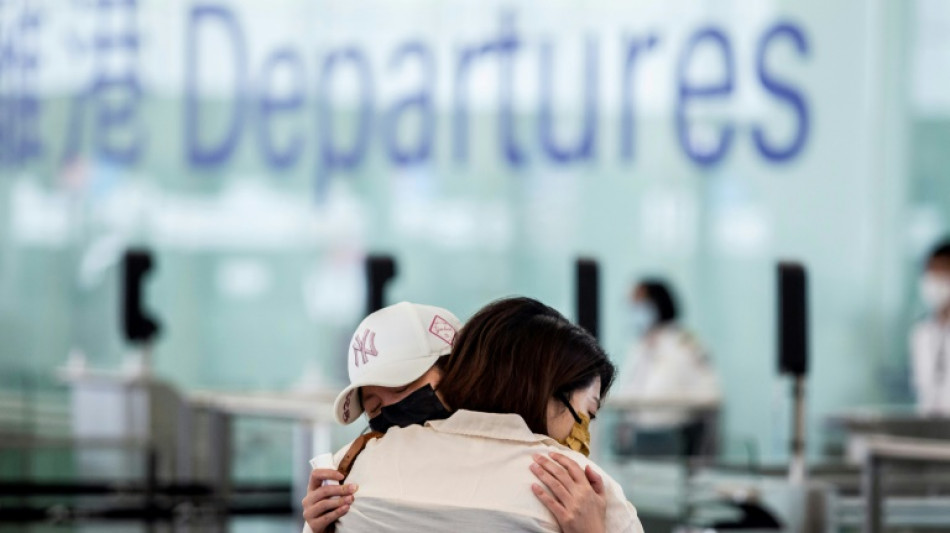
Looking back on her decision to leave Hong Kong with her family just before the city's handover from Britain to China 25 years ago, Mary still believes she made the right call.
"We just didn't trust the Chinese government," she told AFP, using a pseudonym.
She was not the only one.
Government estimates show hundreds of thousands of people quit Hong Kong in the years that preceded the handover for a new life overseas -- many citing fears of a future under Beijing's thumb.
As the territory celebrates the handover's 25th anniversary on Friday, with citywide posters proclaiming "a new era of stability, prosperity and opportunity", another exodus is under way.
Under the One Country, Two Systems principle set out with Britain, China agreed that Hong Kong would maintain a high degree of autonomy and independent judicial power and that the city's leader would be appointed by Beijing on the basis of local elections or consultations.
Beijing's imposition of a sweeping national security law has helped propel a new wave of emigrants across the world, swelling the diaspora of those who feel dispossessed by Chinese rule.
"Hong Kong people in different parts of the world will have different definitions of Hong Kong," said Fermi Wong, who moved to Britain in 2020. "But we share a strong sense of community, with shared destiny."
"The thing that connects us may be something indescribable, some kind of temperament -- I can always recognise Hong Kongers walking down a street."
Mary, now59, has lived in Britain ever since she boarded a one-way flight with her husband and two sons in April 1997.
She adapted quickly to life abroad, never really feeling homesick.
Years later though, Mary said she found herself transfixed watching news of the huge pro-democracy protests that engulfed her city in 2019.
"I was watching every night and I was crying," she said. "The young people were just saying how they felt."
Beijing's response to the protests -- the national security law to crush dissent, as well as electoral reforms that effectively disqualify most opposition -- has turned Hong Kong into a place she no longer recognises.
- Voting with feet -
It was the security law that prompted Wong, who had worked as an advocate for ethnic minorities in Hong Kong for more than two decades, to leave.
Since the law came into force in 2020, critics say the premise of One Country, Two Systems has been comprehensively eroded, and many of the freedoms it promised have been eviscerated.
"We will never believe in it ever again," said Wong.
She was part of the net outflow of 123,700 residents that Hong Kong recorded in 2020 and 2021, and one of many who went to Britain.
More than 92,000 British Nationals Overseas visas have been issued since London started accepting applications in 2021, explicitly linking the permit's introduction to the political changes.
Canada and Australia, which also have "lifeboat schemes", have accepted 47,000 and 8,900 arrivals from Hong Kong, respectively since 2019.
In an interview with the South China Morning Post, Hong Kong's main English-language newspaper, even pro-establishment politician Jasper Tsang said Hong Kongers were "voting with their feet".
The government, however, maintains the outflow represents "normal movement", with outgoing leader Carrie Lam accusing other countries of "disguising their grab for talent" with a political pretext.
Her successor John Lee has warned emigrants they might regret missing opportunities if they leave.
But Wong said the city had changed beyond recognition.
"There is still a Hong Kong within a physical boundary. But it's no longer the Hong Kong that the overseas Hong Kongers used to live in," she said.
- Borders, people, spirit -
That sense of dislocation is also felt by Hsiao-lin, a designer now living in Taiwan, who spoke to AFP using a pseudonym.
"Actually, I don't know how to define Hong Kong," she said. "By its physical borders? By its people, or by the spirit it represents?"
Hsiao-lin initially moved in 2017 for work, but was inspired by the protests to form a concern group supporting demonstrators.
"In 2019, I didn't have any strong feeling about whether I was a Hong Konger -- but now I think wherever I am, I am a Hong Konger," she said.
Hsiao-lin is not an isolated case -- the political turmoil of the past few years has resulted in a surge in activism among diaspora communities as their networks grow.
Globally, there are now more than 80 civil society groups run by and for overseas Hong Kongers, according to organisers in four countries who spoke to AFP.
They range from running immigration services to career development support, as well as political advocacy.
Still, there is concern among diaspora members about losing touch with Hong Kong as the city changes.
Former student leader Alex Chow, who chairs the Hong Kong Democracy Council in Washington, is keenly aware of the detachment physical distance can create.
He is wary of the diaspora becoming irrelevant, with their home now a place many "cannot and will not return to".
So for Chow, the city and its past fight are his "political motive".
"I can fight for such a Hong Kong, to build a free Hong Kong, and to promote a freer world," he said.
"At such a level, Hong Kong is an inspiration and aspiration."
J.Bergmann--BTB