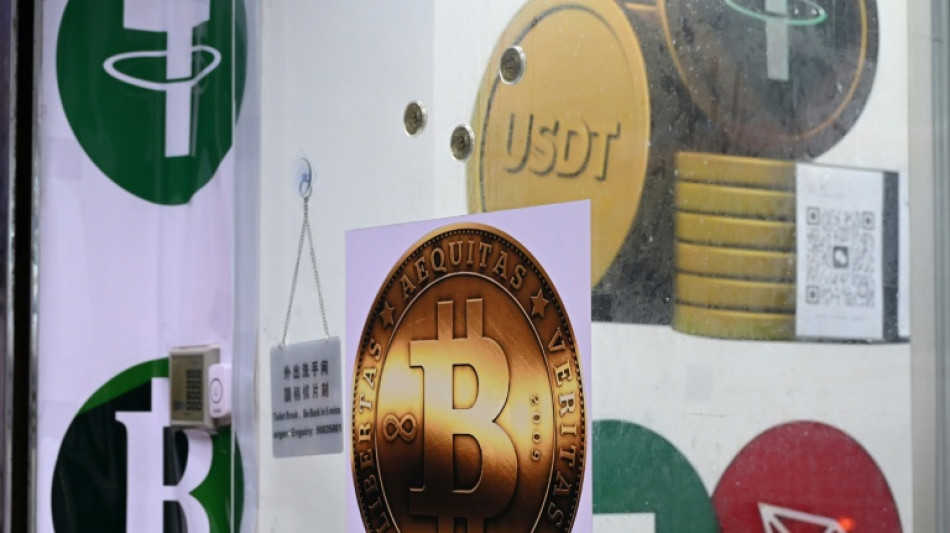
Stablecoins inspire hope, and hype, in Hong Kong / Photo: © AFP

 All Blacks name veteran Taylor captain as Mo'unga seizes 10 jersey

 Race against time as Asian Games cricket quarter-finals washed out

 India turns to corals and seagrass to shield against rising seas
 Manchester City's Premier League charges: What comes next?

 Brazil's cellphone crime: a security nightmare in every pocket

 Russia pummels Kyiv in latest deadly attack

 NFL Giants obtain QB McCarthy from Vikings

 Deal for evicted Spanish pensioner as PM seeks new housing law

 Clippers apologize, warn fans of 'challenges' after Leonard scandal

 Turkish comedian convicted for Erdogan 'insult' freed pending appeal
 Trump announces 'biggest' US steel plant in battleground Iowa

 Olise wonder strike gives Zidane's France win in Belgium

 US stocks fall, bond yields rise as Middle East war drags on

 Trump denies offering to sell arms to China's Xi

 Wemby ready for NBA Spurs to move rivals in climb to top

 Ukraine to postpone some spending amid delays in aid: PM

 Tuchel says Czech Republic game 'not yet a must-win'

 MaXhosa puts South Africa on the Paris fashion map

 Rose, Scott among 2027 World Golf Hall of Fame finalists

 Brunson says NBA champion Knicks can't get satisfaction
 France puts out largest wildfire since 1949

 Real Madrid's Perez summoned over Barcelona referee payments comments

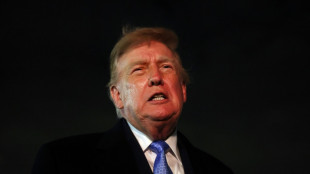 Oil takes off again, Wall Street dips after Trump rejects Iran truce offer

 AlgoQuant Asset Management Selects Liquid Mercury to Enhance Digital Asset Trading Infrastructure

 UK to reopen refugee resettlement scheme to push 'safe' migration

Stablecoin excitement has gripped Hong Kong as the city prepares to launch a licensing system for the less volatile type of cryptocurrency, but authorities warn against overplaying its future role in financial systems.
The digital units have been touted as a cheaper, easier way to carry out monetary transactions -- and their popularity is soaring, with more than US$270 billion in circulation worldwide.
Unlike the heady highs and lows of bitcoin, the value of most stablecoins is kept steady by being linked to an existing national currency -- mainly the dollar -- or a commodity like gold.
Stablecoins are useful internationally because they enable fast, low-cost cross-border payments, handy in markets where hard currency is limited, such as Argentina and Nigeria.
The tokens, bought and sold on digital exchanges, are also used as a safe way for crypto investors to station their profits, instead of converting to cash.
"The size of the stablecoin market has reached a level where the cash flows have geopolitical implications," said Paul Brody, global blockchain leader at consulting firm EY.
More than 99 percent of stablecoin assets are in US dollars, so for other countries "if you're not a player, you could find yourself frozen out", Brody told AFP.
The US House of Representatives this month passed an act codifying stablecoin use, which Senator Bill Hagerty said will "ensure the dominance of the US dollar".
Hong Kong's own stablecoin regulations come in on Friday, part of a push to position itself as an Asian crypto hub as US President Donald Trump's support for the sector fuels a global resurgence.
- 'Overly idealistic' -
"The opportunities are massive," said Rita Liu, whose payment company is developing a Hong Kong dollar-denominated stablecoin in a government-run trial.
"There's a wave of legitimising the digital asset industry... Hong Kong is trying to be at the forefront of that wave," said Liu, chief executive of RD Technologies.
Crypto trading has been banned since 2021 in mainland China, which sees it as a "bit too close to gambling", Brody said.
He and others think stablecoins could prove more acceptable to Beijing, which has experimented with its own "e-yuan" central bank digital currency.
Officials may first want to see how things go in the semi-autonomous territory of Hong Kong.
So far, "a few dozen institutions" have expressed interest in issuing stablecoins or requested more information, Hong Kong Monetary Authority head Eddie Yue said last week.
But he called for the public to "rein in the euphoria" over the new bill, as "in the initial stage, we will at most grant a handful of stablecoin issuer licences".
"Some discussion on stablecoins may be overly idealistic," Yue warned, especially around their "potential to disrupt the mainstream financial system".
The hype can inflate companies' stock prices, he added, a point echoed by Lily King of crypto company Cobo.
"Some applications may be influenced by public relations strategies, as stablecoin-related news often drives market sentiment," she said.
- Bigger problems -
RD's Liu, a former senior manager at Chinese payment platform Alipay, feels that "some of it is fake hype, and some is real", fuelled by "people's hope in this industry".
Stablecoins account for about seven percent of the global cryptocurrency market capitalisation, according to CoinGecko.
If they eventually become "a mainstay of the plumbing" in finance, Hong Kong could enjoy something of a "first-mover advantage", said Jonas Goltermann at Capital Economics.
Japan and Singapore already regulate stablecoins, while South Korea is exploring the possibility.
While stablecoin issuers usually assure buyers their currency is backed up by real-world reserves, they are not risk-free, and sometimes deviate from their pegged value due to market fluctuations, tech issues or problems with the underlying assets.
There is also the risk that stablecoins will become "more of a niche product" if banks work out how to make their own programmable money, Goltermann said.
"It makes sense for Hong Kong to try anything -- it's kind of on a declining path, for reasons that are not to do with technology. It's mostly about the politics, and its relationship with China," he told AFP.
"It's not like stablecoins are a silver bullet that can fix that. But that doesn't mean it can't help."
T.Germann--VB