
Violent videos draw more French teens into 'terror' plots, say prosecutors / Photo: © AFP/File

 How Mystery Bounty Poker Tournaments Spread from Curiosity to Mainstream

 Market Buzz: Meesho Stake Sale, Clean Max’s ₹50,000 Crore Investment and Corporate Updates

 Below Deck alumnus João Franco and brother arrested after fatal Turkey fight
 General Hospital actor Randall England dies at 75

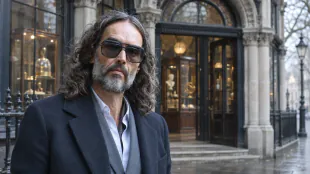 London museum removes Russell Brand hair exhibit after rape conviction
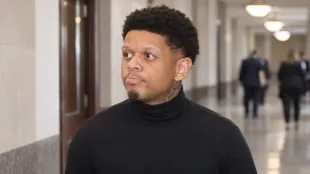 Yella Beezy sentenced to life for arranging rapper Mo3’s murder
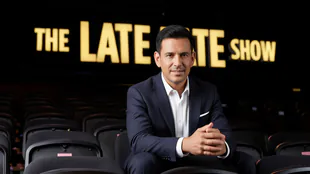
 Kylie Jenner employee describes closet ordeal and pepper-spray incident
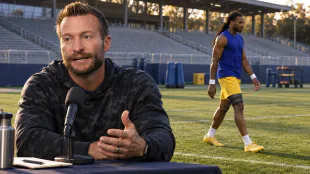 Davante Adams injury deepens Los Angeles Rams receiver shortage

 João Franco’s earlier post draws attention after arrest over fatal Turkey brawl

 Nvidia Appoints Colette Kress as Interim CEO Following Jensen Huang’s Resignation
 Itlu Arjuna receives U/A certificate ahead of theatrical release
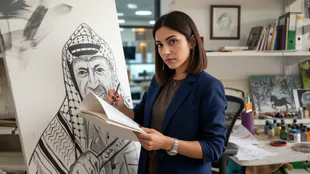
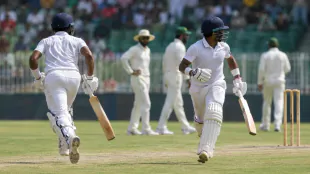 Dhananjaya de Silva guides Sri Lanka to 221-4 against Pakistan
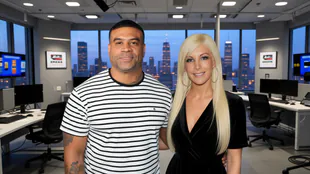 Parents of Deceased Model Fight to Maintain $4 Million Judgment Against Shawne Merriman Associate

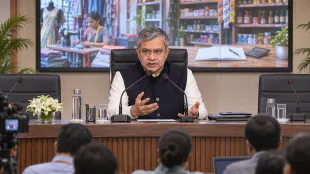 India extends micro-credit guarantee plan for five years

 Zelenskyy arrives in Dublin for meetings on Ukraine and peace efforts
 Jury hears social-media image helped identify teen in Scarlett Faulkner case
One 14-year-old was allegedly planning to blow up an Israeli embassy, while a 16-year-old was convicted of having plotted to attack far-right bars incensed by "injustice".
French prosecutors are alarmed at an increasing number of young teenage boys seemingly plotting "terror" attacks, and say they all share an addiction to violent videos online.
As communities worldwide worry about boys being exposed to toxic and misogynistic influences on social media, French magistrates say they are looking into what draws young teens into "terrorism".
"Just a few years ago, there were just a handful of minors charged with terror offences," France's National Anti-Terror Prosecutor's Office (PNAT) said.
"But we had 15 in 2013, 18 in 2024 and we already had 11 by July 1" this year.
They are aged 13 to 18 and hail from all over France, the PNAT said.
Lawyers and magistrates told AFP these teens are usually boys with no delinquent past, many of whom are introverts or have had family trouble.
The PNAT opened a special branch in May to better examine the profiles of minors drawn into "terrorism", but it said it has already noticed they are all "great users of social media".
"Most are fans of ultra-violent, war or pornographic content," it said.
In France, "terrorism" is largely synonymous with extremist Islamist ideas such as those of the Islamic State jihadist group.
Only in recent months has the PNAT taken on cases different in nature -- one an adult suspected of a racist far-right killing, and the other an 18-year-old charged with developing a misogynist plot to kill women.
A 14-year-old schoolboy who stabbed to death a teaching assistant in June was a fan of "violent video games", although his case was not deemed "terrorist" in nature.
- 'Proving themselves as men' -
In the case of France's youngest "terror" suspects, a judicial source told AFP, social media provides them with a flow of violent videos that are "not necessarily linked to terrorism", such as from Latin American cartels.
"They think they're proving themselves as men by watching them," the source said.
Sociologist Farhad Khosrokhavar said the teens were "neither children nor adults".
This "leads them to violence in order to be recognised as adults -- even if it's a negative adult," he said.
Laurene Renaut, a researcher looking into jihadist circles online, said social media algorithms could suck adolescents in fast.
"In less that three hours on TikTok, you can find yourself in an algorithm bubble dedicated to the Islamic State" group, she said.
You can be bathing in "war chants, decapitations, AI reconstructions of glorious (according to IS) past actions or even simulations of actions to come," she said.
The algorithms feed users "melancholic" content to boost their "feeling of loneliness, with ravaged landscapes, supposed to reflect the soul," she said.
- 'Injustice' -
One such teenager said he was motivated by a sense of "injustice" after seeing a video online of an attack on a mosque in New Zealand.
White supremacist Brenton Tarrant went on a rampage, killing 51 worshippers at mosques around Christchurch in March 2019 in the country's deadliest modern-day mass shooting.
The French suspect was convicted last year for planning "terror" attacks on far-right bars.
He told investigators it started when he was 13 and playing Minecraft, a video game, on gamer social media platform Discord.
"Someone sent Tarrant's video," he said.
"I thought it was unjust to see the men, women and children be massacred."
"I then watched the videos of imams telling people to stay calm and those of terrorists from the far right, and I thought it was unjust," he added.
"Then I saw those of jihadists urging help," he said.
"I thought that by defending this cause, my life would make sense."
A French appeals court in July 2024 sentenced him to four years in jail, including two suspended, after he contacted an undercover agent to find out about weapons.
The court justified the sentence with the "gravity" of his planned actions, but noted he lacked signs of "deeply rooted ideological radicalisation".
Rather, it said, the defendant was the child of fighting parents from a very violent neighbourhood, who had been "significantly deprived of affection" and had sought to "fit in" with internet users.
His lawyer Jean-Baptiste Riolacci told AFP he was an "essentially lonely, sad and good kid, whose only occupation beyond his computer was gliding around on his scooter".
- 'Guesswork' -
The judicial source, who spoke anonymously due to the sensitivity of the issue, said the French system favoured early intervention through charging youth for associating with "terrorist" criminals, and then adapting their punishment according to the severity of the accusations.
But attorney Pierre-Henri Baert, who defended another teenager, said the system did not work.
His client was handed three years behind bars in May for sharing an IS propaganda post calling for attacks against Jewish people as a 16-year-old.
"It's a very harsh sentence considering his very young age, the fact he had no (criminal) record, and was really in the end just accused of statements online," he said.
Another lawyer, who worked on similar cases but asked to remain anonymous due to the sensitivity of the issue, agreed.
"When the judiciary goes after people for terrorist criminal association, it's basically doing guesswork," she said, adding that the "terrorist" label could be very stigmatising.
"There's no differentiation between a kid who sent aggressive messages and a suspect who actually bought weapons," she added.
- 'Fantasizing about jihadism' -
Two judicial sources said teens prosecuted for alleged "terrorism" are usually only spotted through their behaviour on social media.
They are then charged over other actions, such as moving to an encrypted messaging app, sharing recipes to make explosives or looking for funding, the sources said.
A Paris court will in September try three teenagers who, aged 14 and 15, allegedly planned to blow up a truck outside the Israeli embassy in Belgium.
They had been spotted at high school for their "radical remarks", but were then found in a park with "bottles of hydrochloric acid" containing "aluminium foil", a homemade type of explosive, the PNAT said.
Their telephones showed they had watched videos of massacres.
Jennifer Cambla, a lawyer who represents one of the defendants, said accusations against her client were disproportionate.
"My client may have had the behaviour of a radicalised person by consulting jihadist websites, which is forbidden. But he is far from having plotted an attack," she said.
But another lawyer, speaking anonymously, said arresting teenagers "fantasizing about jihadism" could be an opportunity to turn their lives around -- even if it involved "a monstruous shock".
"The arrests are tough," with specialised forces in ski masks pulling sacks over the suspect's head, they said.
But "as minors, they are followed closely, they see therapists. They are not allowed on social media, and they do sport again," the lawyer said.
One of the judicial sources warned it was not clear that this worked.
It "makes it look like they are being rapidly deradicalised, but we do not know if these youth could again be drawn in by extremist ideas," they said.
D.Schaer--VB