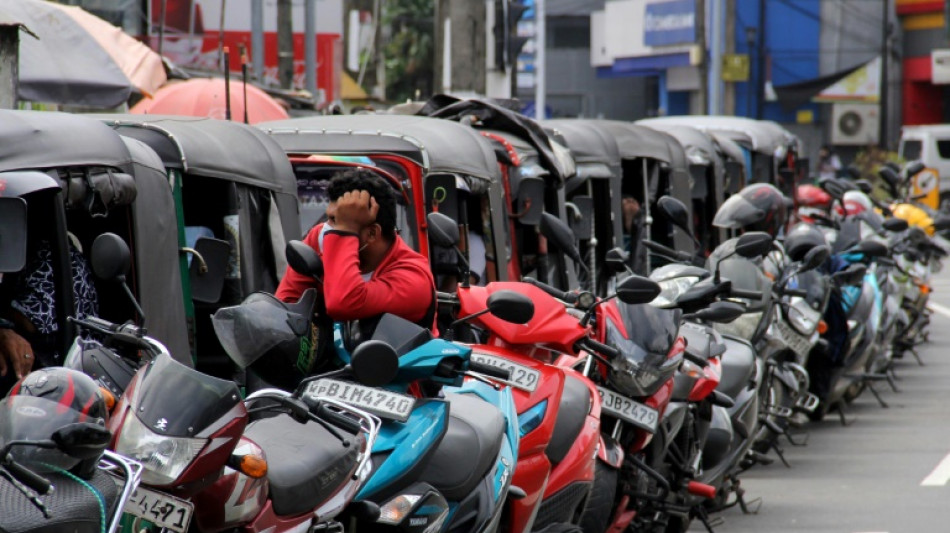
Sri Lanka electricity firm seeks 835% price rise / Photo: © AFP

 Devan Ekambaram and Susha’s 'Varuvaaiy' Makes History as First Tamil Song Nominated for a Grammy

 Miranda Lambert Leads North Texans with Seven Grammy Nominations for 2027

 DiDi Advances Robotaxi Operations in China with New R2 Vehicle and Expanded Safety Infrastructure

 Smart Car Seats Tested: Do Sensors and Apps Actually Improve Safety?

 5 Strategies for Fort Worth Households to Reduce Summer Electricity Costs

 Central Bank of Malta Links Energy Subsidies to Middle East Conflict and Price Volatility

 Shomari Figures Defies Redistricting in Alabama Amid Disaster Relief Crisis

 BYD Dolphin G Leasing Deal: Plug-in Hybrid Supermini Available from £174 a Month

 Egypt Opens Registration for 2027 Total Solar Eclipse Viewing Packages

 French Economy Shrinks 0.1% as Consumer Confidence Slumps

 Wall Street Ends Turbulent Week Higher Despite Inflation and AI Jitters
Sri Lanka's heavily loss-making state-run electricity monopoly asked for a shocking price rise of over 800 percent for its poorest customers with the bankrupt nation out of fuel, regulators said Monday.
The South Asian nation has been hammered by a foreign exchange crisis, leaving it woefully short of dollars for imports, including fuel to generate electricity and for transport.
The Ceylon Electricity Board (CEB) lost 65 billion rupees ($185 million) in the first quarter and sought an 835 percent price hike for the heavily-subsided smallest power consumers, the Public Utilities Commission of Sri Lanka (PUCSL) said.
Currently, anyone using less than 30 kilowatts a month pays a flat 54.27 rupees ($0.15), which the CEB sought to raise to 507.65 rupees ($1.44).
"A majority of the domestic consumers will not be able to afford this type of steep increase," PUCSL chairman Janaka Ratnayake told reporters in Colombo.
"Hence we proposed a direct subsidy from the Treasury to keep the increase to less than half of what they have asked."
Domestic rates have yet to be decided, but prices will go up by 43 to 61 percent for commercial and industrial users, he added.
The CEB will also be allowed to charge users who earn foreign exchange, such as exporters, in dollars, he added, to help the generator finance imports of oil and spare parts.
The government imposed 13-hour power cuts a few months ago, but blackouts have been reduced to about four hours a day as rains filled hydropower reservoirs.
Over the past six months the government has already increased diesel prices nearly fourfold and petrol by more than two and a half times.
Sri Lanka remains virtually without both diesel and petrol. The energy minister has said he is unable to say when fresh stocks will arrive in the country, which does not have its own oil.
Kanchana Wijesekera apologised to motorists on Sunday and announced two ministers were travelling to Moscow to secure cheaper Russian oil.
Wijesekera himself travelled to Qatar to negotiate concessionary terms for hydrocarbon imports.
Meanwhile, a delegation from the US Treasury and the State Department opened talks with Prime Minister Ranil Wickremesinghe, his office said.
"The United States has agreed to provide technical assistance for fiscal management in Sri Lanka," the premier's office said in a brief statement.
Unable to repay its $51 billion foreign debt, the government declared it was defaulting in April and is negotiating with the International Monetary Fund for a possible bailout.
D.Schneider--BTB