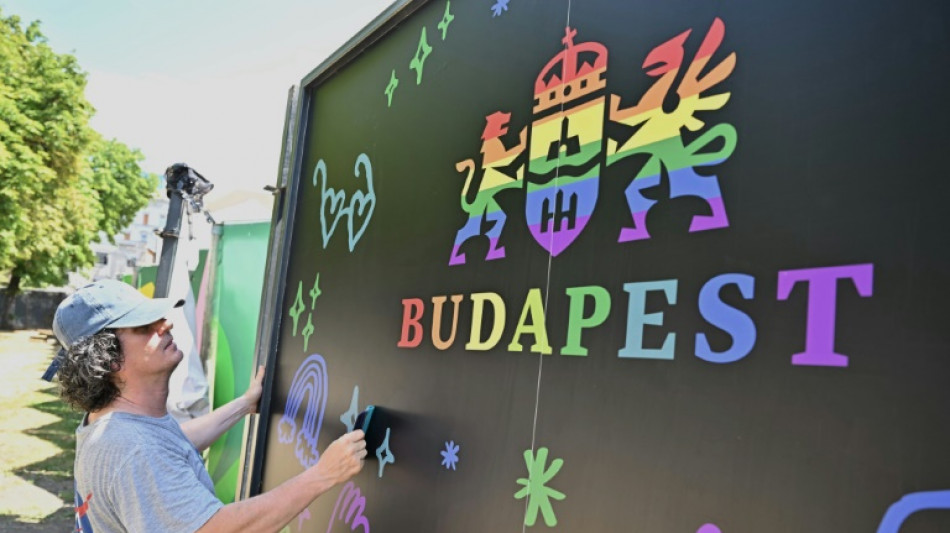
Orban says police will not disperse Budapest Pride march / Photo: © AFP

 UN to hold fourth informal poll of secretary-general candidates
 Who are the Emiratis behind crisis-hit Manchester City?
 Singer Angelique Kidjo urges Africans to 'create together'
 Alleged Rihanna mansion shooter mentally fit for trial, says judge

 Mystery over UK airbase scare as police find petrol not explosives

 OpenAI unveils low-cost AI model, a day after shelving Astra upgrade
 Premier League confirms Man City guilty of serious financial breaches

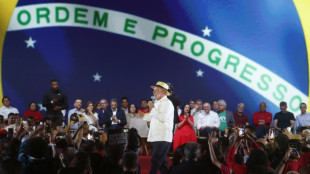 Brazil's Lula turns to Bad Bunny tune to criticise Trump ahead of polls
 Nigerian dancer eyes world record after seven-day marathon
 Swiss regulator concludes Julius Baer bank probe

 Brazil's patron saint pulled into latest election scrap

 Football overload leaves players near 'breaking point', warns Tebas
 Paris Eiffel Tower says chief to step down after uproar over removing women staff
 Amaze Holdings (NYSE: AMZE) Executes Binding LOI to Acquire BullionFX | Alchemy, a Decentralized Gold-Backed Financial Ecosystem for Valued at US$155 Million
 Clashes between French teens, police as school blockades intensify

 Stocks move sideways despite oil moving lower

 African leaders to gather in Egypt for business summit

 UK decides against charging foreign visitors for museums

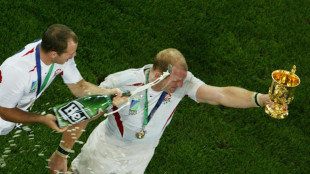 Dallaglio to sell England World Cup winners' medal

 Brazil come from behind to beat Australia 4-2 in friendly
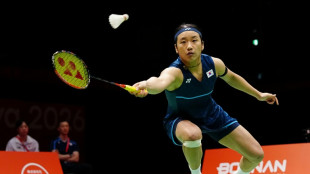 Ruthless An retains Asian Games badminton crown as Kunlavut triumphs

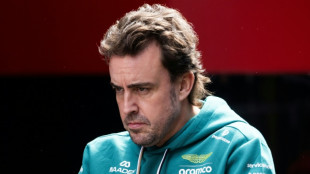 Alonso to stay with F1 team Aston Martin in 2027

 China badminton 'still strong' despite Asian Games slump
 'Exceptional' Turner painting shown in Rome before sale
 European stocks climb as oil dips
Hungarian Prime Minister Viktor Orban said police will not "break up" Saturday's Budapest Pride march despite issuing a ban, but warned attendees and organisers about the legal consequences.
Orban's ruling coalition amended laws and the constitution earlier this year to prohibit the annual celebration, advancing his widely condemned, years-long clampdown on LGBTQ rights in the name of "child protection".
Last week, police banned the Pride march from taking place in Budapest, citing recent legal changes forbidding the promotion or display of homosexuality to under-18s.
But organisers, including the Budapest city hall, disputed the legality of the decision and pledged the parade would go ahead. The ban has drawn international condemnation.
"Of course, the police could break up such events, because they have the authority to do so, but Hungary is a civilised country, a civic society. We don't hurt each other," Orban told state radio during his weekly interview on Friday.
"There will be legal consequences, but it cannot reach the level of physical abuse."
Attendees risk a fine of up to 500 euros ($580) with police empowered to use facial recognition technology to identify them.
Organisers could face a one-year prison sentence.
- 'Wider push' -
However, opposition Budapest mayor Gergely Karacsony insisted during a briefing with visiting EU equalities commissioner Hadja Lahbib that no attendee can face any reprisals as the march is a municipal event and does not require police approval.
"The police have only one task tomorrow, and it is a serious one: to ensure the safety of Hungarian and European citizens attending the event," Karacsony told journalists, warning that far-right actors could be emboldened by the government to disrupt the Pride march.
Far-right groups have announced multiple counterprotests along the planned route of the procession.
Dozens of EU lawmakers are expected to attend the Pride parade, as well as ministers and mayors from multiple European Union countries, according to the organisers.
Lahbib said she is still assessing whether to participate given her role as commissioner, but assured the Hungarian LGBTQ community of the EU's support.
"These attacks are part of a wider push to roll back progress and undo the rights that generations before us fought for," the Belgian commissioner told journalists.
"The right to gather peacefully is one of those rights. It must be protected and upheld across the European Union," she added.
Organisers hope Saturday's Pride march will see a record turnout of more than 35,000 to signal a strong rebuke of Orban's anti-LGBTQ policies.
Hungary's nationalist premier on Friday rejected calls from European Commission President Ursula von der Leyen to reverse the ban, comparing her to late Soviet leader Leonid Brezhnev.
"She considers Hungary a subordinate country and she thinks she can dictate to Hungarians from Brussels how they should live, what they should like, what they should dislike, what their legal system should be like, what should be banned and what should not be. Exactly like Brezhnev," Orban said.
C.Koch--VB