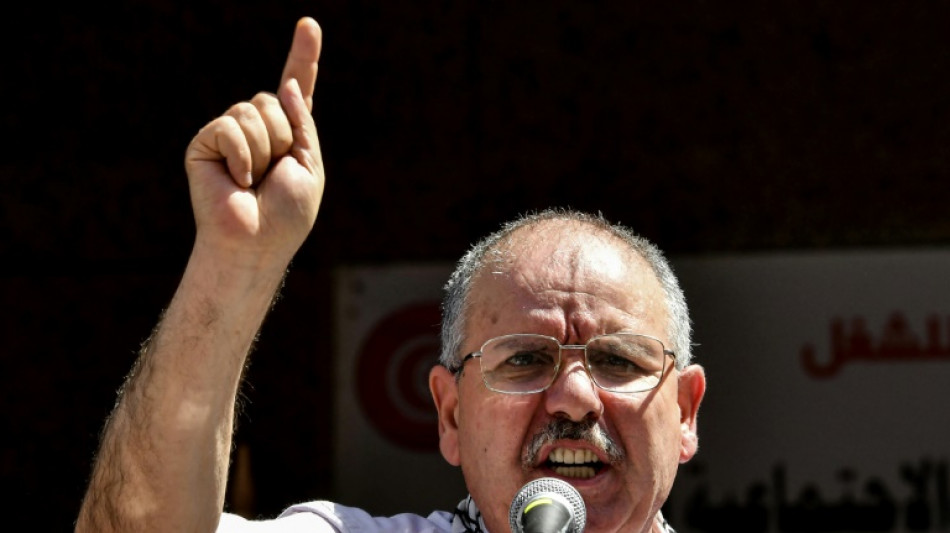
Tunisia trade unions chief rejects IMF reforms / Photo: © AFP/File

 Devan Ekambaram and Susha’s 'Varuvaaiy' Makes History as First Tamil Song Nominated for a Grammy

 Miranda Lambert Leads North Texans with Seven Grammy Nominations for 2027

 DiDi Advances Robotaxi Operations in China with New R2 Vehicle and Expanded Safety Infrastructure

 Smart Car Seats Tested: Do Sensors and Apps Actually Improve Safety?

 5 Strategies for Fort Worth Households to Reduce Summer Electricity Costs
 Central Bank of Malta Links Energy Subsidies to Middle East Conflict and Price Volatility

 Shomari Figures Defies Redistricting in Alabama Amid Disaster Relief Crisis

 BYD Dolphin G Leasing Deal: Plug-in Hybrid Supermini Available from £174 a Month

The head of Tunisia's powerful UGTT trade union on Thursday rejected International Monetary Fund conditions for a new loan to bail out the country's struggling economy and questioned the government's authority to negotiate.
Noureddine Taboubi's comment came a day after an IMF official said the global lender is ready to begin formal talks on a new financial aid package for Tunisia.
"We reject the conditions set by the IMF, given Tunisians' low salaries, lack of means, rising poverty and unemployment," Taboubi told reporters, a week after the UGTT staged a nation-wide public sector strike that saw flights cancelled, public transport halted and government offices closed.
The North African country, already heavily indebted and reeling from price hikes on imports like oil and wheat since Russia invaded Ukraine, is angling for a two billion-euro loan, according to a source with knowledge of preliminary talks.
The global lender has conditioned such a bailout on "ambitious reforms" to rein in public spending and reform Tunisia's state-owned companies.
But on Thursday Taboubi rejected "the painful options they're talking about".
"We support reforms, but we don't share the vision of reforms supported by this government," he said.
The IMF's regional chief Jihad Azour said Wednesday that the fund was set to begin formal talks on a new financial aid package "in the coming weeks".
Economic fallout from the Ukraine war made it ever more pressing, he said.
Tunisia "needs to urgently tackle its fiscal imbalances" including by "containing the large civil service wage bill, replacing generalized subsidies with transfers targeting the poor", said Azour, a Lebanese economist and former minister.
He also urged it to open up its economy to private sector investment and "(reform) its loss-making state-owned enterprises".
The UGTT has demanded guarantees that publicly owned firms will remain state property.
- Casting doubt -
During a visit to Tunisia this week, Azour met officials including President Kais Saied, and welcomed government plans to start tackling dire economic issues.
In Wednesday's statement, he urged the government to discuss proposed reforms "with all stakeholders", echoing previous comments by IMF officials indicating that UGTT consent was vital for a bailout deal.
Saied told Azour, during a meeting on Tuesday, that he "recognised the need to introduce major reforms" but insisted that such changes must "take social impacts into account", according to a statement from the president's office.
Taboubi cast doubt on the government's mandate to negotiate a deal at all.
"This government was appointed temporarily, by decree," he said.
"When there is a government produced by institutions and elections, it will have the legitimacy to start negotiations over reforms."
Saied in July last year sacked the previous administration and suspended parliament in moves opponents have called a coup against the only democracy to emerge from the Arab Spring uprisings more than a decade ago.
The UGTT initially backed Saied's moves but has become increasingly critical as Saied extended his power grab.
It has also turned down calls to take part in Saied's "national dialogue" on the grounds that it excludes other key actors including political parties and much of civil society.
The union is not the president's only domestic headache.
Judges across the country began a strike on June 6 to protest Saied's sacking of 57 of their colleagues and what they called his "continued interference in the judiciary".
Saied had in February scrapped an independent judicial watchdog and replaced it with a body under his own control, a move critics decried as his latest blow to democracy.
On Thursday, dozens of judges demonstrated outside the main courthouse in Tunis to demand their colleagues be reinstated.
Some held up placards demanding an end to "decree-laws and the destruction of the rule of law".
C.Kovalenko--BTB
