Germans turn to food banks as inflation hits / Photo: © AFP/File

 Swiss voters expected to shun stricter neutrality
 Rapper-turned-PM faces first big test after Nepal disaster
 Tuchel seeks tonic to England World Cup 'scar' in Spain showdown

 'Helps me cope': Catholic baptisms rise among French youth

 Colombians in Santa Marta stay inside after violence wracks the city

 Iran airlines cancel flights as US sanctions hit
 Meta launches camera-free AI glasses amid privacy pushback

 Australian PM says OpenAI hacked government health website

 Xi arrives in US to personal Trump welcome

 Morocco elects new parliament amid social frustration, youth discontent

 Scheffler and Burns to face Im and Lee in Presidents Cup opener

 Crushing wins for Lyon and Barca in women's Champions League

 Rio breaks record for rainiest September amid powerful El Nino

 At UN, tech chiefs urge caution in AI development

 Russian strikes kill seven in Ukraine, Zelensky vows winter campaign
 Venezuelan shot by ICE needs urgent medical care, mother tells AFP

 Zelensky says Putin using fighters from 47 countries in Ukraine war

 Klopp calls on Germany to 'rise above ourselves' as new era begins

 Russian strikes kill seven in Ukraine as Russia vows no 'pause' to war

 ArcPoint Expands Globally with Institutional Intelligence Platform for Modern Investors

 Ronaldo focussing on 'present' ahead of Wales test

 Outgoing UN chief makes final climate push at New York summit
 Grief and pain flow at hearing for Canadian suicide poison vendor

 Ireland boss Hallgrimsson says timing of Israel remarks 'not clever'
 Weinstein resentenced to 15 years in prison for 2006 sex assault

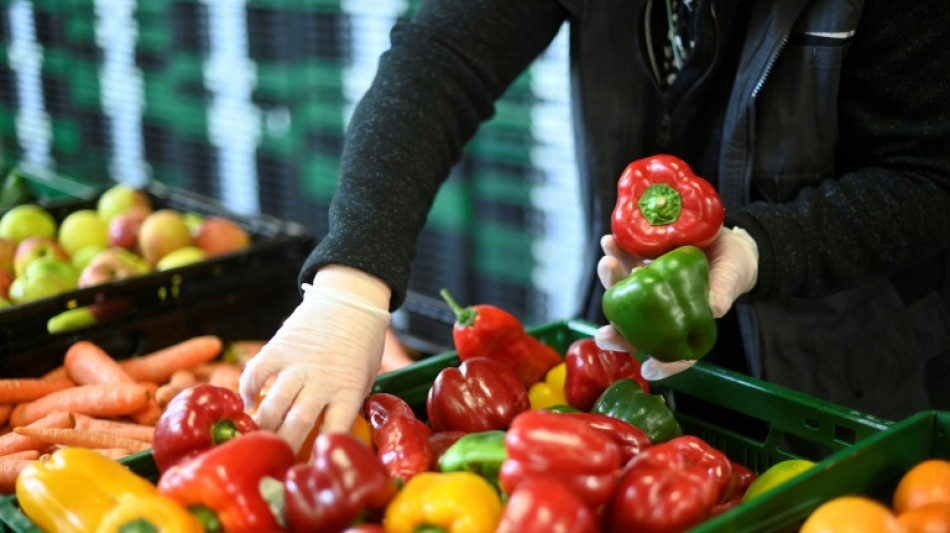
German pensioner Gabriele Washah waits in line to fill her trolley with bags of carrots for 50 cents, yoghurts just past their sell-by date and bunches of wilting flowers.
With the cost of living soaring across Europe, the 65-year-old retired shop assistant is one of many Germans turning to food banks to make ends meet.
"Sometimes I go home from the shop almost crying because I can't afford it any more," she told AFP outside the row of stalls in Bernau, near Berlin.
Nestled in an alleyway behind a big chain supermarket, the food bank sells at greatly reduced prices groceries donated by supermarkets, as well as cheap prepared meals.
Here, customers can pick up a full trolley of food for around 30 euros (around $32).
For Washah, that means bread, butter and her favourite sandwich filling, sausage -- "which used to cost 99 cents ($1.02) but now sometimes costs more than two euros".
Driven by the war in Ukraine, inflation in Germany soared to 7.9 percent in May -- its highest level since reunification in 1990, with food prices among those worst affected.
Demand for food banks across the country has increased "significantly" since the start of the year and doubled in some areas, according to a spokeswoman for the Tafel food bank network.
There are around 1,000 such schemes in Germany, run by volunteers and available to customers on a means-tested basis.
Groceries, while donated, are still sold rather than given away free to the customers as the Tafel has to cover running costs, including rents and electricity. The organisation too has had to put up prices because their running costs have risen.
"It's not just one product," said 69-year-old pensioner Peter Behme. "All the prices are going up."
- Poverty line -
In a bid to ease the pressure on squeezed finances, the government has lowered taxes on fuel, drastically slashed the cost of public transport and promised all taxpayers a one-off payment of 300 euros.
But Behme remains unimpressed. "I don't know where the government help is going," he said.
Even the food banks themselves are feeling the effects of the massive inflation.
"We have had to raise some prices by 20 or 50 cents because we need money to replenish our stocks," said Malina Jankow, manager of the Bernau food bank.
Along with pensioners and unemployed people, the queues are now also filling up with Ukrainian refugees.
Anna Dec, a 35-year-old hospital worker, has come to Bernau with two Ukrainian women who are staying in her home and currently each receiving 449 euros a month in benefits.
"They have to pay for water, energy, food, hygiene products... That's almost nothing," she said.
Overwhelmed by the influx of customers, some food banks in Germany have had to turn away new arrivals or ration the food they distribute.
"We have been asking the government for a long time for a law to force supermarkets to give away their unsold food," said Norbert Weich, 72, chairman of the food bank.
Some 16 percent of Germans, or more than 13 million people, were living below the poverty line in 2020, according to a study by the charity Deutscher Paritaetische Gesamtverband, published in December 2021.
"The federation of food banks has a resolution: as soon as we are no longer needed, we will disband," said Weich. "But I don't think it will be in my lifetime."
T.Bondarenko--BTB