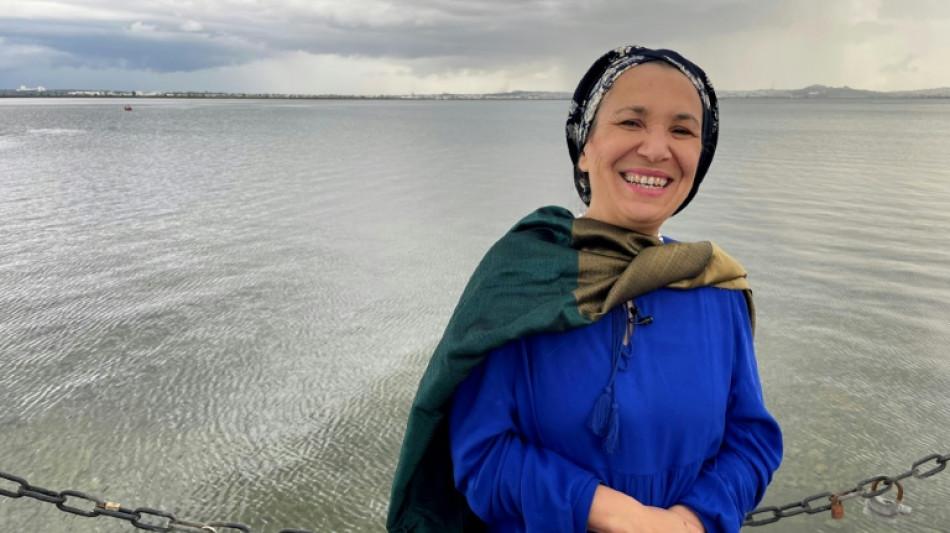
'No dumping ground': Tunisia activist wins award over waste scandal / Photo: © AFP

 Make-A-Wish Announces 2026 Starblazer Award Honorees; Allied World Becomes First Corporate Founder

 Lee-Trump Golf Diplomacy Faces Diplomatic Dilemma Ahead of G20 Summit
 Mavericks Defeat Jazz 112-100 Behind Washington’s 26 Points and Second-Half Surge

 BingX: Major Announcement of Far-Reaching Significance

 James Blunt Scores First Number One Album in 19 Years; Wife Sofia Wellesley Celebrates

 UCLA Stays Unbeaten With Ty Dieffenbach's Heroic Return Against Illinois

 Malta Court Rejects Libel Claims by Developer Kurt Buhagiar Against MEP Peter Agius
Tunisian environmentalist Semia Labidi Gharbi, awarded a global prize for her role exposing a major waste scandal, has a message for wealthy nations: developing countries are "no dumping ground".
Gharbi was among the first to speak out when Italy shipped more than 280 containers of waste to the North African country in 2020.
The cargo was initially labelled as recyclable plastic scrap, but customs officials found hazardous household waste -- banned under Tunisian law.
"It's true, we are developing countries," Gharbi said in an interview with AFP. "But we are not a dumping ground."
The 57-year-old was among seven environmentalists from different countries handed this year's Goldman Environmental Prize -- commonly known as the "Green Nobel" -- in California last week.
The Goldman committee said her grassroots activism helped force Italy to take the waste back in February 2022.
Gharbi "helped spearhead a campaign that challenged a corrupt waste trafficking scheme between Italy and Tunisia," the Goldman committee said.
And her endeavours ultimately led to the return of 6,000 tonnes of "illegally exported household waste back to Italy", the US-based organisation added.
The scandal took on national proportions in Tunisia and saw the sacking of then environment minister Mustapha Aroui, who was sentenced to three years in prison.
A total of 26 people, including customs officials, were prosecuted.
Yet the waste remained at the port of Sousse for more than two years, with Tunisian rights groups criticising the authorities' inaction as Italy failed to meet deadlines to take it back.
- Limited capacity -
Global waste trade often sees industrialised nations offload rubbish in poorer countries with limited means to handle it.
"What is toxic for developed countries is toxic for us too," said Gharbi. "We also have the right to live in a healthy environment."
She added that while richer countries can manage their own waste, developing ones like Tunisia have "limited capacity".
The Goldman committee said Gharbi's campaigning helped drive reforms in the European Union.
"Her efforts spurred policy shifts within the EU, which has now tightened its procedures and regulations for waste shipments abroad," it said.
Gharbi, who has spent 25 years campaigning on environmental threats to health, said she never set out to turn the scandal into a symbol.
"But now that it has become one, so much the better," she said with a smile.
She hopes the award will raise the profile of Tunisian civil society, and said groups she works with across Africa see the recognition as their own.
"The prize is theirs too," she said, adding it would help amplify advocacy and "convey messages".
E.Burkhard--VB